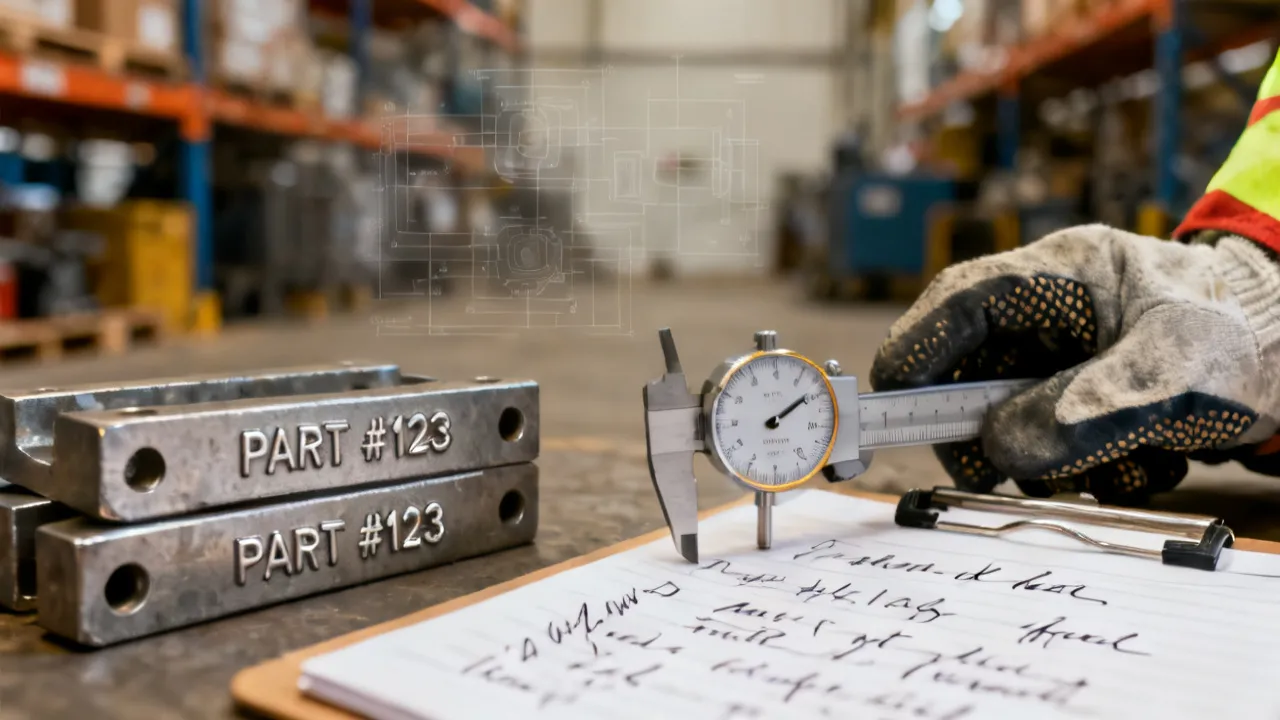
Understanding Item 16121978 Supply and Sourcing
This guide explains how item 16121978 is typically handled across sourcing, compliance, and quality workflows, focusing on practical supplier evaluation rather than speculation. Objectively, the keywords relate to product identification, vendor selection, and logistics readiness. Background context outlines how procurement teams document specifications, verify traceability, and decide on lead-time commitments to reduce risk.
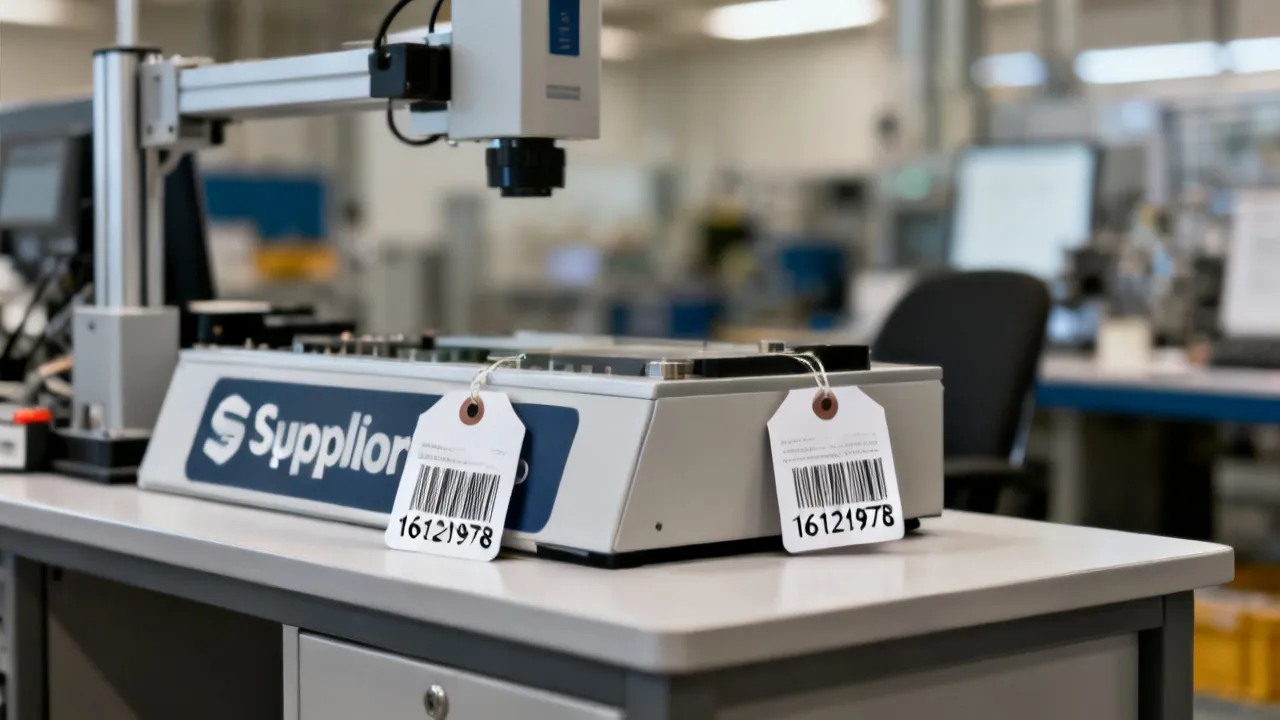
1) What “16121978” Usually Means in Procurement Workflows
In procurement and supply chain operations, an identifier like 16121978 is typically treated as a “single source of truth” for traceability and ordering accuracy. Teams reference it to ensure that the exact product (or configured variant) intended for purchase is the one that is actually quoted, manufactured, shipped, received, stored, and later used in production, maintenance, or project execution.
When 16121978 appears in procurement workflows, it is often an item identifier—for example, a catalog number, internal SKU, ERP part number, manufacturer part code, procurement reference number, or a composite number that maps to a defined specification bundle. In practice, organizations rely on these identifiers as the linking mechanism that connects otherwise separate systems and processes:
- Commercial systems (quotation, purchase order, invoice matching)
- Technical repositories (drawings, datasheets, bill of materials, revision history)
- Quality and compliance files (inspection plans, acceptance criteria, test reports)
- Logistics and warehouse systems (ASN/dispatch data, pallet/carton labels, scanning records)
- Operational usage records (maintenance logs, production consumption records, warranty or lifecycle tracking)
Because these systems must “agree” on what was ordered and what was delivered, procurement teams treat 16121978 not as an arbitrary string, but as an anchor that resolves to specific documentation and verifiable properties. If the mapping is unclear or inconsistent—such as when one party interprets 16121978 differently—errors appear downstream in the form of wrong parts, incorrect revisions, missing certificates, or untraceable batches.
Alongside the identifier, your prompt included other procurement-related keywords (including repeated empty-string placeholders). Even though those placeholders don’t provide explicit terms to interpret, the overall instruction suggests that the content should remain centered on procurement fundamentals: what buyers should confirm, how suppliers typically present documentation, and what steps reduce mismatch risk between ordered items and delivered items.
In other words, the core theme is not simply “what is 16121978,” but “how should procurement professionals use a part identifier reliably across the supply chain.” That is exactly where disciplined procurement practices—specification verification, traceability control, receiving inspection, and evidence preservation—create tangible business outcomes.
2) Key Decision Factors: Specifications, Traceability, and Fit-to-Use
Procurement decisions around an item identifier like 16121978 usually involve more than verifying that a part exists in a catalog. Expert buyers structure their approach around three interconnected decision factors: specification alignment, traceability, and fit-to-use.
1) Specification alignment
Specification alignment ensures that the delivered item matches the technical requirements of the receiving environment. Depending on the product category, that may include:
- Dimensions and tolerances (nominal size, range of allowable variance, measurement methods)
- Materials and material grades (including metallurgy, polymer grade, alloy composition, coatings)
- Performance criteria (electrical properties, strength ratings, pressure/flow ratings, chemical resistance)
- Standards compliance (industry or regulatory references)
- Configuration details (finish type, connector type, interface standards, mounting style, calibration settings)
- Revision level and supersession status (ensuring you didn’t order an old drawing revision or mismatched revision)
When specification alignment fails, the consequences can range from increased inspection and rework to total operational failure. For high-reliability environments, even “small” deviations can create systemic quality issues later—especially if the receiving organization assumes interchangeability when the supplier’s product is actually variant-specific.
2) Traceability and documentation
Traceability ensures that each delivered unit (or batch) can be traced back to the procurement record and the manufacturing/inspection record that produced it. For an identifier like 16121978, traceability typically requires agreement across:
- Lot/batch identifiers (how batches are assigned, how they are labeled, how they map to production records)
- Certificates or inspection reports (what tests were run, acceptance results, responsible authority)
- Identity documentation (how the label, carton/pallet markings, and part numbers encode identity)
- Packaging structure (ensuring the label is present at the level your warehouse system expects: carton vs. pallet vs. individual unit)
Traceability gaps create hidden costs. Even if the part “looks correct” on day one, missing or incomplete traceability can force organizations into:
- Expanded incoming inspection (to compensate for lack of documentation evidence)
- Delays in releasing stock to production or maintenance activities
- Returns or corrective actions if the mismatch is discovered later
- Audit findings and potential compliance issues in regulated contexts
3) Operational fit (fit-to-use)
Fit-to-use covers the practical compatibility of the part with existing systems and workflows. Many sourcing failures occur not because the delivered part fails a specification in a lab, but because it fails integration in the operational environment. Operational fit includes:
- Correct labeling that matches the receiving system’s scanning/ERP mapping
- Correct packaging format for warehouse handling and kitting
- Compatibility with BOMs, maintenance catalogs, and planning structures
- Correct interface features and mounting or connection compatibility
- Appropriate documentation format for end users and technicians
For example, a supplier may deliver the correct component but package it in a way that breaks scanning or does not label each unit/batch level required by your warehouse. In such cases, the “identity” relationship between 16121978 and the delivered units becomes operationally unreliable—even if the physical item is correct.
Because of these three factors, procurement best practice is often verification-based, not price-first. A slightly higher unit cost can be economically justified if it prevents quality risk, reduces receiving delays, and improves audit readiness.
3) Supplier Evaluation: What Buyers Should Ask Before Ordering 16121978
When an item identifier like 16121978 is involved, supplier evaluation is fundamentally risk reduction. Experienced buyers treat supplier data requests as a method to reduce ambiguity—ensuring the supplier can supply the correct item, under the correct configuration, with the correct traceability evidence.
Below are practical questions buyers can use to vet the supplier’s ability to deliver 16121978 reliably. These questions intentionally target common failure modes observed across many industries:
-
Does the supplier reference the same identifier consistently?
Ask whether 16121978 maps to their internal part number and whether that mapping is stable across quotation, order confirmation, packing list, carton label, and shipping documents. -
Can the supplier provide evidence of specification compliance?
Request technical datasheets, drawings, or compliance statements that correspond to 16121978, including revision identifiers if your environment uses revision control. -
What is the labeling and packaging standard for each shipment?
Ensure the supplier labels include the information your receiving team needs (part number, lot/batch, quantity indicators) and that packaging enables correct scanning and inventory recording. -
How does the supplier handle substitutions or equivalents?
Clarify whether substitutions are allowed. If yes, specify conditions requiring written approval, equivalence evidence, and how the supplier prevents accidental replacements. -
What documentation will accompany the shipment?
Ask about inspection records, certificates, test reports, and any sector-specific documentation (e.g., traceable chemical composition documentation for materials). -
What is the supplier’s lead time, and how is it measured?
Confirm whether lead time is production lead time, order-confirmation-to-shipment time, or another definition—then ensure the definition aligns with your planning system. -
What is your internal quality control approach for this item?
Learn whether the supplier conducts batch testing, incoming raw material verification, process controls, and how nonconformities are handled. -
How will you communicate changes to this item (revision, material source, process changes)?
Ask for a change notification process (often formal change management) that prevents undocumented substitutions. -
Do you support audits or provide audit evidence?
If audits are relevant to your business, confirm whether the supplier can provide quality system evidence, traceability samples, or historical inspection records.
These questions are not bureaucracy. They help ensure 16121978 remains the operational anchor that stays consistent from inquiry through receiving. In mature procurement organizations, the supplier evaluation checklist functions as a standardized “prevention tool,” reducing the probability that the buyer will have to fix problems after delivery.
4) Price Considerations Without Risky Assumptions
You requested integration of “price information” and “supplier details,” but your prompt did not provide a specific numeric price, currency, or supplier name. In a professional context, it would be inappropriate to invent numbers. Instead, the key is to show how to analyze price responsibly when the only concrete input is an identifier like 16121978 and the expectation that procurement should remain verification-led.
In procurement practice, unit price is only one component of total cost and—more importantly—one component of risk. For an item that may have traceability and specification requirements, price analysis should focus on total landed cost, like-for-like comparability, and schedule reliability.
-
Break down total landed cost:
Assess the unit price alongside freight, handling, customs (if applicable), inspection costs, special packaging requirements, and any expected rework costs if documentation or identity needs correction. -
Compare like-for-like specifications:
Request confirmation that each quote corresponds to the same specification baseline, including revision level. A lower price can reflect a different material grade, tolerance, or configuration variant that won’t meet your “fit-to-use” requirements for 16121978. -
Consider cost of delays:
If 16121978 is tied to production milestones or critical maintenance schedules, a small unit price advantage can be overwhelmed by schedule disruption. Include buffer time and evaluate the supplier’s lead time reliability, not only lead time averages. -
Document pricing change conditions:
Ask how the supplier manages raw material volatility, schedule changes, minimum order quantities, and index-based pricing. Without clarity, the supplier may revise pricing midstream and create procurement re-approval cycles. -
Clarify payment and invoice matching terms:
Ensure invoice details align with purchase order line items (correct part number, revision, lot references if needed). Identity mismatches can create delays in accounts payable processing.
Ultimately, treat price as a variable in a broader decision framework. The procurement objective is not to pick the lowest unit price—it is to obtain the right product under controlled conditions, delivered with traceability and documentation that allow safe acceptance and audit readiness.
5) Receiving, Inspection, and Recordkeeping for 16121978
Even when a purchase order is correct and supplier documentation is adequate, procurement can still fail at receiving. Mislabeling, scanning errors, missing lot information, incorrect quantities, and incomplete inspection steps are recurring sources of quality problems. For an item identifier like 16121978, receiving should be designed as a controlled verification step that closes the traceability loop.
A robust receiving workflow for 16121978 typically includes the following elements:
-
Identity checks:
Verify that the delivered part number or label matches 16121978 exactly. This is not only a visual check; it should ideally align with warehouse scanning, packing list verification, and ERP record expectations. -
Batch/lot verification:
Confirm that the lot/batch information on labels matches the documentation and that it maps correctly to the supplier’s batch records. If your process requires batch-level traceability, the label must include the right data fields at the right packaging level. -
Incoming inspection:
Follow a documented inspection plan that matches your risk profile. The plan defines what to inspect, sampling frequency (if applicable), and the acceptance criteria. -
ERP/warehouse updates:
Record receipt quantity, lot/batch, and inspection outcomes in the appropriate systems. This ensures the next time someone searches for 16121978, they find the correct batch and inspection record.
A key point for professional procurement is that receiving records must create a data trail that supports:
- Internal traceability (linking delivered stock to production consumption or maintenance usage)
- Supplier accountability (linking delivered batches to supplier inspection evidence)
- Audit readiness (demonstrating that acceptance was conducted using defined criteria)
Where supply chains involve multiple manufacturing tiers, buyers should expect supplier traceability records to connect the final delivered batch back to the production lots and process conditions that created it. If this tiering is complex, the receiving team’s role is even more important: they must ensure the label identity and lot information remain consistent with the supplier’s documentation.
In practice, many organizations implement “traceability tests” at receiving—for example, verifying that the label lot ID can be mapped to a specific certificate or inspection record in the supplier’s documentation set. This is often a high-value step because it catches problems early, before parts are released to operations.
6) Compliance and Quality Management: Standards and Reasonable Expectations
Procurement documentation and acceptance expectations depend on the industry, regulatory environment, and customer requirements. Your prompt did not specify a particular product category, so this section remains general and objective—focused on quality management principles and how procurement teams typically frame “reasonable expectations” for suppliers.
Many organizations use quality management frameworks to ensure consistent processes across suppliers and internal operations. A widely recognized baseline is ISO 9001, which provides structure for quality management systems, including process control, document control, corrective actions, and continuous improvement.
In addition to general quality management systems, procurement and quality teams also focus on traceability, documented control, and evidence preservation. In safety-critical or regulated contexts, the bar for evidence is higher because the organization may need to demonstrate:
- That specifications were defined and communicated
- That inspection and acceptance criteria were planned and executed
- That the delivered product can be traced back to batch/manufacturing evidence
- That nonconformities are handled through defined corrective actions
Source note (reliability): ISO 9001 is published by the International Organization for Standardization. For reference, see ISO’s official information on ISO 9001 and quality management principles. (ISO documentation is a baseline for quality management terminology; specific application depends on industry.)
Even without deep regulatory requirements, buyers often include quality system requirements in supplier contracts because procurement outcomes benefit from consistency. When suppliers have robust document control and traceability practices, buyers can reduce receiving friction and minimize the risk that 16121978 will be delivered with missing or inconsistent evidence.
What counts as “reasonable expectations” depends on the product category. For some low-risk items, a simple certificate or batch label may be sufficient. For higher-risk items, the buyer may require full inspection reports, specific testing results, material certifications, or calibration evidence for measuring tools used during production. The procurement principle remains the same: define what evidence is required before ordering and make sure those requirements are mapped correctly to 16121978.
7) Comparison Table: Supplier/Procurement Pathways (No Links)
The following comparison table supports decision-making around an item identifier like 16121978. It is intentionally neutral and focuses on common procurement pathways. Rather than claiming that one approach always wins, it clarifies what each pathway optimizes and what documentation emphasis typically accompanies it.
| Procurement Pathway | What It Optimizes | Typical Documentation Emphasis | Top Fit Conditions |
|---|---|---|---|
| Specification-first sourcing | Fit-to-use and technical alignment | Technical datasheets, drawings, compliance statements | When performance tolerances and interchangeability are critical |
| Traceability-first sourcing | Batch/lot traceability and audit readiness | Lot records, inspection reports, identity/labeling evidence | When recall risk, audits, or regulated documentation matter |
| Logistics-and-receiving optimized sourcing | Operational continuity at receiving/warehouse | Packaging/labeling specs, handling instructions, advance shipment notice format | When warehouse scanning and kitting workflows must remain stable |
| Commercial-and-total-cost sourcing | Total landed cost and schedule reliability | Lead-time history, cost breakdowns, change-management terms | When project timelines and cashflow are sensitive to delays |
In real procurement programs, organizations often use hybrids. For instance, a buyer may be specification-first for performance parameters but still require traceability-first documentation for batch control. The comparison table helps teams clarify trade-offs before selecting the sourcing approach for 16121978.
8) Step-by-Step Guide: How Teams Should Handle 16121978 from Inquiry to Receipt
This step-by-step guide is designed to reduce errors associated with item identification, documentation mismatches, and receiving failures. It assumes that 16121978 is a meaningful identifier in your environment and that its mapping to specification and traceability evidence is important to your operations.
Adapt the steps to your internal policies and product category for 16121978, but keep the “verification loop” intact: define requirements early, request the correct documentation tied to the identifier, and close the loop at receiving by updating records.
-
Confirm the item identity internally.
Validate that your internal catalog references 16121978 correctly (including alternate part numbers, superseded numbers, or revision notes). This includes verifying that your ERP mapping and warehouse scanning rules point to the same identity definition. -
Define the specification baseline.
Compile required drawings, tolerances, material requirements, and performance criteria. Attach these to supplier inquiries so that the supplier’s quotation is anchored to your baseline, not to assumptions from their catalog. -
Request documentation during quotation.
Ask for the datasheet or compliance documents that correspond to 16121978, not general catalog materials. If revision control matters, require revision alignment in the documents. -
Assess supplier capability with objective criteria.
Review quality approach, inspection readiness, and traceability practices. If you operate under a formal quality system, confirm how the supplier aligns their processes with your expectations and how they provide evidence. -
Clarify labeling, packaging, and shipment format.
Ensure labels include the information required for scanning and batch/lot traceability for the delivered item number 16121978. Define whether labels must appear on cartons, pallets, and/or individual units depending on your warehouse and traceability design. -
Validate lead time and schedule terms.
Confirm whether lead time is measured from order confirmation, production start, or shipment dispatch. Define expectations for changes, including how the supplier notifies you if production schedules shift. -
Set inspection requirements for receiving.
Predefine sampling plans or inspection methods appropriate to your product risk profile. Ensure receiving staff can verify identity and required properties using approved measurement methods and acceptance criteria. -
Record results and close the traceability loop.
After inspection, update ERP/warehouse records using the delivered lot and the correct identifier 16121978. Ensure that inspection results (pass/fail, measured values when required) are stored in the location your quality process uses. -
Maintain evidence for audits.
Keep supplier documentation, inspection results, and shipping evidence in a structured record set. The goal is that a future auditor—or internal quality reviewer—can trace a delivered batch back to the purchase order line item associated with 16121978.
Where teams struggle with this flow, the problem is often that step 3 (document request) and step 5 (labeling/packaging clarification) are treated as optional. In reality, those steps prevent the most common mismatch errors: wrong part identity, missing lot traceability, and non-interoperable packaging information.
9) Conditions and Requirements: When “Correct” Sourcing Still Fails
Even when an item number like 16121978 is provided and seems to represent a “correct” part, sourcing can still fail if operational assumptions differ between buyer and supplier. To reduce this risk, procurement teams should ensure that key conditions and requirements are explicitly aligned in purchase orders and supplier agreements.
Common conditions that cause trouble include:
-
Revision control:
Confirm whether 16121978 maps to a specific revision level. Ask whether revisions change without renumbering, and require notification when a revision is updated. Without revision alignment, you may receive a part that is “the same” in name but not in specification. -
Substitution rules:
Specify whether a supplier can propose equivalent parts and how approvals are documented. Define who must approve substitutions and what evidence is required to confirm equivalence for 16121978. -
Label content:
Ensure labels contain the fields your receiving and traceability systems expect (part number, lot/batch ID, quantity identifiers, and sometimes date codes or manufacturing site codes). If your scanning system expects a specific format, require label formatting standards. -
Inspection thresholds:
Define acceptance criteria before shipment when feasible. For items with measurable performance characteristics, decide whether the supplier must perform testing before shipment or whether receiving inspection handles the verification. -
Communication cadence:
Confirm how status updates are delivered during production and dispatch. For critical items, define milestones such as production start confirmation, near-ready notification, and dispatch confirmation including shipping documents. -
Document format and delivery method:
Procurement teams sometimes specify what documents are required but not in what format (PDF vs. structured data) or delivery channel (email, supplier portal, or attached to shipping). Standardize delivery to reduce time-to-availability for quality review. -
Handling of nonconformities:
Define corrective action expectations for rework, scrap, and replacement shipments. Clarify whether replacement units use new lot IDs and how they are labeled to avoid confusing inventory records tied to 16121978.
These conditions highlight a central procurement principle: “correct sourcing” isn’t only about choosing the right supplier or part number. It’s about controlling the rules of identity, documentation, and acceptance throughout the transaction lifecycle.
10) Localized Note on “nearby” Replacement
Your instructions include a rule: whenever a keyword contains a city or country placeholder, replace it with “nearby.” In the provided keywords, no explicit city or country terms were visible, so the location-specific “nearby” adjustment is not applied here. If you share the actual location tokens you intended, the article can be tailored to include regional procurement norms, common language patterns in supplier communications, and practical receiving considerations (for example, differences in shipping documentation conventions or typical lead time expectations by region).
Even without specific location tokens, procurement teams should remember that “nearby” sourcing often implies certain practical constraints. In local sourcing scenarios, shipments may arrive faster, but packaging and labeling standards still matter—identity mismatches and traceability failures do not disappear because delivery is faster. Conversely, long-distance sourcing can increase documentation complexity, but disciplined documentation and label controls can mitigate that risk.
11) Industry Background (Objective): Why Item Identifiers Matter
Unique item identifiers are fundamental to reducing ambiguity in supply chain operations. The value of a part number system—like 16121978—is not only that it “names” a product, but that it provides a consistent mapping across people, processes, and systems.
In supply chain practice, identifiers support:
- Traceability: Linking delivered units to purchase orders, batches, and verification records—so you can identify what you have and where it came from.
- Interoperability: Enabling scanning and consistent mapping across ERP, warehouse management systems, and maintenance tooling—so operational workflows function correctly.
- Audit readiness: Allowing internal or external review of how a part was sourced, inspected, and accepted.
While companies sometimes use multiple numbering schemes—internal part numbers, manufacturer codes, revision marks—the top practice is to maintain a documented mapping that ensures 16121978 resolves to a single clear specification in operational systems. That mapping should be maintained with:
- Revision control rules (what changes require renumbering vs. what stays under the same identifier)
- Supersession logic (how old identifiers map to new ones)
- Configuration rules (how variants are differentiated—by separate identifiers or by attributes)
- Departmental alignment (procurement, quality, warehousing, and technical engineering agree on the mapping)
In many organizations, problems emerge when these mappings drift over time. For example, engineering may update a drawing revision while procurement keeps ordering under the old code. Or the warehouse scanning label may be generated from an internal template that does not match what the supplier prints. In both cases, 16121978 might still “exist,” but its operational meaning becomes inconsistent.
This is why procurement teams often require that suppliers echo identity in multiple documents: quotation references, purchase order acknowledgments, packing slips, carton labels, and shipping documents. When identity is consistent, the transaction is easier to reconcile and easier to audit.
12) FAQs
Q1: Is 16121978 always a manufacturer part number?
A: Not necessarily. In many organizations, identifiers can be manufacturer codes, internal catalog numbers, ERP SKUs, or procurement reference numbers. The critical point is that 16121978 must map unambiguously to the correct specification, revision, and traceability records in your system.
Q2: What should I verify first when a shipment arrives?
A: Start with identity verification: confirm that the delivered label/part number matches 16121978. Then verify lot/batch alignment with documents and complete the inspection steps defined in your receiving plan.
Q3: How do I compare supplier quotes objectively?
A: Compare like-for-like specifications and document quality evidence. Evaluate total landed cost, lead-time reliability, packaging/labeling readiness, and substitution terms—not just unit price—especially for critical items tied to 16121978.
Q4: Can I accept substitutions if the supplier says they are equivalent?
A: This depends on your contract and internal approval policies. For procurement control, substitution should be allowed only under defined conditions, with documented supplier equivalence and buyer approval that confirms specification alignment for 16121978.
Q5: What documents should suppliers provide for traceability?
A: Commonly requested documents include inspection/quality reports appropriate to the product category, lot/batch identification evidence, and packaging/label details. Exact requirements depend on your industry, risk profile, and applicable standards.
Q6: Why does labeling matter so much?
A: Labeling controls how receiving staff and automated systems identify the item. If 16121978 is not correctly printed or mapped to the expected fields, traceability breaks and downstream workflows may mis-handle parts.
Q7: Where can I learn about quality management principles used in sourcing?
A: Many organizations use ISO 9001 as a widely recognized quality management baseline. For traceability and process-control concepts, consult official standard documentation and your industry’s regulatory or customer requirements.
Q8: What if the supplier’s documentation lists a different part number than 16121978?
A: That situation often indicates a mapping issue between systems. Before receiving, require the supplier to explain how their part code corresponds to 16121978 (or provide a corrected document set). Your receiving workflow should not assume the item is correct if identity references conflict.
Q9: What is the difference between “inspection” and “traceability” in procurement?
A: Inspection is verification of quality against acceptance criteria (measured properties, test results). Traceability is the ability to identify what was produced and where it fits in the procurement record, typically at the batch/lot level. A shipment can be “inspected” and still be “non-traceable” if lot identifiers or evidence links are missing.
Q10: How can procurement reduce the number of receiving holds for items like 16121978?
A: Standardize documentation requests early (linked specifically to 16121978), enforce labeling/packaging requirements, align revision control, and train receiving staff on the identity-check steps. Also consider pre-receipt document review so quality issues are flagged before the shipment is physically accepted.
13) Conclusion: Use 16121978 as a Verification Anchor, Not a Mere Reference
In professional procurement, 16121978 should function as a verification anchor that connects specification requirements, supplier documentation, receiving inspection, and traceability records. When teams treat the identifier as the linkage mechanism across the supply chain—rather than as a superficial label—they reduce mismatch risk and build a sourcing process that withstands operational reality and audit scrutiny.
By applying supplier evaluation rigor, clarifying substitution and labeling conditions, and using disciplined receiving workflows, procurement teams can ensure that the part associated with 16121978 is not only delivered but also verifiably correct and traceable. That disciplined approach improves reliability for operations, decreases downstream corrective actions, and creates a defensible evidence trail.
If you provide the missing specifics you intended—such as the actual product category, the supplier name(s), and any legitimate price range details you wish to reference—this guidance can be refined into even more category-specific procurement controls while staying objective, standards-aligned, and focused on verifiable outcomes tied to 16121978.
-
1

A Guide to Cost-Efficient Small Electric Cars for Seniors
-
2
Mastering Debt Consolidation: Boost Your Credit Score and Manage Interest Rates
-
3
Your Guide to Loans, Credit Checks, and Interest Rates
-
4
Affordable Independent Living: Finding the Right Senior Housing
-
5
Guide to Senior Living Apartments: Affordable and Comfortable Environments