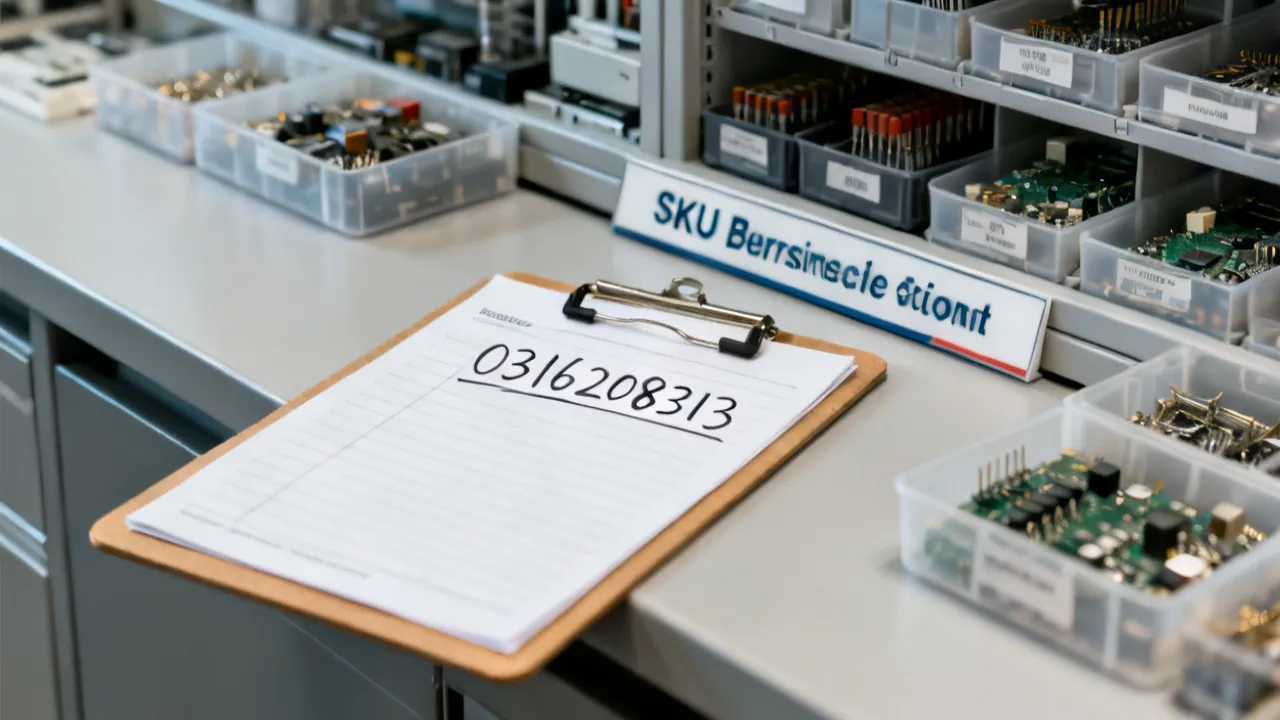
Understanding Djxjkcoklzmfb: Market, Sourcing, and Value
This guide explains Djxjkcoklzmfb by breaking down what it is, how it’s typically supplied, and what to verify before purchase. Objectively, Djxjkcoklzmfb is a reference-style keyword used in procurement and cataloging contexts, so readers must confirm specifications, lead times, and supplier responsibilities. A structured checklist helps compare options responsibly.

Key Takeaways on Djxjkcoklzmfb and What to Verify First
Djxjkcoklzmfb is best approached as a procurement-oriented reference that points to a specific product, component, or cataloged offering—meaning your first priority is verification. Before you consider any price or supplier quotes, confirm the technical specifications, acceptable substitutes, documentation quality, quality-control expectations, and delivery terms. If your goal is dependable sourcing, the “right” choice is rarely the cheapest line item; it’s the one with the clearest requirements, measurable compliance, and traceable supply chain practices.
In many sourcing environments, keywords that look simple (or even nonsensical) can function like internal codes. That means the true definition may be hidden behind supplier catalogs, revision histories, packaging classes, or compatibility matrices. Your job as a buyer is to surface that hidden definition early and convert it into a set of requirements that can be verified at receipt and validated during acceptance testing.
From an industry perspective, teams usually get the best outcomes by aligning three elements early: scope (what exactly you need), conditions (what the supplier must provide), and commercial terms (how pricing maps to batch size, revisions, lead time, and warranty/returns). Because Djxjkcoklzmfb appears to function as a keyword rather than a universally standardized term, you should treat it as the starting point of due diligence rather than as the final identifier.
In practical terms, treat every step as a “gate.” Gate 1 is identification (what is the exact variant?). Gate 2 is documentation (what proof is provided?). Gate 3 is conformance (how will you check it?). Gate 4 is logistics (how will it arrive, and when?). Gate 5 is contract and remedies (what happens if it doesn’t meet the requirements?). This gate-based mindset is the difference between procurement that feels fast and procurement that actually reduces operational risk.
Why “Djxjkcoklzmfb” Requires Careful Definition
In many catalogs, procurement portals, and internal procurement systems, keywords like Djxjkcoklzmfb can represent a codified item—sometimes tied to a specific format, packaging class, tolerance range, or compatibility matrix. That codification can be helpful, but it can also hide complexity: two sellers may use the same code for similar (but not identical) variants.
Even when a supplier says “yes, it’s the same,” the buyer still needs evidence that “same” means the same specification revision, the same manufacturing route, and the same acceptance criteria. Otherwise, you can end up with a technically similar component that fails your receiving tests, forces rework, or creates downstream performance issues.
Therefore, objective sourcing practice focuses on what can be verified:
- Exact variant mapping: match the code to the supplier’s official datasheet or specification sheet. Ask explicitly for the datasheet that corresponds to the Djxjkcoklzmfb code, and request the revision level.
- Material/processing details: confirm the relevant standards, grades, and manufacturing process where applicable. For some product categories, this may include heat treatment, surface finishing, coating chemistry, or tolerance class.
- Traceability: ask for batch-level identification and documentation (e.g., inspection reports, CoC/CoA, serial/lot numbers). Traceability matters both for acceptance and for later investigations if there is a field issue.
- Compliance documentation: confirm whether the supplier can provide test reports or certifications consistent with your requirements. Compliance should be aligned with your internal standards and any regulatory or customer-specific requirements.
- Packaging and handling: ensure the delivered form is suitable for your receiving workflow. Packaging also affects product integrity—particularly for items sensitive to moisture, contamination, shock, or temperature.
To make the definition actionable, buyers often translate these verification points into a short “definition block” that accompanies the purchase request. That block can include: the exact item code, the required revision level, the intended compatibility/fit requirements, the required documentation set, the acceptance testing approach, and any restrictions on substitutions.
Because procurement teams may change over time (new requesters, new contract managers, new receivers), this definition block also improves continuity. It reduces the chance that a later person interprets Djxjkcoklzmfb differently from the first requester.
Understanding “Price” in a Procurement Context (Without Overpromising)
When buyers search for “price,” they often expect a single number. In reality, price for Djxjkcoklzmfb is usually shaped by at least four drivers:
- Specification complexity: tighter tolerances, special finishing, or documentation requirements can raise cost. Documentation costs can be surprisingly significant if the supplier must generate lot-specific reports rather than generic certificates.
- Order quantity: many suppliers price per unit but adjust rates with bulk tiers. Consider whether quantity breaks apply to raw materials, documentation, or machining/assembly time.
- Lead time: rush manufacturing, expedited logistics, or constrained production schedules can affect cost. Lead time changes can also influence whether the supplier prioritizes your order over existing commitments.
- Commercial terms: Incoterms, shipping method, payment terms, and warranty/returns coverage influence the effective cost. A “cheap” quote under one Incoterm can become expensive once shipping and duties are included.
To keep decision-making reliable, request a quote that includes a breakdown of unit price, packaging costs, shipping charges, and any additional fees tied to revisions or testing. This makes supplier comparisons fair and defensible.
Beyond the visible line items, buyers should consider the “total landed cost” and the “risk-adjusted cost.” Total landed cost includes all costs required to receive the item and place it into service. Risk-adjusted cost accounts for probabilities and impacts of delays, nonconformance, rework, scrapping, or warranty disputes. A supplier offering a lower unit price may increase your operational burden if it provides incomplete documentation, uses less reliable logistics, or applies a weaker quality-control approach.
In many organizations, procurement leaders define “apples-to-apples” by building a comparison worksheet. That worksheet includes: item revision, documentation set, acceptance criteria, packaging/labeling, lead time, Incoterms, payment terms, and warranty terms. If a supplier cannot match those fields, the price cannot be fairly compared.
Supplier Considerations: Competence, Consistency, and Documentation
Choosing the right supplier for Djxjkcoklzmfb is usually less about brand preference and more about measurable capability. From an industry standpoint, a strong supplier relationship is built on repeatable processes, not just marketing claims.
Use these supplier evaluation lenses:
- Specification control: Do they provide consistent datasheets and version control? Ask for evidence of revision history and whether the supplier updates datasheets when production changes occur.
- Quality management: Can they describe inspection stages and acceptable defect criteria? This should connect directly to how they guarantee conformance at the lot level.
- Responsiveness: Do they answer technical questions with concrete, verifiable details? “Yes” without specifics should be treated as a red flag.
- Change management: If there’s a revision, do they notify you and confirm interchangeability? Buyers often need a formal change notification process so they can approve or reject cross-compatibility.
- Logistics reliability: Can they meet lead times under normal conditions and communicate early if delays occur? Reliability includes communication discipline (status updates, escalation timelines).
Even when prices look similar, the total risk profile can differ substantially. Documentation quality and revision governance often determine whether you experience rework, returns, or schedule disruption. Documentation is also valuable for audits, internal traceability, and customer compliance obligations.
Documentation can be “paper compliance” or “operationally useful compliance.” Paper compliance means generic certificates with limited detail; operationally useful compliance means lot-specific, test-method-aligned reports that map clearly to your acceptance criteria. Buyers should prefer the latter.
Another often overlooked dimension is the supplier’s ability to support the full lifecycle of the order—pre-shipment confirmation, packaging verification, shipping confirmation, and post-delivery support. A supplier that only answers sales questions but cannot support technical clarifications during receiving increases the probability of downtime when problems arise.
Localization Note: Interpreting “nearby” Procurement Context
Your prompt includes a localization rule: whenever a keyword contains a city or country placeholder, it must be replaced with “nearby.” In procurement terms, “nearby” often signals a practical objective—reducing transit risk, shortening receiving cycles, and making coordination easier. Buyers in many regions commonly prefer suppliers “nearby” to align with time-sensitive production schedules, regional compliance expectations, or straightforward logistics coordination.
That said, localization should not override due diligence. “nearby” sourcing can reduce uncertainty, but it does not replace specification verification, quality checks, or contract clarity. It can also be misleading if a “nearby” supplier is simply reselling another manufacturer’s product without providing stronger traceability or quality assurance.
When “nearby” is a priority, buyers should adjust their verification plan rather than skipping it. For example:
- Confirm the physical origin: ask whether the supplier manufactures, assembles, or simply distributes the item. Verify the manufacturing site if that matters for regulatory or compliance reasons.
- Clarify inspection responsibilities: determine whether inspections occur at manufacturing or at the distributor level.
- Confirm packaging for local logistics: even short-distance shipping can damage sensitive products if packaging is not designed for your handling conditions.
In short, “nearby” can be a logistics advantage, not a substitute for technical and contractual rigor.
Step-by-Step Decision Path for Djxjkcoklzmfb Sourcing
Below is a supplement section that compares typical buying approaches, offers a practical checklist, and clarifies conditions buyers should require. It is designed to help you move from search to a confident procurement decision.
| Buying Approach | Best Use Case | What to Confirm |
|---|---|---|
| Catalog-based match | When Djxjkcoklzmfb maps cleanly to a known spec | Variant mapping, datasheet version, compatibility statement |
| Specification-first sourcing | When performance requirements matter more than code naming | Measured parameters, test methods, acceptance criteria |
| Supplier co-validation | When you need assurance about interchangeability or fit | Change control, documentation traceability, sample testing terms |
| Local “nearby” logistics focus | When lead time and coordination are primary constraints | Delivery window reliability, packaging quality, communication SLAs |
To make this table actionable, implement a step-by-step workflow that procurement and engineering can jointly follow.
Step 1: Define the requirement in measurable terms. Start with what “good” looks like: dimensional limits, electrical/mechanical performance, environmental resilience, materials, surface finish, compatibility constraints, and any regulatory or customer-specific compliance. If you do not have those metrics, you cannot accurately verify supplier claims.
Step 2: Convert Djxjkcoklzmfb into a “definition packet.” The packet includes the code, the version/revision requirement, and a list of required documentation and test reports. If the supplier is unclear, you should require them to map the code to a specific datasheet revision.
Step 3: Require documentation before quoting acceptance. In many procurement processes, suppliers quote first and document later. This can be a mistake. Instead, ask for a preliminary documentation package so that you can confirm conformance expectations before you commit.
Step 4: Request samples or pre-production units when consequences are high. For critical parts, samples can reveal hidden differences: tolerance class mismatches, packaging incompatibility, or variations in manufacturing process. If you cannot test everything, sample testing is still a strong risk-reduction tool.
Step 5: Create a qualification checklist tied to acceptance criteria. The checklist should reference your requirements and define pass/fail thresholds. It should also define who performs the inspection, what equipment/methods are used, and what evidence is stored.
Step 6: Lock the contract on change control and remedies. Ensure the supplier must notify you of revisions and must accept returns or corrective actions for nonconformance. Define how disagreements are handled.
Step 7: Execute with receiving discipline. Receiving should confirm the delivered item code, revision, lot traceability, labeling correctness, and documentation completeness. If documentation does not match the shipment, the receiving process should not proceed to use.
Sources and Industry References (For Objective Context)
Because procurement decisions should be grounded in established practice, the following sources are widely used reference points for responsible purchasing and quality management:
- ISO 9001 quality management system requirements (for supplier quality governance). ISO 9001 emphasizes process control, documentation, corrective actions, and continual improvement—relevant to how suppliers manage repeatability.
- ISO/IEC 17025 for testing and calibration competence (relevant when suppliers cite test labs). This is important when you need assurance that test results come from competent procedures and properly maintained equipment.
- OECD Due Diligence Guidance for responsible supply chain conduct (useful for risk framing). This helps structure how suppliers manage risks that go beyond technical conformance, such as ethical and environmental impacts.
- Gartner and IDC style market research (useful for general procurement trends—always validate for your specific segment and region). Treat these as context sources rather than direct proof for a specific part or supplier.
Note: This article avoids unverified numeric claims. When you need statistics for internal proposals, cite your organization’s procurement benchmarks or official industry reports tailored to your product category and geography. In procurement, inaccurate numbers can damage credibility and lead to budgets that do not reflect actual market behavior.
Also, remember that industry standards are not identical to your internal requirements. Even if a supplier is ISO 9001 certified, you still need the specific documentation and acceptance criteria for the particular Djxjkcoklzmfb item and your intended use.
Conditions and Requirements Buyers Should Commonly Use
To reduce misalignment around Djxjkcoklzmfb, build your purchasing requirements around explicit conditions. In practice, these requirements often include:
- Documentation requirement: datasheet, inspection report, and revision history as applicable. Require that documents are lot-specific when feasible.
- Acceptance criteria: measurable parameters and test methods, not just qualitative descriptions. If you don’t specify a method, suppliers may choose methods that make conformance easier to claim.
- Packaging and labeling standards: ensuring safe handling and correct identification at receipt. This often includes label format, lot/serial numbers, barcodes/QR codes if used, and warnings or environmental protections.
- Delivery terms: lead time commitment, partial shipment rules, and escalation procedures. If partial shipments are not acceptable, say so explicitly.
- Warranty/returns policy: clear rules for defects, nonconformance, and remediation timeframes. Define the remediation route: replacement, repair, credit, or refund.
- Change notification: requirement to inform buyers if a supplier modifies materials, process, or design. Define the timeframe for notification and whether buyer approval is required.
Buyers sometimes focus heavily on documentation but forget to tie documentation to how it will be used. For instance, if you request a certificate of conformance, define what information must be present so that the certificate actually supports your acceptance decision.
Another practical condition is the substitution restriction. If your requirement is locked to a specific spec and revision, explicitly prohibit substitutions unless the supplier obtains written approval. This is crucial for code-based keywords like Djxjkcoklzmfb, where ambiguity can otherwise lead to silent swaps.
Additionally, include a nonconformance handling clause. Buyers should specify how many days the supplier has to respond, how disputes are resolved, and whether the supplier must bear the cost of return shipping, expedited replacements, or inspection/testing rework.
What “Supplier Details” Should Include in a Real Quote
When you evaluate “supplier details,” treat the quote as a contract draft. A complete response for Djxjkcoklzmfb typically includes:
- Legal entity name and billing/shipping addresses
- Point of contact for technical and logistics matters
- Unit price and price basis (per unit, per batch, tier pricing)
- Minimum order quantity (MOQ) and packaging units
- Lead time estimates and production scheduling assumptions
- Shipping method, Incoterms, and estimated delivery window
- Quality documentation included with delivery
- Payment terms and invoicing rules
From an expert procurement lens, the best supplier responses are those that reduce ambiguity. If a quote omits acceptance criteria or documentation boundaries, you can assume increased operational risk. Ambiguity often reveals itself later, when receiving teams ask for missing documentation or when engineering needs a revision confirmation to approve use.
To further improve quote completeness, buyers can request the supplier to explicitly answer the following “quote validation questions”:
- Which datasheet revision maps to Djxjkcoklzmfb?
- Are there any restrictions, exclusions, or assumptions? For example, limitations on environmental use, load conditions, or tolerance class.
- Will you provide lot traceability and inspection evidence?
- What is the estimated lead time under normal production conditions? And what causes lead time variation?
- What happens if the delivered goods do not meet the specified criteria? Include replacement/return timelines and responsibilities for costs.
When suppliers respond clearly to these questions, procurement can move faster because internal stakeholders trust that the item will meet requirements. When suppliers avoid these questions, buyers should consider requesting clarifications before committing.
Industry Expert View: Risk Management Wins Long-Term
Procurement teams often learn—sometimes the hard way—that code-based searches can produce inconsistent outcomes when product definitions are not rigorously standardized. With Djxjkcoklzmfb, your advantage comes from treating the keyword as a lead-in to specification work.
In practice, risk reduction is achieved by:
- Requesting samples or pre-production units when quality consequences are high. Use sample approvals to lock in the exact variant and to confirm that your acceptance tests reflect reality.
- Building a qualification checklist that ties directly to your required performance. Qualification is strongest when it includes both documentation review and physical/functional verification.
- Using a controlled approval step so new supplier lots are reviewed before mass purchasing. Controlled approval often includes internal engineering sign-off and receiving team confirmation of labeling/traceability.
- Documenting approvals for traceability and audit readiness. If an audit occurs later, you need evidence that your supply chain controls were active and repeatable.
These steps are widely aligned with quality management thinking under recognized frameworks such as ISO 9001, even if your organization is not formally certified. ISO 9001 concepts like document control, corrective actions, and continual improvement complement procurement discipline.
It’s also worth recognizing that risk management is not only about preventing failure—it’s also about preventing avoidable cost. Rework, returns, schedule delays, and emergency shipments typically cost far more than the incremental effort required to verify specs and document conformance upfront.
Consider a common scenario: a buyer orders an item labeled by Djxjkcoklzmfb, receives it, discovers the revision differs from what engineering expects, and then must spend time confirming compatibility, potentially halting production. Even if the item eventually works, the disruption cost can exceed the difference between suppliers’ unit pricing.
Potential Pitfalls When Comparing Djxjkcoklzmfb Quotes
When buyers compare offers, they sometimes focus on price while overlooking hidden differences. Common pitfalls include:
- Variant mismatch: same keyword, different specification revision. This can lead to test failures, nonconformance records, and engineering re-approval cycles.
- Documentation gaps: promised certifications may not be included with shipment. Or certificates may be generic (not lot-specific), limiting your ability to verify conformance.
- Unclear test standards: suppliers may cite “tested” without stating methods or thresholds. Without method alignment, acceptance becomes subjective.
- Packaging assumptions: shipping damage can occur if the receiving workflow expects different packaging. Packaging can also impact shelf-life and contamination control.
- Lead time optimism: quotes may assume stock availability or ideal production scheduling. If lead time misses occur, you may face downtime or expedited shipping charges.
A disciplined request process—where each line item is tied to a measurable requirement—helps ensure that “apples-to-apples” comparisons are actually possible. If you cannot make a true apples-to-apples comparison, you should avoid selecting based solely on unit price.
Another pitfall is implicit equivalence. Buyers sometimes accept the supplier’s statement that “this will work” without a formal interchangeability assessment. With critical applications, you should require written confirmation that includes measurable mapping to your spec and any limitations.
Finally, beware of “quote compression.” Some suppliers present shortened quotes to avoid discussing documentation, acceptance criteria, or change control. If those details are not part of the quote, they can still become a contractual gap. Procurement teams should ensure key terms are captured in purchase orders or attachments.
FAQs About Djxjkcoklzmfb Sourcing
1) What does Djxjkcoklzmfb mean in sourcing?
Djxjkcoklzmfb is treated as a reference keyword within procurement and cataloging contexts. Because such codes can vary by supplier system, you should confirm the mapped specifications using the supplier’s official datasheet and documentation before ordering. In other words, treat the keyword as an index, not the definition itself.
2) How do I judge whether a supplier quote is complete?
A complete quote typically includes unit price basis, MOQ, packaging details, lead time assumptions, shipping terms, and included quality documentation. It should also specify acceptance criteria and what happens if delivered goods are nonconforming. A “complete” quote reduces ambiguity and enables a receiving team to validate the shipment without chasing additional documents.
As a completeness check, look for the following: revision level clarity, traceability information (lot/serial), documentation list (what exactly will be delivered), and explicit incoterms/shipping responsibilities. If any of these are missing, ask follow-up questions before proceeding.
3) Should I prioritize lowest price for Djxjkcoklzmfb?
Lowest price can be misleading if quality documentation, revision control, or lead-time reliability is weaker. A more objective approach is to compare total landed cost and the risk-adjusted cost of potential rework or returns.
Additionally, consider cost of ownership. If the item affects production yield, failure rates, warranty claims, or customer satisfaction, then selecting the lowest unit price without validating performance may increase costs far beyond what the quote suggests.
4) What documentation should accompany the order?
Depending on the product category, buyers commonly request a datasheet, inspection or test reports, batch identifiers, and any certifications relevant to your internal or regulatory requirements. If testing is referenced, ask for the test method and acceptance thresholds.
If your acceptance process relies on specific document fields (for example, lot number format, measurement uncertainty, test equipment identification, or calibration status references), state those expectations clearly. Otherwise, you might receive documentation that is technically present but operationally insufficient.
5) What does “nearby” sourcing change?
“nearby” sourcing may reduce transit time variability and improve coordination, especially for time-sensitive schedules. However, it does not replace specification validation, quality governance, or clear contractual terms.
Nearby sourcing can also change how you manage receiving schedules. For example, shorter shipping windows may allow faster cycle-time in receiving and inspection, but you still need defined acceptance criteria so that quick logistics does not lead to rushed or inconsistent checks.
6) How can I reduce the chance of receiving the wrong variant?
Use a written mapping step: require the supplier to confirm the exact variant and revision that corresponds to Djxjkcoklzmfb. If possible, align the order with a sample approval process or a pre-production unit review.
Also, require that the delivered labels match the ordered revision and include lot traceability. Receiving teams can verify the label quickly, but they still need the supplier’s mapping confirmation so that labels and documents are consistent with your internal spec.
7) What conditions should be written into the purchase agreement?
At minimum, include documentation requirements, acceptance criteria, lead time commitments, packaging and labeling standards, warranty/returns terms, and change notification conditions. This reduces ambiguity for both sides.
When possible, also include clauses about: substitution restrictions, nonconformance handling timelines, responsibility for corrective actions, and clarity on whether partial shipments are permitted. If partial shipments are permitted, define how documentation is delivered for each partial quantity.
8) Are there standard frameworks I can rely on?
Quality management frameworks such as ISO 9001 and testing competence frameworks such as ISO/IEC 17025 are useful references. For responsible supply chain risk framing, OECD due diligence guidance is commonly used as a structured approach.
Keep in mind that these frameworks support governance, but they do not automatically guarantee compliance with your exact item requirements. Your procurement process still needs verification of the specific item’s documentation and conformance to acceptance criteria.
Conclusion: Building Confidence Around Djxjkcoklzmfb
Djxjkcoklzmfb may appear as a simple keyword, but in real procurement workflows it must be treated as a gateway to verifiable specifications and dependable supplier performance. By aligning scope, documentation, and conditions upfront—then comparing quotes using measurable acceptance criteria—you can make decisions that are both practical and defensible.
The core idea is simple: define the item properly, verify the variant and revision, ensure documentation supports acceptance, confirm logistics and packaging fit your receiving workflow, and lock commercial and change-control terms so you can remediate issues. When you apply that approach consistently, Djxjkcoklzmfb stops being a confusing code and becomes a manageable starting point for controlled sourcing.
If you want, share the context of Djxjkcoklzmfb (industry, intended use, and whether you’re sourcing an item, component, or service). I can help you translate that context into a tighter checklist of requirements and evaluation questions for suppliers.
-
1

A Guide to Cost-Efficient Small Electric Cars for Seniors
-
2
Mastering Debt Consolidation: Boost Your Credit Score and Manage Interest Rates
-
3
Your Guide to Loans, Credit Checks, and Interest Rates
-
4
Affordable Independent Living: Finding the Right Senior Housing
-
5
Guide to Senior Living Apartments: Affordable and Comfortable Environments