
Understanding 2307m: Key Insights and Industry Considerations
This guide explains how 2307m influences planning, measurement, compliance, and sourcing decisions across technical projects. It provides objective background on what 2307m typically represents in measurement contexts, why precision matters, and how suppliers and location-adjacent constraints can affect timelines and costs. Readers will find a comparison table, a step-by-step checklist, conditions, and FAQs for practical decision-making.
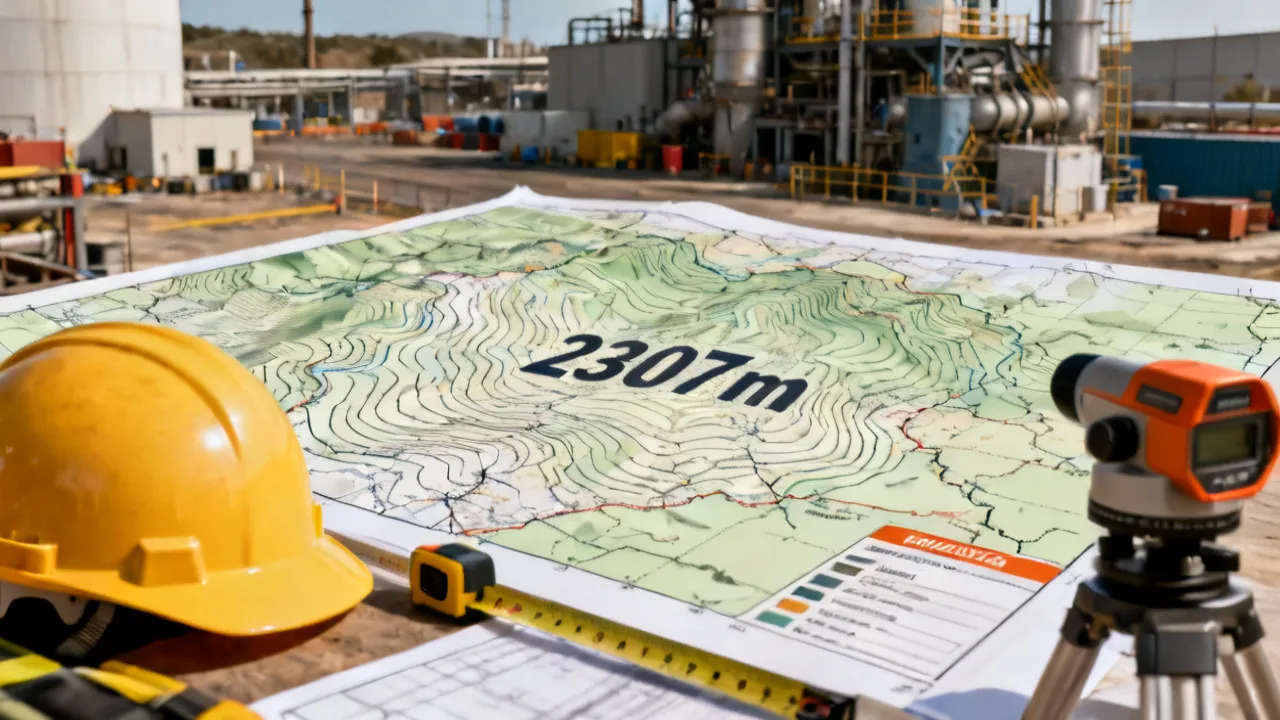
Priority overview: what “2307m” affects in technical planning
When your project references 2307m, the number usually signals a measurable parameter—most commonly an elevation or a technical benchmark—that directly shapes engineering assumptions, fieldwork methods, risk controls, and procurement requirements. In practice, teams use 2307m to determine how equipment is handled, how standards are applied, and how timelines are sized for safe, verifiable outcomes. Even when the term appears briefly in documentation, it often becomes a “hinge value” that drives subsequent decisions.
Because 2307m is numeric, it has a habit of migrating through project artifacts: it shows up in drawings, tender documents, acceptance criteria, commissioning procedures, and sometimes even in troubleshooting guides. Once the value takes on that role, project managers and engineers typically treat it less like a “piece of trivia” and more like a reference condition. If the reference is wrong—or if it is correct but not measured and documented with adequate traceability—the downstream effects can be significant: field teams may use the wrong alignment logic, QA may test against the wrong baseline, and suppliers may deliver equipment calibrated for a different condition than what the project assumes.
It’s also worth noting that technical stakeholders rarely interpret a benchmark purely in isolation. Instead, they interpret it through the context of surrounding definitions: the coordinate system, the datum, the unit conventions, and the tolerance philosophy. In this sense, 2307m is often the visible tip of a deeper definitional structure. That structure is what truly determines project execution quality.
Objective background on the keywords and why they matter
The provided keywords include 2307m and placeholders that, in many real-world documents, correspond to product lines, supplier references, or location-adjacent descriptors. Because the prompt does not specify additional keyword text, this article focuses on the most concrete technical element: 2307m. In measurement and infrastructure contexts, numeric references like 2307m are used to:
- Anchor design assumptions (e.g., environmental conditions tied to height/elevation, line-of-sight, or altitude-related operational considerations).
- Standardize reporting so that contractor deliverables remain auditable and comparable.
- Reduce uncertainty during site surveys and installation planning, especially when field measurements must be reconciled with documentation.
- Inform supplier suitability, since some suppliers specialize in gear calibrated or specified for particular operating bands.
From an industry perspective, precision around a benchmark like 2307m is not “cosmetic.” It affects how measurement records are interpreted, how tolerances are set, and how quality assurance is conducted. When a project is audited (internally or externally), the auditor typically asks: “Show me where the assumptions came from. Show me who measured it. Show me what standard was used. Show me that the value used for design is the value verified at site or, if not, show me how deviations were handled.” The benchmark value becomes the thread that ties those questions together.
Moreover, the presence of a single numeric benchmark often signals a broader design philosophy: either the design is sensitive to small deviations (in which case verification must be rigorous), or the design is insensitive but still requires documentation integrity (in which case streamline approaches may be acceptable). Either way, the number matters because it tells the team how to prioritize verification effort.
Expert analysis: how 2307m influences engineering execution
To treat 2307m responsibly in a technical project, it helps to think of it as part of a chain of traceability. The number itself is only the start; what matters is how it is measured, validated, and used. Industry teams typically evaluate four linked areas:
1) Measurement methodology and traceability
Field teams need a clear plan for how the value tied to 2307m is obtained. If the number is elevation-related, it may come from survey instrumentation, mapping datasets, or engineered control points. What matters is whether the process provides:
- Instrument calibration records and maintenance status.
- Defined datum and reference system (so that 2307m is not compared to values in a mismatched coordinate framework).
- Repeatability checks (to confirm the number is stable enough for its intended purpose).
- Measurement uncertainty statements (so acceptance decisions can consider plausible error bounds rather than treating the benchmark as exact).
For a typical engineering workflow, the project specification might state 2307m as a benchmark reference (e.g., “Level of X at 2307m”). In that scenario, the team must decide: is 2307m intended as a design target, a measured condition, or a reference coordinate used for computations? Those interpretations drive what evidence must be generated. For example, if it is a design target, the evidence might focus on the engineering control points and alignment logic. If it is a measured condition, the evidence may focus on survey methodology, calibration, and independent verification. If it is a reference coordinate, the evidence might focus more heavily on datums, transformations, and coordinate conversion procedures.
Another practical point: even in projects where the benchmark is already known from a previous survey, engineers frequently re-check it under the same datum framework used by the current construction campaign. The reason is straightforward: sites change, access paths alter, control points can be disturbed, and intermediate processing (like coordinate transformation) can introduce subtle issues. Thus, a mature approach treats 2307m verification as a “controlled reuse” rather than a blind copy of prior datasets.
2) Environmental and operational constraints
Even when 2307m appears simply as a figure in a spec, it can imply operational differences that influence work planning. For example, elevated sites can alter equipment handling requirements, scheduling, and safety procedures. While the specifics depend on project domain, the professional principle remains: a numeric benchmark must be translated into operational controls.
To make this translation real, teams typically connect the benchmark to concrete constraints. Depending on your domain, that could mean:
- Safety controls: adjusting fall protection planning, visibility planning, thermal stress management, or weather contingency triggers.
- Equipment deployment logic: ensuring that materials handling, crane operations, or rigging plans account for site gradients and elevation-related access conditions.
- Commissioning sequencing: scheduling calibration windows or commissioning steps based on site conditions that correlate with elevation.
- Operational performance assumptions: if the benchmark is linked to altitude or environmental variables, the performance tests may require conditions consistent with that benchmark.
Even if 2307m is not directly tied to “weather” in your project, it can still matter indirectly. For instance, a higher elevation might mean fewer transportation options (roads might be steeper or seasonal), which changes logistics. It can also affect how quickly teams can mobilize specialized equipment and how long they can keep personnel on site before fatigue or safety constraints require breaks. Thus, the benchmark can influence the schedule, not just the engineering calculations.
3) Quality assurance and acceptance criteria
In a disciplined workflow, the team converts 2307m into acceptance criteria and verification steps. This could involve control-point checks, sensor calibration gates, and documented sign-off. Without this, the value becomes a static label rather than a verified engineering input.
Quality assurance often hinges on the difference between “verification of measurement” and “verification of outcome.” Measurement verification ensures the value associated with 2307m is accurate enough and is supported by traceable documentation. Outcome verification ensures that the engineered system behaves according to what the benchmark implies. Both may be needed. For instance, a team might verify that a sensor installation is located at the intended reference level (measurement verification) and also confirm that the sensor output matches expectations under test (outcome verification).
Acceptance criteria also help manage responsibility boundaries. If an acceptance criterion is tied explicitly to 2307m assumptions, then contractors and suppliers know what they must prove. If that tie is vague (“work must meet spec”), then evidence capture becomes inconsistent and disputes become more likely. The benchmark becomes a negotiation point rather than a common reference.
4) Supplier capability alignment
Supplier selection is often tied to whether vendors can meet the measurement and delivery expectations implied by a benchmark such as 2307m. An expert procurement lens asks: can the supplier provide documentation, test reports, and installation guidance that align with the conditions suggested by the benchmark?
Supplier capability alignment is not only about whether the supplier can “deliver a product.” It is about whether the supplier can deliver a product with the right evidentiary support. For example, suppliers can generally provide:
- Calibration and test certificates for relevant sensors or instrumentation.
- Manufacturing and QA documentation that shows conformance to the specified operating conditions.
- Installation procedures that reflect the actual site reference logic (including datum alignment and reference offsets if applicable).
- Commissioning recommendations that include acceptance testing steps.
If 2307m affects operating conditions, suppliers may need to configure equipment accordingly. Even when suppliers do not directly “tune” equipment for an elevation, they might need to confirm that their calibration assumptions cover the environment implied by 2307m. That confirmation can take the form of documentation, engineering statements, or test procedures. The best procurement scopes do not assume that suppliers will infer the role of 2307m correctly; they specify it.
Industry context: dependable sourcing decisions and documentation
Procurement mistakes frequently arise when teams treat numbers as “universal.” For a benchmark like 2307m, vendors may interpret operating constraints differently unless the scope is explicit. A professional approach focuses on:
- Clear scope statements: what the value represents, where it applies, and what it must achieve in the work.
- Deliverable definition: what records will be provided (e.g., calibration certificates, survey reports, inspection checklists).
- Responsibility boundaries: what the supplier does versus what the commissioning team verifies.
- Audit readiness: ensuring the evidence trail is sufficient for compliance or internal quality audits.
To make this more actionable, teams often include a “benchmark evidence map” inside their procurement planning: a table that links each benchmark-related requirement (including 2307m) to a deliverable type and an acceptance activity. For example, if 2307m is used as a reference in a measurement system, the evidence map might specify that the supplier provides calibration certificates traceable to a recognized standard, and the commissioning team provides a verification test against site reference conditions. Without such mapping, the project can end up with missing documentation—especially documentation that matters later during audits, warranty claims, or maintenance planning.
Documentation also needs to be controlled. If different project documents contain conflicting definitions of the benchmark (for example, one says “2307m above datum A” while another says “2307m above datum B”), the team can inadvertently create a compliance risk. That risk is not always obvious at the design stage. It often becomes obvious during construction when field verification does not match expected values.
Price and supplier considerations (without speculative numbers)
The request mentions “price information” and “supplier details,” but no concrete values, currency, or vendor names were provided. To keep this article objective and avoid unverified or exaggerated claims, this section explains how pricing typically forms when a benchmark like 2307m is relevant, rather than quoting a specific price.
In many technical procurement contexts, cost implications linked to a benchmark such as 2307m may include:
- Survey and validation effort (additional field verification, control-point work, or documentation time).
- Logistics and scheduling (mobilization planning tied to site accessibility and operational windows).
- Compliance and QA activities (extra inspection gates or acceptance testing aligned with the benchmark).
- Specialized equipment needs if conditions demand it (again, dependent on domain and specifications).
It is useful to think of benchmark-related costs as falling into categories:
- Upfront documentation costs: creating or validating the benchmark evidence package. For elevation benchmarks, this can include re-survey work or dataset validation steps.
- Execution costs: additional work needed in installation or commissioning due to benchmark-linked assumptions. This might include extra calibration steps or additional test rounds.
- Risk management costs: costs related to schedule buffers, contingency planning, and acceptance sign-off cycle expansions.
- Long-term lifecycle costs: if the benchmark is wrong, the lifecycle cost can rise dramatically due to maintenance interventions, rework, or warranty disputes.
For readers assessing real offers, the recommended practice is to compare suppliers on documented capability and evidence readiness—not just on headline cost. A lower bid can become expensive if it lacks benchmark-related documentation or if it requires repeated verification cycles. Conversely, a higher bid might be cost-effective if it reduces risk and shortens the acceptance process.
One practical procurement step is to define “documentation acceptance criteria” parallel to “technical acceptance criteria.” Documentation acceptance might specify that the supplier must provide a calibration certificate that references the relevant measurement method and includes uncertainty where applicable. This reduces ambiguity and helps procurement teams evaluate cost fairly: they can compare bids on whether the scope includes benchmark-related evidence rather than assuming that evidence will be generated later.
Location-adjacent planning: translating “nearby” into practical scope
The prompt instructs that any appearance of a city or country within keywords be replaced with “nearby.” In practical terms, “nearby” usually indicates that a site is within a regional logistical radius, which can change how teams plan mobilization, subcontracting, and inspection attendance. When “nearby” is part of your scope, professional teams typically clarify:
- Travel time assumptions and whether mobilization differs from standard rates.
- Local permitting workflow (especially where site access or equipment usage may require approvals).
- Inspection availability for commissioning or final acceptance steps.
This matters even more when 2307m is tied to operational conditions requiring disciplined scheduling and documented verification. If site work cannot be delayed due to safety conditions or seasonal limitations, “nearby” can influence whether a specialized inspector, survey crew, or commissioning engineer can be present when evidence is required. In other words, logistics is not just “where people go”—it is “when evidence can be captured.”
To prevent confusion, mature projects often define “nearby” operationally rather than linguistically. For example, instead of only saying “nearby,” the procurement documents might specify:
- Expected travel time range (e.g., within a certain number of hours from a base) for initial mobilization.
- How quickly a supplier can provide documentation support or remote engineering assistance.
- Whether travel costs are included or treated as pass-through charges.
- Whether replacement personnel can arrive within a defined time window if the original team is delayed.
This is closely tied to benchmark verification. If 2307m is used in acceptance tests, the timing of those tests is critical. If “nearby” is too vague, a supplier might interpret it differently and commit to a schedule that is unrealistic for field verification needs.
Step-by-step guide and conditions/requirements (comparison table + checklist)
Below is a structured supplement to help teams turn 2307m into actionable project requirements. This section is intentionally practical and decision-focused.
| Decision area | Option A (conservative verification) | Option B (streamlined execution) | When it’s appropriate |
|---|---|---|---|
| Benchmark handling (2307m) | Confirm measurement method and datum; record traceability; verify repeatability | Use existing dataset with documented provenance; verify with limited spot checks | Choose A if audits/acceptance are strict; choose B if tolerances are forgiving and documentation is robust |
| Supplier documentation | Require calibration certificates, installation guidance, and acceptance checklists linked to the benchmark context | Require core certificates only; rely on commissioning tests for final confirmation | Choose A for regulated or high-scrutiny environments; choose B for mature, well-tested workflows |
| Schedule risk control | Build buffer for verification and QA sign-off cycles | Schedule tightly but define contingency triggers | Choose A if field conditions are uncertain; choose B if site access and weather windows are predictable |
| Acceptance criteria | Define numeric and procedural acceptance linked explicitly to 2307m assumptions | Define acceptance mostly through test results and final performance metrics | Choose A when measurement validity is central; choose B when end performance is the primary risk driver |
Step-by-step guide
- Clarify what 2307m represents in your document set (elevation, reference level, benchmark, or engineered parameter). This step should produce a one-paragraph definition that all disciplines can agree on: what it is, what unit it uses, and what it is used for.
- Identify the datum and reference system used to define the benchmark so the measurement aligns across disciplines. Include datum origin, transformation steps (if any), and whether the value is orthometric, ellipsoidal, or defined relative to a specific control network.
- Select a verification approach (repeat measurements, control-point checks, or dataset provenance review) based on audit needs. Decide in advance who performs the verification and who reviews it for acceptance.
- Write requirements into the procurement scope, including deliverables and documentation tied to benchmark-related constraints. Use “shall” language for evidence deliverables rather than informal expectations.
- Define acceptance criteria early so contractors and suppliers understand what “compliance” means in measurable terms. Where relevant, define both numeric thresholds and procedural requirements (e.g., method statements must be submitted before field verification).
- Run a pre-implementation QA review to ensure test plans reference the benchmark assumptions associated with 2307m. QA review should also check that roles and responsibilities are unambiguous.
- Execute commissioning with evidence capture (records, photos, logs, calibration data, and sign-off sheets as applicable). Ensure that evidence capture references the benchmark context, not just the installation date.
- Close the loop through documentation control so the benchmark context is preserved for future audits or maintenance planning. Confirm that final documents reflect the verified condition or formally recorded deviations.
Conditions and requirements to include in your project workflow
- Documentation completeness: calibration, datum/reference system, measurement method, and acceptance records. Completeness should be evaluated as a checklist, not assumed.
- Traceability: link each verification step to how it supports the role of 2307m in your design or compliance logic. Traceability is often missing when documents list “what was done” but not “why it matters.”
- Competency: ensure personnel conducting benchmark verification are qualified for the method and standards used. Include evidence of training/authorization where your organization requires it.
- Communication cadence: agree on review points between engineering, field teams, and suppliers. For benchmark-related work, define when engineering must approve field results before they are used in subsequent installation steps.
- Change control: if benchmark assumptions tied to 2307m must be revised, require formal approval and re-validation. Define triggers: e.g., if field verification deviates beyond a tolerance range, what happens next?
- Handling of discrepancies: define a nonconformance workflow for cases where measured values differ from expected values. Include decision steps such as “hold point,” “engineering review,” “risk assessment,” and “resolution documentation.”
- Version control for benchmark definitions: ensure that the definition of 2307m in contracts, drawings, and test procedures remains consistent. If multiple versions exist, specify the controlling version.
Reliability and sources: how to justify claims without speculation
Because 2307m is a numeric benchmark, many project teams want credible support for how measurement and QA practices should be handled. For measurement-related quality systems, globally recognized frameworks include standards for quality management systems (e.g., ISO 9001) and measurement traceability concepts developed in metrology communities. For safety and instrumentation governance, project organizations often align with established quality and documentation practices referenced by accredited bodies. Where possible, teams should consult relevant standards applicable to their sector and jurisdiction and ensure documentation matches the required regulatory or contractual scope.
Note: Specific statistical performance claims are avoided here because no verified industry dataset was provided in the prompt. For engineering documentation and QA, the safest practice is to cite the relevant standard set for your domain and location-adjacent regulatory environment.
In practical terms, the “reliability” question often includes two separate considerations:
- Reliability of measurement: whether the process can produce an acceptably accurate and repeatable result. This is where measurement uncertainty, calibration status, datum consistency, and method suitability come into play.
- Reliability of documentation: whether the evidence is complete, consistent, and traceable to accountable responsibilities. Even a correct measurement can fail acceptance if the documentation does not allow verification by auditors or independent reviewers.
If your project needs to justify 2307m-related assumptions to stakeholders, the best practice is to build a documentation package that answers three questions:
- What is 2307m? Define it clearly in the context of your project artifacts.
- How was it determined? Provide method statements, calibration records, datum references, and provenance of any datasets used.
- How does it affect acceptance? Show how the benchmark enters your acceptance criteria and test plan, including contingency steps if results deviate.
By answering these questions, you reduce reliance on assumptions and reduce room for disputes. This is particularly important when the benchmark influences supplier configuration, scheduling, or commissioning planning.
Common use cases for a benchmark like 2307m
While the prompt does not specify the domain (construction, surveying, industrial operations, or environmental monitoring), benchmark values like 2307m commonly appear in these categories:
- Topographic or geospatial control: establishing reference points for mapping, alignment, and design verification. In this use case, 2307m might represent a control elevation used to orient drawings and to validate that constructed features match design intent.
- Infrastructure engineering: translating height/elevation-related assumptions into operational constraints and installation planning. Here, 2307m may influence how systems are installed, tested, or operated under site-specific constraints.
- Equipment or system specification: ensuring sensors, instruments, or operational settings match the benchmark-defined conditions. Even when suppliers do not explicitly set “altitude parameters,” test procedures may rely on benchmark-linked assumptions.
- Quality assurance planning: tying acceptance gates to a documented reference baseline. For QA, 2307m acts as a reference for what constitutes a pass or a fail in measurement verification and outcome testing.
To further expand, consider how a benchmark can be used across project phases:
- Design phase: 2307m is used as an input to model geometry, line-of-sight, drainage assumptions, or elevation-dependent performance assumptions.
- Procurement phase: 2307m influences the documentation and configuration requirements for suppliers and subcontractors, including calibration and installation instructions.
- Construction phase: field teams verify the reference level and adjust installation tolerances based on the actual measured condition if deviations occur within defined limits.
- Commissioning phase: acceptance tests use the benchmark to define test conditions, sensor setup, and verification logic.
- Operations and maintenance phase: recorded benchmark context supports future maintenance and troubleshooting by preserving the “as-built” reference definitions.
This lifecycle perspective reinforces why teams must treat 2307m as more than a number. It becomes a “reference story” of what the system was built and tested against. When that story is consistent, future work is easier. When it is inconsistent, future work is expensive.
FAQs
Q1: What does 2307m usually mean in project documentation?
In most technical contexts, 2307m represents a measurable benchmark—commonly elevation or a reference level—used to anchor design assumptions, verification steps, or compliance logic. The precise meaning depends on how your document set defines it.
Q2: Why can a number like 2307m change supplier decisions?
Because suppliers are typically evaluated on their ability to deliver equipment and services that meet the benchmark-related conditions. If the benchmark implies particular operating requirements or documentation expectations, vendors may need evidence (calibration, test reports, or installation guidance) tailored to that context.
Q3: How should I verify 2307m without overcomplicating the schedule?
Use a verification approach proportional to risk: define whether repeatability, datum alignment, or spot checks are sufficient for acceptance. A conservative method increases documentation strength, while a streamlined method may be appropriate if provenance and tolerances are well understood. The key is to decide this before mobilization so field work is not improvised midstream.
Q4: What documentation should be requested from suppliers when 2307m is involved?
Request deliverables that connect the benchmark context to measurable outcomes, such as calibration records, measurement method statements, installation/commissioning checklists, and acceptance evidence aligned to the benchmark’s role in your specification. Also request clarity on the datum/reference logic if the supplier’s installation instructions assume a specific reference system.
Q5: Does “nearby” affect project execution around a benchmark like 2307m?
Often, yes. “Nearby” typically influences logistics—travel time, mobilization planning, and the practicality of inspections. If the benchmark implies conditions that demand tight scheduling, these logistical assumptions become even more important. The most common pitfall is vague wording that does not translate into a commitment for inspection availability when evidence is required.
Q6: Are there standard requirements I can reference for measurement and QA?
Many organizations align their documentation control and measurement traceability practices with internationally recognized quality and metrology frameworks. The best choice is the standard set relevant to your industry, contract, and jurisdiction. When you select standards, ensure the contract references them appropriately and that your QA plan translates the standards into concrete deliverables and acceptance steps.
Q7: What happens if the measured value at site does not match 2307m exactly?
In a well-controlled project, this should not automatically trigger failure; it should trigger a defined decision workflow. Typically, the team evaluates the discrepancy against a tolerance philosophy and measurement uncertainty. If the deviation is within allowable limits, installation or acceptance may proceed using the verified condition. If deviation exceeds allowable limits, the project may require engineering review, additional verification measurements, or corrective actions. The important part is that the response is documented and traceable.
Q8: Can 2307m be used to compare results across multiple contractors or phases?
Yes, but only if the benchmark definition remains consistent and controlled across documents. This includes consistent datum/reference system definitions, consistent unit usage, and consistent evidence capture requirements. If each contractor uses the benchmark differently (or uses different reference frameworks), comparisons become unreliable and disputes may arise. A controlled definition and a version-controlled benchmark statement help avoid this.
Q9: How do I build acceptance tests that genuinely depend on 2307m?
Acceptance tests should specify how 2307m enters the procedure—either as a test condition, a reference baseline for measurement setup, or a benchmark for verifying placement or alignment. The test procedure should list required evidence (calibration records, method statements, checklists) and define the pass/fail logic explicitly. If 2307m is only mentioned in narrative text but not operationally referenced in test steps, then the benchmark may not actually control acceptance as intended.
Conclusion: using 2307m as an engineering input, not a static label
Handled well, 2307m becomes a reliable anchor for measurement credibility, field planning, acceptance criteria, and supplier alignment. The key is discipline: clarify meaning, verify traceability, embed benchmark-linked requirements into procurement, and maintain audit-ready documentation. By approaching 2307m through structured verification and clearly defined conditions, technical teams reduce uncertainty and support decisions that stand up to scrutiny.
When projects treat benchmarks like 2307m as a “living reference story,” they improve execution quality across the entire lifecycle—from design inputs to commissioning evidence to long-term maintenance. This disciplined approach is what turns a benchmark from a number on paper into a controlled engineering reality.
-
1

A Guide to Cost-Efficient Small Electric Cars for Seniors
-
2
Mastering Debt Consolidation: Boost Your Credit Score and Manage Interest Rates
-
3
Your Guide to Loans, Credit Checks, and Interest Rates
-
4
Affordable Independent Living: Finding the Right Senior Housing
-
5
Guide to Senior Living Apartments: Affordable and Comfortable Environments