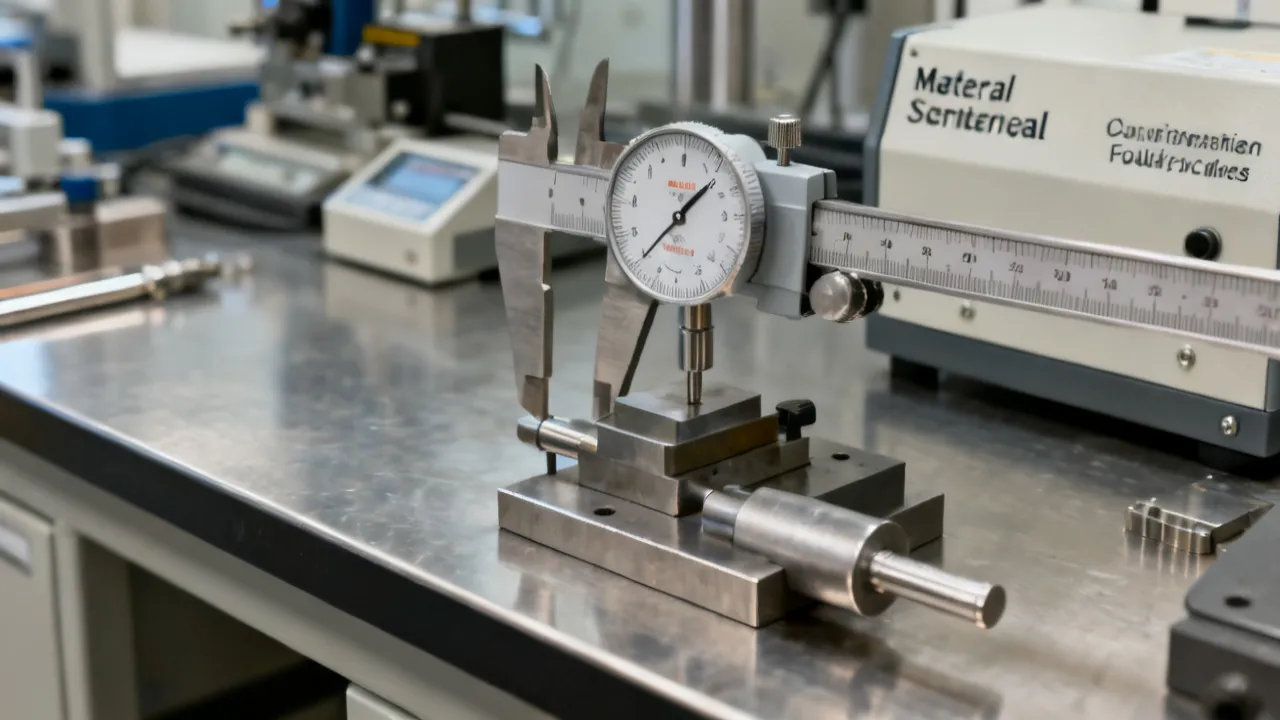
Understanding 2307m: Technical Overview and Procurement Criteria
This guide explains what 2307m typically refers to in technical procurement contexts, how suppliers document specifications, and what buyers should verify before purchase. Background sections clarify how altitude-like and measurement-style identifiers affect design, calibration, and compliance. The article then provides criteria, comparison-style conditions, and practical FAQs to support objective decisions.
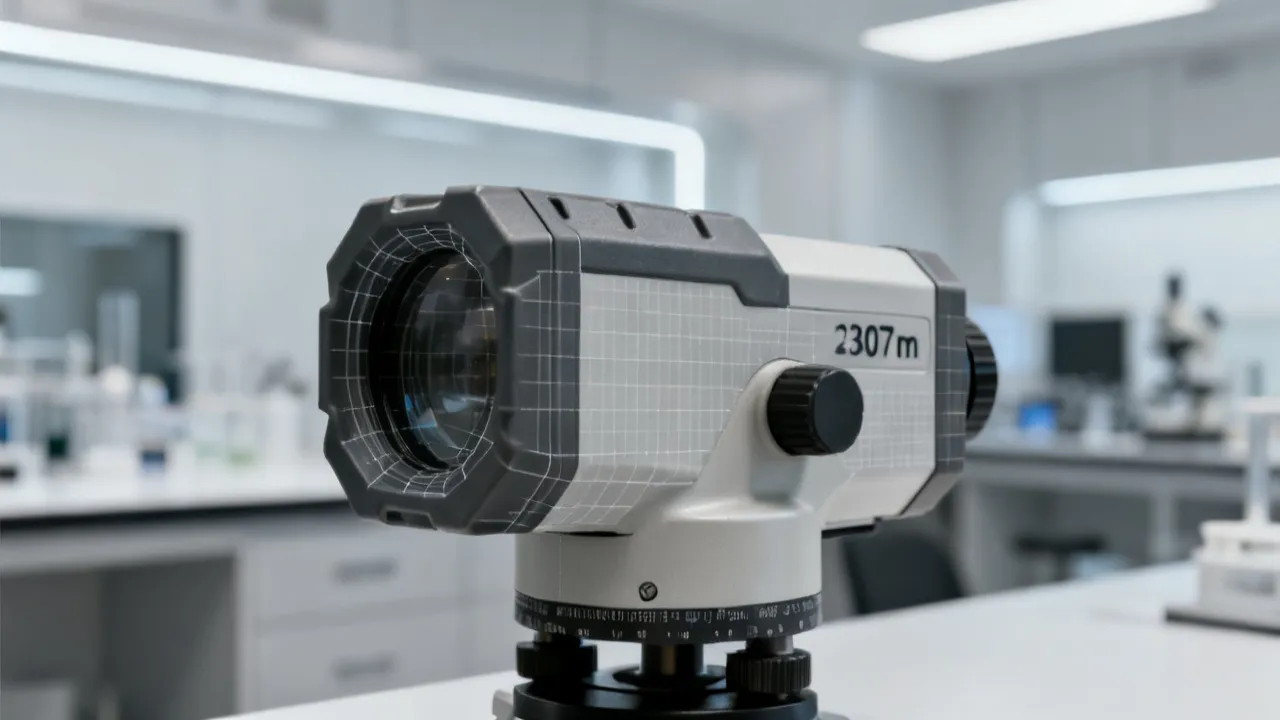
1) What to verify first when evaluating “2307m”
When buyers encounter the identifier “2307m,” the most important early step is to confirm what it means in the specific product context—often a measurement-related reference (commonly altitude-like or parameterized performance framing) that can influence design limits, calibration requirements, and documentation. Because “2307m” may function as a specification tag rather than a universal standard, you should request the supplier’s technical file (datasheet, specification sheet, test report excerpts, and intended measurement conditions) before comparing prices or lead times.
From an industry perspective, procurement mistakes usually happen when teams treat the label “2307m” as self-explanatory. In reality, whether “2307m” relates to an environmental operating range, a calibration reference, a performance target, or a deployment height requires direct confirmation from the supplier and alignment with your own project constraints. A common failure mode is that internal stakeholders assume the value represents a regulatory or universally accepted condition. In practice, many manufacturers embed “reference conditions” inside their product documentation so that performance numbers become meaningful and repeatable. If you do not confirm the reference basis, you may end up purchasing hardware that cannot be accepted under your site’s actual environment, even though the marketing claims appear strong.
To avoid that, you should treat “2307m” as a variable that requires interpretation and mapping. The buyer’s goal is not simply to “verify the number exists,” but to verify the definition, the test method or calibration method behind it, and the boundary conditions under which the claims remain valid. The best procurement teams ask the simplest clarifying question first: “In your documentation, what definition do you attach to ‘2307m,’ and what does it affect?” That question often triggers the supplier to provide the key missing information, such as test matrices, environmental correction factors, configuration options, or measurement uncertainty statements.
It is also wise to confirm whether “2307m” is part of:
- A performance envelope (e.g., “guaranteed performance at and around 2307m”).
- A calibration reference condition (e.g., “calibrated with reference condition corresponding to 2307m”).
- A mechanical or environmental constraint (e.g., “designed for deployment up to 2307m above mean sea level”).
- A documentation label for a configuration profile (e.g., “Profile 2307m” used in a controller or data logging mode).
- A contractual acceptance criterion (e.g., “acceptance test will be run under conditions equivalent to 2307m”).
Each of those meanings changes procurement strategy. For example, if “2307m” is a calibration reference, you may need traceable evidence of calibration performed at or corrected to that reference. If “2307m” is a guaranteed performance envelope, you may instead need clarity on tolerances, measurement uncertainty, and how corrections should be applied for temperatures, pressure, humidity, or other relevant environment variables. If “2307m” is a deployment constraint, you may need to check your installation site’s actual altitude and consider whether it is within a tolerance band around the specified value.
Finally, verify how the supplier communicates “2307m” across documents. Sometimes it appears in multiple places—datasheet tables, installation manuals, compliance statements, and quality certificates—but those references can be inconsistent. A disciplined first verification step is to check whether the same meaning appears everywhere. If you find mismatches (for instance, one document implies a design limit while another implies a calibration reference), you should require written reconciliation from the supplier before purchase or scope finalization.
2) Why the “2307m” label affects engineering decisions
Even when “2307m” is not a regulatory designation, it can still represent a practical boundary. For example, measurement-style identifiers can correlate with changes in operating conditions such as atmospheric properties, expected sensor behavior, signal processing parameters, or the mechanical/environmental envelopes. In fields like instrumentation, industrial monitoring, and infrastructure testing, the same component may behave differently depending on how the manufacturer defines test conditions.
Therefore, the buyer’s objective target should be traceability: confirm the basis for “2307m” in the manufacturer’s documentation, ensure compatibility with your installation environment, and verify that the supplier’s declared accuracy or performance is tied to those conditions. In engineering practice, traceability is not just a “quality” concept; it influences system design margins, how tolerances are allocated across subassemblies, and what you can safely assume in your acceptance and commissioning plans.
To understand why the label affects engineering decisions, consider that many real-world performance metrics are not purely intrinsic to the hardware—they are conditional. Conditional performance means that the metric depends on the environment and on how the system measures or corrects for that environment. “2307m” can be one of the inputs to that environment conditioning. For instance, it may relate to pressure, air density, dielectric properties, or other environmental factors that shift calibration constants or correction curves.
When engineering teams ignore that conditional nature, they may:
- Underestimate commissioning effort (e.g., expecting plug-and-play when calibration offsets or correction parameters are needed).
- Misallocate tolerance budgets (e.g., assuming measurement uncertainty is constant across environments when it actually changes).
- Overlook system-level compensation requirements (e.g., needing external temperature or pressure sensors to apply corrections).
- Choose a mounting or enclosure method that does not align with the supplier’s assumptions used for the “2307m” condition.
- Design downstream processing (filtering, averaging, thresholds) based on performance assumptions that only hold at “2307m.”
In contrast, engineering teams that engage early with the “2307m” definition tend to build robustness into the design. They confirm whether the supplier’s performance claim includes correction factors, specify additional calibration or verification steps, and adjust acceptance criteria to reflect real measurement conditions. That leads to fewer field surprises and reduces the chance that acceptance tests fail due to misunderstood assumptions.
Another reason “2307m” affects engineering decisions is that it can influence how you document requirements and maintain change control. If your project spec references “2307m” as a key condition, any design change that alters assumptions (for example, moving the installation from one site altitude to another) must trigger a review. Without this, the procurement contract and the technical reality may drift apart. Good engineering discipline ensures the meaning of “2307m” stays aligned across requirements documents, supplier documentation, acceptance tests, and commissioning procedures.
Additionally, the engineering impact extends beyond the product itself. If the supplier’s “2307m” reference implies certain environmental correction or measurement methods, it may influence the required data acquisition settings, sensor mounting locations, sampling rates, and even how you interpret raw data. The procurement label is therefore not just a purchasing detail; it becomes a system-level parameter that shapes how the entire measurement pipeline is configured.
3) Supplier documentation: the fastest route to objective comparison
To compare suppliers fairly, ask for documentation that explicitly connects “2307m” to:
- Intended use (where and how the product is supposed to be deployed).
- Test or calibration conditions (what conditions were used when generating the performance claims).
- Assumptions (what the manufacturer assumes about environment, mounting, maintenance, and measurement intervals).
- Limitations (what performance is not guaranteed outside the stated conditions).
An expert procurement approach emphasizes that “specification compliance” is more than meeting a single number. The right question is: does your requirement statement match the supplier’s documentation context for “2307m”?
In practice, the “fastest route” to objective comparison is to request a “definition pack” or “spec evidence bundle” from each supplier that includes not just the datasheet but also supporting artifacts that show how performance was demonstrated. The difference between a bare datasheet table and evidence-based documentation is critical. A bare datasheet may simply state “2307m” exists, without clarifying whether the performance claim is guaranteed, typical, representative, or conditional. Evidence-based documentation clarifies whether the manufacturer tested at the reference condition, computed corrections from test campaigns, or used modeling assumptions.
When requesting documentation, you can strengthen objectivity by using a consistent template question set across suppliers. For example, ask for:
- A written definition of “2307m” used in the product line (including whether it is nominal, maximum, or a calibration reference point).
- A list of environmental variables tied to the condition (pressure, temperature range, humidity assumptions, and any other relevant factors).
- The test procedure summary used to generate “2307m” performance results (including instrumentation used, setup, and measurement approach).
- Acceptance criteria or pass/fail limits that match the reported performance claims.
- Measurement uncertainty or uncertainty budget, if applicable (especially for instrumentation where uncertainty is central).
- Any correction models used (equations, lookup tables, or software configuration steps) that relate performance to environment.
- Guidance for deviations: what happens if the site is not exactly at “2307m” (or if local conditions fall outside tested ranges)?
It helps to ask for the “mapping logic” from supplier documentation to your project. Many suppliers provide performance results in a way that assumes the customer will use their recommended mounting practices and configuration profiles. If you do not document those assumptions, you may inadvertently compare suppliers unfairly, because one supplier might have validated a configuration that you would not actually deploy, while another supplier’s validation matches your real approach.
Documentation also affects negotiation. If a supplier can show robust evidence linked to “2307m,” you can justify a higher unit price if it reduces your commissioning risk. Conversely, if a supplier cannot provide the evidence needed to interpret “2307m,” you can push for contractual guarantees, additional test reports, or a revised scope that ensures your acceptance criteria can be met.
Finally, check whether the documentation is consistent across versions. Suppliers sometimes update product releases and change test conditions or definitions. Ensure that the “2307m” meaning you evaluate corresponds to the exact part number, revision, and configuration you plan to purchase. Without controlling versioning, you may compare a past datasheet claim to a newer hardware reality.
4) Price considerations—avoid the common “cheapest wins” trap
Because the prompt does not provide a specific price, this section focuses on how to evaluate cost structure when “2307m” is part of a specification package. In industrial purchasing, the total cost of ownership (TCO) often matters more than unit price, especially when “2307m” implies a need for calibration, environmental validation, or installation constraints.
When comparing quotes, separate the cost components:
- Unit price for the hardware/material.
- Calibration or factory test costs associated with the conditions tied to “2307m.”
- Documentation & traceability (e.g., test reports, measurement uncertainty statements).
- Installation support (site commissioning, mounting guidance, acceptance testing).
- Warranty terms and what conditions can void coverage.
- Logistics & compliance handling if specialized packaging is required.
If you only compare unit price, a supplier with a lower quote may omit the “working conditions” that make “2307m” meaningful for your application—leading to rework, retesting, or warranty disputes later.
To make pricing comparisons truly fair, consider that “2307m” may drive additional costs in subtle ways. For example, even if the hardware is identical, one supplier may include pre-installation programming, parameter presets, or factory calibration tailored to the “2307m” reference condition. Another supplier might ship a generic configuration and expect the customer to do the work in the field. The unit price difference might appear small, but the labor, downtime, and commissioning uncertainty could be significantly higher for the second supplier.
A robust procurement approach also accounts for costs related to compliance and documentation. If your project requires traceable evidence, the cost of generating proper test reports and uncertainty statements might be included in one quote and omitted in another. Similarly, if you need acceptance testing during installation, the cost of providing instruments, procedures, or on-site technical support must be accounted for. “Cheapest wins” can fail when the true cost is shifted from the supplier to your organization.
Another TCO factor is the cost of failure to meet acceptance criteria. If “2307m” is linked to performance guarantees, missing that condition or misunderstanding how it is applied can cause acceptance failures. Those failures may lead to:
- Delay penalties and extended project schedules.
- Additional engineering time to diagnose and correct issues.
- Recalibration or retesting efforts.
- Potential redesign of the measurement approach or correction algorithm.
- Contractual disputes regarding warranty responsibility.
Therefore, the best procurement decision is often to compare not just quotes, but the “cost of evidence.” Ask each supplier what they will deliver that proves compliance with “2307m” conditions. If one supplier provides comprehensive traceability and commissioning support, the cost might be higher, but the overall risk might be lower. Conversely, if a supplier provides minimal documentation, you may be forced to spend internal resources to compensate for the missing evidence.
To avoid uncertainty, you can require price breakdowns that show which items correspond to “2307m”-relevant deliverables. For example, include separate line items or clarifications for:
- Factory calibration at a stated reference condition (if applicable).
- Factory configuration profile “2307m” (if applicable).
- Test report with uncertainty and measurement conditions.
- Installation and commissioning support in the customer’s environment.
- Provision of acceptance test procedures or acceptance test witnessing.
This approach helps prevent negotiations from becoming ambiguous. When you know what each supplier is pricing, you can hold them accountable for the deliverables that matter. It also helps align stakeholders: engineering cares about evidence and performance; procurement cares about cost and risk; quality cares about traceability and auditability; operations cares about maintenance and commissioning feasibility.
In short, treat “2307m” not as a decorative label, but as a driver of evidence and risk. A fair quote reflects the cost of meeting that evidence, not just the cost of shipping hardware.
5) Interpreting “2307m” safely: a practical framework
Since “2307m” is ambiguous without product context, adopt a verification framework. Treat it like a parameter that must be mapped to your requirement.
Start with three questions:
- Definition: In this product line, what exactly does “2307m” designate (reference condition, performance parameter, or deployment constraint)?
- Evidence: What documents demonstrate performance at (or relevant to) “2307m” conditions?
- Compatibility: Do your installation conditions match the supplier’s stated assumptions?
Document the answers in a buyer’s requirement worksheet. This helps you align procurement, engineering, and QA teams—so “2307m” becomes a controlled variable rather than a point of confusion.
To make the framework more actionable, extend it with a “mapping step” that many teams omit. Once you know what “2307m” means, you should map it to concrete project requirements:
- What exact performance metric is affected (accuracy, sensitivity, throughput, stability, drift, response time, signal-to-noise ratio, etc.)?
- What range of conditions around “2307m” is validated (± tolerance or a broader envelope)?
- What external corrections are required (software updates, parameter adjustments, environmental sensors)?
- What acceptance criteria will be applied during installation and commissioning?
This mapping is critical because “2307m” might represent a narrow point while your installation may fall within a broader tolerance band. Engineers and QA should know whether they can accept results at a slightly different environment or whether the supplier’s claims collapse quickly outside a narrow range.
Another safety mechanism is to classify “2307m” as one of three levels:
- Guaranteed performance level: Contracted and testable, with stated uncertainty or tolerances.
- Typical or representative performance level: Provided for expectation setting but not contractually guaranteed.
- Reference information only: Used for interpretive context but not a guarantee.
Suppliers sometimes present performance at “2307m” but label it implicitly as typical. If you treat typical as guaranteed, you set yourself up for acceptance disputes. Therefore, ask suppliers to explicitly state whether their “2307m” value corresponds to a guaranteed metric or a reference condition for typical behavior.
In addition, interpret whether “2307m” relates to measurement input or output. For example, “2307m” might be a site parameter used as input to a correction model, or it might indicate where a measured output is expected to fall. This distinction affects how you design your validation plan. If it is input to correction, you need to ensure the correction model is configured correctly. If it is output expected behavior, you need acceptance tests that measure the output and confirm it meets tolerance.
Finally, remember that “safe interpretation” includes handling missing information. If the supplier documentation does not define “2307m” clearly, do not proceed based solely on assumptions. Instead, request clarification and pause comparative evaluation until you get a consistent definition. In many procurement systems, the correct gating step is to require a documented definition before final vendor selection or contract signing.
6) Localization and “nearby” deployment context
The provided instruction asks that any appearance of a city or country in keywords be replaced with “nearby.” While the keywords supplied here do not include explicit location tokens, in real procurement the deployment context often matters. For example, buyers in “nearby” regions (meaning near your target installation area) will typically focus on:
- Local installation practices (mounting standards, weather exposure, maintenance cycles).
- Availability of calibration services and qualified technicians.
- Lead time realities tied to import/export schedules or regional distribution.
- Whether the supplier can support acceptance testing in your operational environment.
Even if the product is rated for “2307m” conditions in documentation, success depends on whether the supplier’s guidance matches local deployment realities.
Localization does not only mean “where the equipment ships.” It also means the practicality of living with the equipment after installation. Suppose “2307m” ties to environmental parameters. In that case, your local area may have additional environmental factors (such as precipitation patterns, dust exposure, temperature cycling, icing events, or maintenance access limitations) that could shift real performance. The supplier may not have validated under those additional localized factors. Therefore, you should treat “2307m” as part of a broader environment model and ask how localized factors interact with the “2307m” reference condition.
Another localization factor is administrative and operational. Acceptance testing and commissioning often require site access, permits, and scheduled downtime windows. If “2307m” performance requires specific test equipment or calibration routines, you may need those resources available locally. Ask suppliers whether they can provide recommended test procedures and whether those procedures can be executed with resources available in your region, or whether specialized equipment must be imported.
Localization also impacts logistics and continuity. If your “nearby” procurement ecosystem depends on spare parts availability, you should clarify whether parts and replacement calibration services can be handled locally or whether everything must route back to the supplier. If calibration cycles are required to keep performance valid at or around the “2307m” condition, then time-to-calibrate becomes part of operational cost.
Additionally, your operational staff may interpret “2307m” differently without training. If the supplier’s installation manual references “2307m” assumptions, you should ensure that commissioning teams understand which settings correspond to that assumption. Provide training or at least a commissioning checklist that translates the documentation into operational steps. A localized deployment may also require adaptation to local electrical standards, communication standards, or safety practices. Those adaptations can influence measurement conditions and therefore affect performance relative to “2307m.”
Finally, localization is a reason to ask for regional technical support. If something goes wrong and performance deviates from expectations, you want the supplier to have staff capable of diagnosing the issue in your environment. If supplier support is limited, you might need to negotiate technical support in the contract or require remote support response times. “2307m” performance verification is not always a one-time activity; it may require troubleshooting, reconfiguration, or recalibration to align with the actual installed environment.
7) Industry-standard approach to acceptance: what “good” looks like
From an industry standpoint, the best-run projects treat “2307m” as part of an acceptance plan. Your QA team should define objective evidence for:
- Installation verification (correct mounting, power/configuration settings, and environmental enclosure practices).
- Operational verification (test measurements that align with the conditions described around “2307m”).
- Uncertainty and calibration traceability where applicable (especially for instrumentation).
- Change control (what happens if your site conditions differ from “2307m”-linked assumptions).
When these are clearly specified, procurement becomes less dependent on vendor claims and more dependent on verifiable outcomes.
“Good” acceptance is not simply running one test and hoping it matches. It is designing acceptance in a way that is resilient to the realities of measurement systems. In most serious engineering programs, acceptance has multiple layers: document review, factory evidence review, installation evidence, and site performance evidence. “2307m” typically belongs in the site performance layer—but it also affects how you do earlier layers.
For example, installation verification should confirm not only that the device is physically installed correctly, but also that configuration settings that relate to “2307m” are correctly applied. If the product uses configuration profiles (like a correction model or parameter scaling) tied to altitude or reference condition, then misconfiguration can cause acceptance failure even if the hardware is perfect. QA should therefore include configuration checks as part of acceptance evidence.
Operational verification must then test performance in a manner consistent with the “2307m” assumptions. That can mean:
- Conducting tests at a site altitude close to “2307m,” or
- Applying correction factors using a documented model, or
- Using reference instrumentation and calibration procedures that translate between your site condition and the “2307m” reference.
The key is that your acceptance test method must match the supplier’s stated basis. If supplier documentation says the performance guarantee holds at “2307m” after applying corrections, then acceptance tests must either replicate those conditions or apply equivalent corrections with traceable inputs. If supplier documentation instead implies the performance guarantee is intrinsic and does not require corrections, then your acceptance plan can be simpler. But you cannot assume which it is—you must read and interpret the documentation.
Uncertainty and calibration traceability are often where projects succeed or fail. If your performance metric is defined with uncertainty, then your acceptance criteria should incorporate that uncertainty. Otherwise, you risk rejecting devices that are actually within tolerances once uncertainty is accounted for. For instrumentation, measurement uncertainty is central; it influences pass/fail thresholds and how you interpret differences between measured and expected results.
Change control is the third pillar. If your site condition is not exactly “2307m,” you must define how to handle the deviation. Good acceptance plans include a decision tree:
- If site condition deviates within a specified band, proceed with standard acceptance tests and apply correction models if needed.
- If deviation exceeds a specified band, conduct an engineering review and decide whether recalibration or supplemental testing is required.
- If deviation changes the applicability of the supplier’s “2307m” assumptions entirely, renegotiate acceptance criteria or product selection.
Embedding this into acceptance planning reduces delays. Without it, acceptance may stall during commissioning when stakeholders dispute what is acceptable given the deviation.
Finally, make acceptance auditable. QA should ensure that all evidence tied to “2307m” is captured in a way that can be audited later. That includes test logs, environmental measurements used during testing, calibration certificates of reference instruments, and configuration snapshots. When the acceptance is auditable, it becomes easier to resolve disputes if performance is questioned.
8) Comparison table: conditions and requirements buyers should set
Because you requested the “Additional important Information” to be placed slightly later and rephrased as a supplement, the following is a buyer-focused comparison of what conditions are typically required when “2307m” appears as a specification identifier. (No external claims are made about specific prices or specific suppliers, since those details were not provided.)
| Buyer Requirement Area | Minimum Condition to Ask For | What to Check for “2307m” Alignment |
|---|---|---|
| Definition of the identifier | Written explanation in datasheet or technical note | Confirm what “2307m” represents and whether it is a reference or boundary condition |
| Test/calibration evidence | Sample reports or summary test results | Look for documents linking performance to the “2307m” context (or stating relevant conditions) |
| Performance guarantees | Guaranteed metrics with stated tolerances | Verify accuracy/throughput/output claims specify conditions near “2307m” assumptions |
| Environmental envelope | Operating and storage conditions | Confirm temperature, atmospheric/operational assumptions, and exposure limits around the “2307m” reference |
| QA and traceability | Batch documentation; traceable calibration where applicable | Ensure the supplier can provide traceability statements consistent with the “2307m” designation |
| Warranty and exceptions | Clear warranty terms | Check whether deviations from the “2307m” condition mapping affect warranty coverage |
| Installation/commissioning support | Documented support scope | Confirm whether commissioning includes checks relevant to “2307m”-tied behavior |
| Configuration and correction model | Documentation of configuration profiles or correction equations/tables | Verify if “2307m” requires applying corrections, and provide the method to do so reliably |
| Acceptance test method compatibility | Acceptance procedure or recommended test approach | Ensure the proposed acceptance test method matches the documentation basis for “2307m” |
| Deviation handling plan | Written guidance for site conditions outside “2307m” assumptions | Check what happens if you are not exactly at “2307m”—recalibration, additional tests, or engineering change |
When you add the last three rows—configuration/correction model, acceptance test method compatibility, and deviation handling—you substantially reduce the risk that “2307m” remains a confusing label. You make the supplier explicitly accountable for the parts that typically cause commissioning surprises.
9) Step-by-step guide: an objective “2307m” procurement workflow
Use the following process to reduce risk and ensure your team compares like-for-like when the identifier “2307m” appears in product materials.
Step 1: Capture the requirement statement
Write down exactly what you need the product to do, and include the role of “2307m” as written in your internal requirement. If “2307m” is unclear, flag it as a clarification item.
In addition to capturing what you need the product to do, capture how you will measure success. A requirement statement should ideally include:
- The performance metric(s) you care about (e.g., accuracy, sensitivity, stability).
- The environment in which the metric must be achieved (including whether “2307m” is the key parameter).
- The tolerance bands that define pass/fail.
- The measurement approach or standard method (if your program has one).
This prevents “requirement drift,” where one team uses “2307m” as a design target while another uses it as a commissioning note. Explicit requirement capture aligns teams early.
Step 2: Request a supplier “definition pack”
Ask for the supplier’s definition of “2307m,” plus documents that specify the testing basis and any measurement uncertainty statements relevant to the claim.
To streamline response and avoid back-and-forth, you can structure your request as a list of deliverables. For example:
- Definition of “2307m” (what it means and where it applies).
- Test conditions used to generate performance claims.
- Environmental correction approach, if any.
- Uncertainty/traceability statements (if applicable).
- Limitations and deviation guidance.
- Configuration details needed to enable the “2307m” behavior.
- Sample test report(s) or certified evidence.
If you standardize your request format across suppliers, you reduce the risk of apples-to-oranges comparisons.
Step 3: Verify environmental and operational mapping
Compare your site conditions to the supplier’s stated operating envelope. If your actual conditions differ from the supplier’s assumptions linked to “2307m,” request guidance on whether performance remains valid or if recalibration/testing is needed.
Mapping should include both the “headline” parameter and the supporting environment. If “2307m” is altitude-related, then pressure and air density may be implied; you should still confirm which environmental variables the supplier actually used. If the supplier provides a correction model, ask for the inputs required for that model and confirm that you can obtain those inputs on site (or measure them with sufficient accuracy).
Operational mapping also includes mechanical assumptions: mounting orientation, enclosure effects, airflow considerations, and cable routing can influence measurement systems. Ask how those factors connect to “2307m” claims, especially if the documentation mentions “test setup” assumptions.
Step 4: Evaluate documentation quality, not just numbers
Prefer sources that include the context around the “2307m” parameter: test configuration, acceptance criteria, and limitations. Ask for clarification where documentation is silent.
Documentation quality can be assessed using a simple scoring rubric. For example:
- Specificity: Does the document specify what is guaranteed and under what conditions?
- Traceability: Are there test reports, calibration certificates, or uncertainty statements?
- Actionability: Can you reproduce acceptance tests based on the document?
- Consistency: Does the meaning of “2307m” align across datasheet, manuals, and reports?
- Deviation guidance: Is there clear documentation on what happens if conditions differ?
This rubric keeps evaluation objective. It also helps procurement and QA have a shared language when discussing documentation gaps.
Step 5: Align on acceptance criteria before purchase
Define acceptance tests that can demonstrate compliance with the “2307m”-relevant performance claims. Ensure QA, engineering, and procurement agree on what constitutes pass/fail.
To make acceptance criteria robust, specify:
- Which evidence sources count (supplier factory test vs. site test vs. both).
- Which environmental measurements must be recorded during testing.
- What acceptance limits are applied and whether uncertainty is included.
- Whether correction models must be applied and how you will validate correction inputs.
- How deviations are handled and who approves the decision.
This prevents the common scenario where the purchase order references “2307m” but the acceptance plan uses different assumptions.
Step 6: Confirm commercial terms that reduce risk
Clarify warranty coverage, spare parts availability, and what happens if performance deviates from expectations tied to “2307m.”
Commercial terms should ideally include:
- Warranty statement that explicitly references applicability conditions, including whether performance is guaranteed at or with corrections for “2307m.”
- Responsibility boundaries for recalibration or retesting if “2307m” assumptions are not met by the installation environment.
- Scope of supplier support during commissioning.
- Delivery terms for necessary documentation and calibration certificates.
- Remedies if acceptance fails (replacement, correction, engineering support, refund policy).
If the supplier is unwilling to define responsibilities in writing, treat that as a risk signal. In “2307m” scenarios, clarity matters because acceptance often depends on whether you can replicate the documented conditions or corrections.
Step 7: Conduct commissioning with condition awareness
During commissioning, ensure settings, mounting, and measurement practices follow the supplier’s documented assumptions for the “2307m” context. Record results for traceability.
Commissioning should include a practical checklist that links directly to “2307m.” For example, verify:
- Correct configuration profile is loaded (if applicable).
- Any correction model is implemented with the required inputs.
- Environmental monitoring instruments are calibrated (so your “site condition” data is trustworthy).
- Mounting and enclosure follow the supplier’s recommended setup related to performance claims.
- Data logging and sampling settings match those used in validation (or are justified if different).
Also record everything used during the test process. If later disputes arise—such as performance not matching expected values—your records become your evidence base.
10) Conditions and requirements checklist for stakeholders
To keep decision-making objective, establish role-specific checks. These conditions and requirements are designed to prevent misinterpretation of “2307m.”
- Procurement: Require complete technical documentation before final vendor selection; do not rely on shorthand labels.
- Engineering: Confirm the design rationale and how “2307m” maps to performance; verify interfaces and environmental assumptions.
- Quality Assurance: Ensure test reports and acceptance criteria reflect the same conditions tied to “2307m.”
- Operations/Maintenance: Validate that maintenance and calibration plans are feasible for your deployed environment.
To make the checklist even more practical, add two additional stakeholder checks that often reveal hidden risk.
- Documentation/QA admin or configuration control: Ensure you are using the correct product revision, part number, and document revision that correspond to the quoted “2307m” specification.
- Project management: Ensure schedule and acceptance milestones incorporate the time needed for any “2307m”-related commissioning, calibration, or correction validation.
These two checks prevent common procurement-to-installation failures. Many projects fail not because the product is wrong, but because the wrong revision was purchased or because the schedule underestimated commissioning complexity.
11) FAQs
Q1: What does “2307m” mean?
“2307m” can function as a measurement reference, an environmental or performance boundary, or a parameter used by a manufacturer to describe test or operating conditions. Its meaning depends on the product line and documentation. You should request a written definition from the supplier and verify that it matches your project requirements.
Also confirm whether “2307m” is a nominal point or a range. Some products define a single altitude reference; others provide a range such as “valid between X and Y meters.” If documentation only references “2307m” without clarifying tolerance, ask the supplier to specify the validated band and the correction behavior at intermediate points.
Q2: Should buyers select a supplier based only on the presence of “2307m” in marketing materials?
No. A fair comparison requires documentation that explains the definition, provides test or calibration evidence, and states limitations. The presence of “2307m” alone does not guarantee that the product is validated for your specific installation conditions.
Marketing often compresses technical information into a single line item. Technical documentation must be used to interpret the actual meaning. If suppliers compete on marketing language but do not provide evidence, you risk buying uncertainty.
Q3: How can I compare “2307m” claims objectively across suppliers?
Use the same evaluation rubric: confirm the definition of “2307m,” require test evidence tied to stated conditions, and compare acceptance criteria and warranty terms. Also separate unit price from costs tied to calibration, commissioning, and documentation.
In addition, require a consistent format of evidence delivery. For example, insist that each supplier provide at least one test report that references the “2307m” parameter, plus the assumptions used. Without consistency, you might compare a supplier’s computed correction method to another supplier’s measured test campaign, which is not an apples-to-apples comparison.
Q4: What if my site conditions differ from what the supplier used for “2307m”?
Request guidance in writing. Depending on the technology, performance may still be acceptable within uncertainty limits, or it may require additional calibration, retesting, or an engineering adjustment. The key is obtaining documented approval and updating acceptance criteria accordingly.
If you can, proactively measure your site environmental variables and share them with the supplier before finalizing installation. This “pre-alignment” can shorten commissioning time and reduce risk. If the supplier can model or correct performance for deviations, you need the correction method in writing.
Q5: Does “2307m” affect installation or commissioning?
It can. If “2307m” is linked to environmental assumptions, calibration reference conditions, or operating envelopes, then commissioning procedures may need to align with those assumptions. Always follow the supplier’s documented commissioning steps and record results for traceability.
Commissioning also includes verifying correct configuration and correction parameters. If the product uses software profiles tied to “2307m,” then installation procedures must include steps to confirm the correct profile is enabled.
Q6: Are there international standards relevant to measurement documentation?
Many industries reference general metrology and measurement traceability principles. For example, organizations such as the International Bureau of Weights and Measures (BIPM) support metrology concepts used worldwide. For standards and formal references, consult your industry’s applicable standards and the supplier’s quality documentation. (If you tell me your sector—instrumentation, telecom, surveying, or industrial monitoring—I can narrow the typical standard families used in that field.)
In any sector, the goal of standards is the same: ensure traceability, clarify uncertainty, and define how measurements can be compared and audited. When “2307m” is involved, the key is that measurement results and uncertainty statements must remain consistent with the accepted traceability framework.
Q7: The supplier gave a quote, but the “2307m” documentation is missing—what should I do?
Pause evaluation until you receive the technical definition and supporting evidence. A quote without “2307m”-aligned documentation increases the likelihood of later mismatches between expectations and measured performance.
If the supplier claims the documentation exists but cannot provide it promptly, treat that as a risk. You can negotiate conditional purchase terms or staged delivery: for example, do not finalize purchase until documentation is delivered and reviewed by QA and engineering.
Q8: Can I negotiate around “2307m” verification costs?
Yes, but negotiate with clarity. You can request that calibration, test reports, or commissioning support relevant to “2307m” be included in the scope, or specify an acceptance process that defines what evidence will be delivered. The goal is to ensure “2307m” claims are verifiable.
Where possible, shift negotiation from vague expectations to specific deliverables. For instance, request that the supplier provide factory calibration reports that explicitly reference the “2307m” condition (or provide written correction modeling documentation). If the supplier can’t do it, negotiate a revised acceptance plan that is achievable with their equipment and your site conditions.
12) Background context: how measurement identifiers commonly work
Identifiers like “2307m” appear in multiple industries as structured references—either to a reference condition used during testing or to a boundary that indicates expected behavior under defined environments. In practice, manufacturers may link these identifiers to calibration tables, test condition matrices, configuration profiles, or performance envelopes.
Because such identifiers are context-dependent, objective due diligence focuses on documentation traceability: what was tested, under what assumptions, and what outcomes were guaranteed. This is why supplier-specific technical packs and acceptance criteria tend to matter more than a single numeric label.
To deepen understanding, it’s useful to consider the lifecycle of a product claim. During product development, manufacturers perform test campaigns and decide how to express the results. They might find that performance is stable across a broad range, so they publish an envelope. Or they might find that performance is guaranteed only when a particular correction is applied, so they publish results “as tested at 2307m.” In both cases, “2307m” is part of a story about how the performance claim should be interpreted.
In many measurement systems, the environment can influence both the input and the calibration state. For example, sensors might experience drift or change sensitivity with altitude-related environmental factors. Even if the hardware is physically stable, the calibration constants might incorporate assumptions about ambient conditions. If “2307m” is tied to those assumptions, then using the product at a different altitude may require correction or recalibration.
There is also a difference between physical altitude and “equivalent reference condition.” Sometimes manufacturers use “m” notation for convenience but actually reference a standardized atmospheric model or pressure equivalence. That means your site altitude might not be the only factor; what matters could be pressure, temperature profile, or humidity. Therefore, interpreting “2307m” safely requires reading the definition, not just recognizing the unit.
Another common pattern is configuration profiles. Some systems may have configuration options that select among correction tables or algorithm parameters. “2307m” might denote a profile name rather than a guaranteed condition. In that case, the hardware might still meet specifications at other altitudes if the correct profile is selected. But if buyers assume it is a guaranteed boundary and do not configure the device accordingly, acceptance can fail.
Finally, some “2307m” identifiers can appear in quality documents or batch certificates. It might indicate which calibration procedure was used or what reference environment was applied. If the “2307m” identifier appears in certificates, then your traceability and QA documentation should require that the purchased units include the relevant certificates that match the “2307m” definition. If those certificates are missing or do not match the serial numbers, you may not be able to demonstrate compliance during audits.
13) References for traceability and metrology principles (for further reading)
For background on metrology and measurement traceability principles commonly used to underpin measurement documentation, the following sources are widely referenced:
- BIPM (International Bureau of Weights and Measures): metrology and calibration traceability concepts.
- ISO/IEC guidance in general metrology and quality systems (the exact standard family depends on your application domain).
If you share the industry and what “2307m” refers to in your case (e.g., altitude reference for a sensor, a performance envelope for equipment, or a calibration target), I can tailor the checklist, acceptance tests, and documentation requests to match typical practices for that sector.
In general, the most useful “further reading” approach for buyers is not memorizing standards, but learning the practical implications: traceability means you can connect your measurement results to a known reference; uncertainty means you know the bounds of the claim; and documented test conditions mean you can reproduce or audit compliance. Whenever “2307m” appears, your procurement objective is to ensure that those metrology principles are applied consistently to the claims tied to that identifier.
To make the practical application concrete, consider a scenario: you are asked to accept devices with a performance claim tied to “2307m.” To do this responsibly, you need to know which reference instruments were used, their calibration status and traceability chain, how the test environment was controlled or measured, and how the uncertainty contributed to the final acceptance limit. “Further reading” is valuable when it helps your team ask these questions correctly and interpret supplier documentation with enough technical literacy to challenge vague claims.
When you build the procurement workflow described above—definition verification, evidence verification, environmental mapping, documentation quality checks, acceptance alignment, commercial risk reduction, and condition-aware commissioning—you essentially operationalize traceability and metrology principles. “2307m” becomes a parameter with documented meaning and verifiable acceptance rather than a cryptic label that invites confusion.
-
1

A Guide to Cost-Efficient Small Electric Cars for Seniors
-
2
Mastering Debt Consolidation: Boost Your Credit Score and Manage Interest Rates
-
3
Your Guide to Loans, Credit Checks, and Interest Rates
-
4
Affordable Independent Living: Finding the Right Senior Housing
-
5
Guide to Senior Living Apartments: Affordable and Comfortable Environments