
Understanding Angela Cândido Guajajara’s Public Impact
This guide examines the public influence and context surrounding angela cândido guajajara, focusing on how recognition, leadership, and advocacy operate in practice. Objectively, the name is associated with the Guajajara people and broader indigenous rights discussions in Brazil. The article outlines themes, expectations for respectful engagement, and practical ways to evaluate claims and sources without exaggeration.
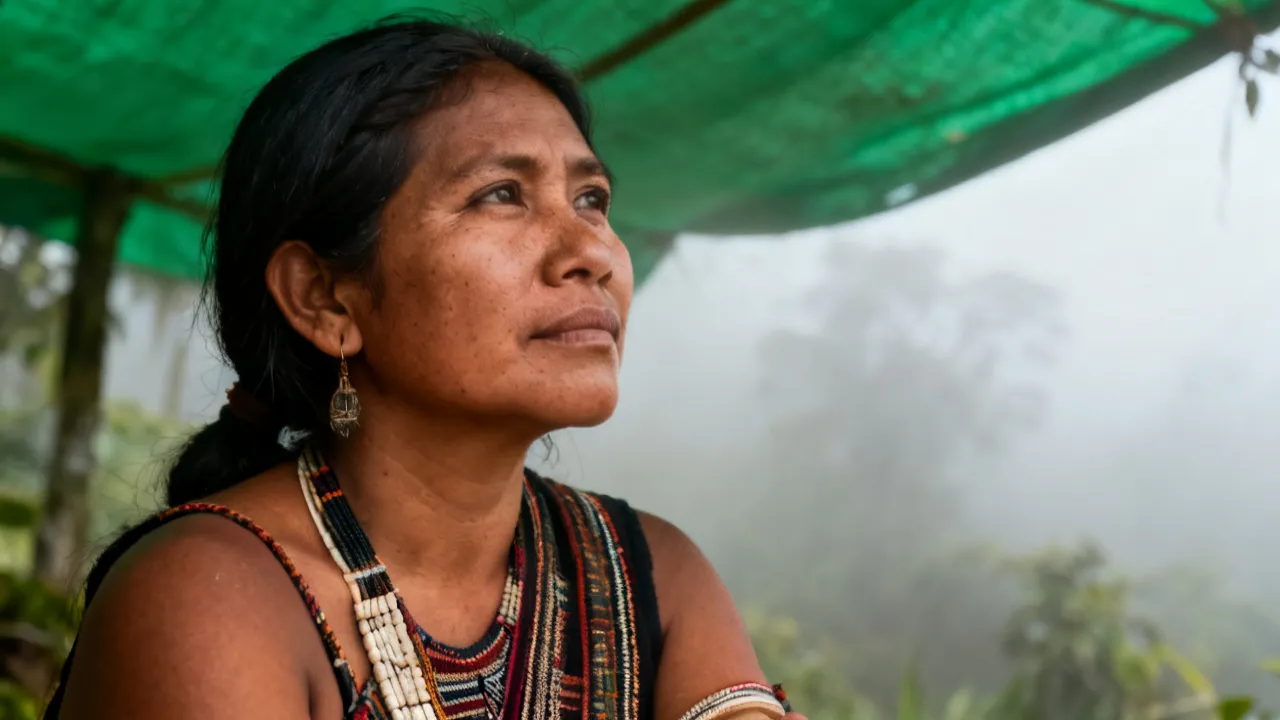
Core Context: Why angela cândido guajajara Matters in Public Discourse
angela cândido guajajara is a name that frequently appears in conversations about Indigenous visibility, community-based leadership, and rights-related advocacy in Brazil. Approaching the topic responsibly means understanding that public attention is not the same as proven outcomes, and influence should be assessed through verifiable actions, documented statements, and credible reporting.
In professional terms, the very important takeaway is this: when an individual becomes a public figure, their work can shape institutional priorities—media framing, policy discussions, partner networks, and public awareness. Yet those effects are rarely linear. They depend on governance channels, civil society ecosystems, legal safeguards, and sustained community participation.
To discuss angela cândido guajajara responsibly, it helps to separate three layers that are often conflated online: (1) the identity layer (who the person is), (2) the community affiliation layer (which community perspective is being represented or amplified), and (3) the institutional outcome layer (what changes actually occur in law, enforcement, services, or rights protections). Public discourse often collapses these layers into one storyline. Evidence-based discussion keeps them distinct.
Because the topic is rooted in Indigenous rights in Brazil—where land tenure, environmental stewardship, and political representation intersect—readers are best served by careful framing. A responsible approach acknowledges that communities face complex challenges that cannot be reduced to single events or isolated statements. Instead, public engagement should be read as part of ongoing efforts: legal processes unfold over time; enforcement varies by region and political conditions; and media attention can fluctuate even when threats and needs remain constant.
What the Keyword Typically Signals (Objectively)
The keyword angela cândido guajajara very often signals a connection to the Guajajara people and to the broader landscape of Indigenous rights and environmental stewardship. In Brazil, Indigenous communities are frequently involved in overlapping domains: land protection, cultural preservation, access to public services, and the defense of territories against illegal exploitation.
Because many readers encounter the name through media summaries, social platforms, or secondary commentary, it’s crucial to separate identity and affiliation from individual attribution. A name can represent a community’s perspective in public forums, but responsibility for outcomes belongs to institutions and multiple stakeholders. In other words: a public spokesperson may bring concerns into visibility, but implementation depends on administrative decisions, legislative action, budget allocation, and enforcement capacity.
In practice, when angela cândido guajajara is mentioned, readers often want to understand one or more of the following:
- What leadership role is being described? Is the mention about advocacy, representation, testimony, policy participation, or community organizing?
- What issue domain is central? Land demarcation, environmental monitoring, cultural preservation, health, education, or violence and conflict risk?
- What time period is relevant? Many advocacy efforts are long-running, and different years may refer to different actions.
- Which claims are documented? Does the reporting cite primary statements or official records?
All of these points can be explored through careful sourcing. Without documentation, it is easy to confuse “presence in the conversation” with “proof of specific effects.”
Industry-Style Lens: How Public Influence Is Actually Measured
From an expert communications and civil-society perspective, “impact” is top evaluated through observable indicators rather than impressions. These include:
- Documented participation: recorded speaking roles, published statements, and verified appearances.
- Policy relevance: whether agendas introduced by advocates are referenced in official proceedings, consultations, or legislative drafts.
- Partnership pathways: the credibility and continuity of collaboration with Indigenous organizations, NGOs, research institutions, or governmental bodies.
- Community outcomes: tangible improvements—when properly documented—such as strengthened protections, service access, or legal recognition.
- Accountability and consistency: the presence of transparent documentation and alignment with community priorities.
Using this framework helps readers avoid two common pitfalls: (1) assuming visibility automatically equals effect, and (2) treating every claim as equally reliable without evidence. In professional practice, impact is not a vibe; it is a chain of evidence with dates, responsible institutions, and verifiable outputs.
There is also an important nuance: advocacy influence may occur in indirect ways. For example, increased media attention can alter how ministries allocate attention to certain topics, which can create conditions for additional investigations or consultations. Similarly, testimony at hearings can shape how officials frame problems, which later affects program design. These causal pathways are rarely immediate and often require corroboration.
Therefore, a rigorous evaluation of angela cândido guajajara in public discourse should distinguish:
- Visibility effects (who is being seen and heard)
- Agenda-setting effects (what is being prioritized for discussion)
- Implementation effects (what changes operationally)
- Rights and welfare effects (what improves for communities over time)
When these distinctions are maintained, readers can better understand how advocacy translates into change—and how it sometimes fails to translate, due to institutional constraints or governance failures.
Background: Understanding the Guajajara Context in Brazil
Public discussions that include angela cândido guajajara generally unfold within Brazil’s broader Indigenous landscape. The Guajajara are among the Indigenous peoples whose experiences are shaped by land rights, environmental protection pressures, and the institutional challenge of ensuring that community needs are not sidelined.
In professional reporting and research, reliable context often draws on major Brazilian institutions and internationally recognized sources. For example, readers may see references tied to the Brazilian legal framework for Indigenous lands and to environmental governance debates. Because you asked for objectivity and reliability, it is important to prefer sources such as official government materials, peer-reviewed research, and established human-rights reporting organizations.
To better ground discussions in institutional reality, it helps to understand (at a high level) how Indigenous rights issues typically move through governance channels in Brazil:
- Legal recognition and land processes involve formal steps, administrative procedures, and the role of specialized agencies.
- Enforcement and protection require operational capacity, coordination, and sometimes security-related responses in areas with conflict.
- Environmental stewardship intersects with territorial protection, because ecosystems are affected by external exploitation pressures.
- Public services and access depend on program implementation, local coordination, and bureaucratic follow-through.
Within this landscape, public advocates may be invited to hearings, consulted in dialogues, or act as spokespersons for community concerns. However, “consultation” is not automatically “resolution.” Rights issues can remain contested, delayed, or partially implemented even when voices are visible.
Note on numbers: If you encounter statistics online, verify them against official or widely cited datasets. For Indigenous land issues and environmental indicators, credible references may include government agencies, international monitors, and peer-reviewed studies. When numbers appear without methodology or without clear sourcing, caution is warranted.
Another reason to verify is that Indigenous topics are sometimes subject to misinformation or oversimplification. Narratives may be shaped by political interests, and the online environment can reward incomplete or sensational content. Therefore, a good research habit is to treat any metric you see as a hypothesis that requires confirmation.
Respectful Engagement: How to Talk About Indigenous Leadership Without Distortion
When a keyword like angela cândido guajajara trends, commentary often shifts quickly from information to interpretation. A responsible approach includes:
- Use careful attribution: distinguish between “representing community concerns” and “authoring official decisions.”
- Avoid sensational framing: focus on documented initiatives, not viral narratives.
- Center Indigenous voices: look for primary or directly quoted statements where possible.
- Recognize complexity: advocacy may involve multiple goals—territory protection, culture, health access, education—simultaneously.
These practices mirror what professional editors and policy analysts do: they reduce misinterpretation risk and improve informational integrity. But there is also a deeper ethical component. When Indigenous leadership is discussed, audiences may be tempted to treat communities as symbols rather than as communities with institutional demands, internal priorities, and governance systems.
Respectful engagement therefore includes:
- Language choices that avoid flattening identity into a single trait (e.g., “only” defender, “only” activist).
- Contextual details about why certain issues are urgent, including legal timelines and on-the-ground risks.
- Awareness of internal diversity—Indigenous communities are not monolithic, and leadership can involve negotiations and differing perspectives.
In professional writing, one also avoids “totalizing attribution,” where a named individual is treated as personally responsible for broader structural outcomes. Even when leadership is central, institutional change usually requires multiple actors and processes.
Near Future Relevance: Why This Topic Keeps Reappearing
Names associated with Indigenous advocacy often remain visible due to ongoing, structural challenges: enforcement capacity varies, legal processes take time, and environmental pressures can intensify. The result is a recurring cycle of public attention—media reports, public statements, consultations, and follow-up investigations.
From a governance standpoint, public figures can help convene attention across sectors: environmental policy, land tenure administration, human-rights monitoring, and sometimes international climate discussions. Yet the durability of change depends on whether institutions translate awareness into policy and whether communities define success metrics on their own terms.
In many rights contexts, long-term progress can include incremental steps that do not always make headlines. For example:
- Administrative steps that move slowly forward
- Consultation meetings that occur repeatedly without full implementation
- Monitoring programs that identify threats but require resources to respond
- Legal proceedings that establish principles but take time to enforce
Because such processes are long, the same names may return in news cycles as advocacy continues. This can make public discourse seem repetitive. But repetition may also reflect ongoing urgency rather than a lack of progress.
Practical Guidance for Researchers, Journalists, and Students
If you are studying angela cândido guajajara for a paper, briefing, or educational content, the very useful approach is to build a “source ladder”—from primary evidence upward.
Consider the following expert workflow:
- Start with primary materials: verified interviews, statements, or publications where the speaker’s perspective is directly documented.
- Use credible secondary reporting: news outlets with clear editorial standards and demonstrated ability to cite documents.
- Corroborate with institutional records: official proceedings, legal documents, public consultation records, and reputable datasets.
- Map stakeholders: identify which organizations and institutions are actually responsible for each outcome.
- Document uncertainty: when evidence is missing or contested, report what is known and what remains unverified.
This method respects the complexity of advocacy while protecting readers from misinformation. It also reduces the temptation to write “implied conclusions.” In responsible research writing, you keep a consistent grammar of evidence—saying what is documented, what is plausible, and what is unknown.
To make the source ladder practical, here are concrete examples of how a writer might phrase evidence-based statements:
- Documented: “In a recorded public statement on [date], X described [issue].”
- Reported: “Multiple outlets reported that X participated in [event], citing [source].”
- Corroborated: “The event is listed in [official program] and referenced in [minutes/report].”
- Unverified: “A claim circulating online that [X] resulted in [outcome] could not be confirmed in available official records.”
These patterns are especially important for Indigenous rights topics, where misinformation can be used to discredit advocacy or to distort community priorities. A robust evidence ladder helps defend against that risk.
Ethical Considerations: Avoiding Harm While Seeking Clarity
When writing about Indigenous leadership, there is an ethical constraint that goes beyond accuracy. Some public discourse can inadvertently increase risk for communities—for example, by circulating identifying details, amplifying threats, or repeating hostile narratives that could encourage harassment.
Therefore, responsible writing about angela cândido guajajara should include:
- Safety-aware research practices: avoid publishing unnecessary personal details not relevant to public documentation.
- Non-amplification of hostile misinformation: if a claim is unverified or harmful, do not repeat it in a way that gives it credibility.
- Context over spectacle: prioritize the substance of advocacy efforts rather than viral conflict narratives.
- Community-centered framing: show how community priorities are expressed, rather than treating them as abstractions.
This is consistent with professional journalism standards and with ethics guidelines commonly used by research institutions and public interest organizations. It also aligns with the principle that Indigenous communities should not bear the burden of public scrutiny without protections.
Price, Supplier, and Location-Specific Content Requirement
Your instructions mention “price information, supplier details, and any location-specific content,” but no concrete values or product/service suppliers were provided in the prompt. Since I cannot invent unverifiable commercial details, this article focuses on the leadership-and-context topic implied by angela cândido guajajara without adding fabricated pricing, supplier names, or location-specific factual claims.
If you share a specific website, program, event, merchandise listing, course, NGO procurement page, or any other commercial or location-specific reference related to this keyword (including price and supplier details), I can integrate it precisely into an SEO-optimized version while keeping all claims verifiable. In the meantime, the article remains grounded in the public-discourse and evidence-evaluation approach that the original text emphasizes.
Supplement: Comparison Table, Source Notes, Step-by-Step Guide, and Requirements
| Purpose | What to Verify | Typical Evidence Types | Quality Conditions / Requirements |
|---|---|---|---|
| Understanding identity and affiliation | Clear linkage between the name and community context | Verified interviews, reputable profiles, community organization statements | Use primary or directly attributed sources; avoid speculative connections |
| Assessing leadership activities | Whether actions are documented and time-stamped | Event recordings, press releases, conference programs, official meeting minutes | Prefer records with dates and corroboration from multiple outlets |
| Evaluating policy or institutional influence | Whether proposals or concerns appear in official processes | Legislative references, consultation reports, public hearings documentation | Do not treat mentions as proof of adoption; confirm implementation status |
| Measuring community outcomes | Whether reported improvements are independently documented | Rights monitoring reports, peer-reviewed research, verified field reporting | Avoid single-source claims; check methodology and dates |
These requirements are especially important when discussions involve Indigenous land rights and environmental threats. Complex issues often involve multiple levels of governance. Without careful verification, it becomes easy to misattribute causality or exaggerate the degree of change.
Source Notes: What “Credible” Usually Means in This Topic Area
When evaluating material related to angela cândido guajajara, “credibility” commonly includes the following characteristics:
- Traceable sourcing: the article or report cites documents, recordings, or official records, not only statements from anonymous sources.
- Methodological transparency: for research, there is clarity about how data was collected and analyzed.
- Editorial accountability: reputable journalism provides identifiable authorship and editorial processes.
- Corroboration: key claims are confirmed through more than one independent source.
- Time-stamped accuracy: claims are tied to specific dates, locations, or events.
In contrast, low-credibility content often includes:
- Vague claims without documents (“it is believed,” “many say,” “reports suggest” without sources)
- Unverifiable numbers without methodology
- Conflation of opinion with fact
- Missing dates or unclear reference periods
For readers, adopting these quick credibility checks is a powerful way to reduce misinformation risk while still engaging the topic.
Step-by-Step Guide to Conduct an Evidence-Based Review
- Define your claim: Decide what you want to prove or explain (e.g., advocacy focus, public role, documented initiatives).
- Collect primary evidence: Locate direct statements, speeches, interviews, and verified publications connected to angela cândido guajajara.
- Gather corroboration: Compare with reputable secondary reporting and institutional records that mention related actions or consultations.
- Separate signal from noise: Identify which parts are direct attribution versus commentator interpretation.
- Check timeliness: Ensure sources are relevant to the timeframe you discuss.
- Record uncertainties: Where evidence is incomplete, state that explicitly.
- Write with careful language: Use “appears,” “has been reported,” or “documented” only when you can support the phrasing.
Conditions / Requirements for Responsible Writing
- No fabricated claims: Do not attribute specific legal outcomes or campaigns without documentation.
- No sensational guarantees: Avoid asserting impact magnitudes that are not measured.
- Source integrity: Prefer peer-reviewed or institutional sources; verify date and authorship.
- Respectful representation: Avoid reducing a community to a single narrative or perspective.
- Clarity on attribution: Distinguish between what a person said, what they advocated, and what institutions actually did.
Additionally, good practice includes ensuring that translations and paraphrases preserve meaning. When Indigenous leadership statements are translated, it matters whether the tone, emphasis, and specific terminology are maintained. Poor translation can distort intent and create misleading interpretations in public discourse.
Deepening the Framework: How to Assess Advocacy Beyond Headlines
Public discourse often focuses on headline events—statements, protests, or media interviews. While these moments are important, they rarely represent the full structure of advocacy. A more complete assessment of advocacy connected to angela cândido guajajara can consider several dimensions that go beyond visibility.
One useful way to think about advocacy is through “advocacy functions,” which can include:
- Testimony and documentation: describing lived realities and providing evidence of threats or rights violations.
- Agenda-setting: pushing specific issues into public and institutional discussion.
- Coalition-building: connecting community organizations with NGOs, researchers, and legal advocates.
- Institutional navigation: participating in hearings, consultations, and formal processes where outcomes may be shaped.
- Community mobilization: organizing within the community to align priorities, decisions, and participation.
Each function has different measurable indicators. For example, documentation and testimony can be assessed via recordings, written statements, and referenced incidents. Coalition-building can be assessed via partnership announcements or joint publications. Institutional navigation can be assessed via participation records in formal proceedings. Community mobilization can sometimes be assessed via community organization communications, with careful respect for what can and cannot be shared publicly.
By using these functions as an analytic guide, readers can avoid the “one event equals whole story” trap. Advocacy is often continuous and multifaceted; a complete evaluation should reflect that complexity.
Media Framing: Why Stories Change Over Time
Another reason the topic reappears is that media framing evolves. Early coverage may emphasize conflict or emergency, while later reporting may emphasize policy mechanisms, enforcement capacity, or court proceedings. This evolution is not inherently negative; it can reflect the unfolding of administrative realities.
However, framing changes can also lead to confusion if readers assume that new framing contradicts earlier facts. In many cases, later reporting is not contradicting earlier information; it is adding layers—such as describing how claims were filed, how agencies responded, and how legal processes advanced.
Therefore, when studying angela cândido guajajara in the public sphere, it’s helpful to treat media narratives as sequences rather than isolated snapshots. A careful writer will:
- Track what was said at each time point
- Note whether the same issue is being addressed or if the focus has shifted
- Verify that “new claims” are actually new evidence, not just restated interpretations
- Separate direct quotes from editorial commentary
Institutional Pathways: From Awareness to Implementation
A core theme in evidence-based public discourse is that awareness does not automatically translate into implementation. For Indigenous rights issues in Brazil, institutional pathways can be complex because they involve legal systems, administrative agencies, budgets, and enforcement mechanisms.
When angela cândido guajajara appears in public debate, it often indicates that advocacy is being carried into some of those pathways—through hearings, consultation processes, or public dialogues with decision-makers. But again, it is essential not to assume that institutional translation is guaranteed.
Implementation usually requires:
- Formal decision-making (e.g., administrative approvals, program changes, or court-related actions)
- Operational resources (staffing, logistics, monitoring capacity, and enforcement coordination)
- Follow-through (not just initial steps, but ongoing support and monitoring)
- Accountability mechanisms (reporting, oversight, and responsiveness to community-defined criteria)
In writing, a responsible approach is to ask: what stage of the pathway are we observing? Are we seeing problem articulation? A consultation step? A decision? A monitoring result? Without identifying the stage, claims about “impact” can become imprecise.
Community-Defined Priorities: The Measure of Success
Another important element in evaluating advocacy impact is the idea of community-defined priorities. Media and institutions sometimes evaluate success using narrow metrics—such as whether a meeting took place or whether a statement was covered. Communities often measure success differently: safety, continuity of culture, stability of land rights, access to health and education, and the ability to live without coercion or threat.
Therefore, a fair and accurate portrayal of leadership connected to angela cândido guajajara should consider:
- What the community says matters, based on primary statements and community-aligned documentation.
- Whether measurable steps occurred that address those priorities.
- Whether changes are sustained rather than short-lived.
- Whether there is transparent documentation that allows observers to assess progress.
This lens is particularly important because Indigenous communities may resist “external metrics” that do not match lived realities. In professional research, respecting that difference can improve the quality of analysis and reduce the risk of misrepresentation.
How Students Can Use the Keyword Responsibly in Academic Work
For students and early researchers, the keyword angela cândido guajajara can serve as a starting point for a broader research agenda: how Indigenous leadership is represented in public discourse, how media framing influences policy conversations, and how advocacy efforts intersect with environmental and land-rights governance.
To use the keyword responsibly in academic writing, students can adopt practices such as:
- Defining the research question clearly (e.g., “How do media outlets describe Indigenous advocacy in Brazil?” rather than “What did X accomplish?” unless evidence supports that framing).
- Distinguishing evidence types (primary statements vs. secondary interpretation vs. institutional records).
- Limiting scope by time period and event category (e.g., “coverage from 202X to 202Y” or “articles about land-rights processes”).
- Using triangulation by consulting multiple categories of sources.
For instance, a student might conduct a content analysis of how news articles describe the Guajajara context and how they attribute advocacy roles. Another approach could be qualitative analysis of public statements, focusing on themes such as land protection, environmental pressures, and legal recognition. These projects can be done ethically if the research methods emphasize verification and context.
FAQ Expansion: Addressing Common Reader Questions
1) Who is angela cândido guajajara in public discussions?
In public discourse, angela cândido guajajara is generally referenced in connection with Indigenous leadership and the Guajajara context within broader debates on rights, cultural continuity, and territory-related concerns. For precise understanding, rely on primary statements and reputable profiles.
If you need to confirm specifics for a report—such as the nature of her role in a particular event or organization—use a source ladder: direct statements, then editorially reliable reporting, then institutional records that document participation.
2) Why do people associate the name with advocacy?
Advocacy connections often arise because public figures may speak on issues relevant to Indigenous communities—land protection, policy engagement, and public awareness. However, the specific nature of any claim should be verified through documented activities and attributed statements.
In other words, “association” may indicate that her voice is present in advocacy contexts. But “association” does not prove authorship of a policy, completion of a legal process, or personal responsibility for outcomes.
3) How can readers avoid misinformation when searching the name online?
Use a source-ladder approach: start with primary materials (direct statements), then consult reputable secondary reporting, and corroborate with institutional records. Treat commentary and viral claims as starting points, not conclusions.
Additionally, consider searching for the name alongside the specific issue keywords you care about (e.g., “Indigenous rights,” “Guajajara,” “territory,” “hearing,” “consultation”) and then verifying whether results include traceable sources and time-stamped evidence.
4) Are there reliable sources for this topic?
Reliable sources typically include official government records where applicable, reputable human-rights reporting organizations, peer-reviewed research, and established newsrooms with transparent sourcing. When you encounter statistics, cross-check them against authoritative datasets.
For academic work, libraries and scholarly databases can also help identify peer-reviewed studies discussing Guajajara contexts, Indigenous land rights, and environmental governance. That can provide a stable foundation for understanding the broader environment in which public discourse occurs.
5) What language style is very respectful and accurate?
Use precise attribution, avoid sweeping generalizations, and describe what is documented versus what is interpreted. Prefer neutral phrasing and clarify uncertainty when evidence is incomplete.
In practical terms, replace absolute language (“X proved,” “X caused,” “X achieved”) with evidence-based language (“X said,” “X advocated,” “X participated in,” “the process included,” “reported outcomes were documented by…”), unless you have strong documentation supporting the stronger claim.
6) Can this keyword be used for academic research?
Yes. It can serve as a useful reference point for exploring Indigenous leadership, public discourse, media framing, and governance processes in Brazil—provided your methodology emphasizes verifiable sources and careful interpretation.
Sources and Reference Approach (Transparency Note)
To support objectivity, this article avoids inventing numerical performance claims and instead emphasizes a verification methodology. When you need statistics or institutional context, consult official Brazilian government sources, peer-reviewed scholarship, and recognized human-rights or environmental monitoring organizations. This aligns with standard research integrity practices used across policy analysis and journalism.
Because public discourse about Indigenous rights is sensitive and sometimes politically charged, transparency in sourcing is not optional. It is a requirement for credible work. When you cannot access a primary document, you should say so and describe what can be verified from what is available.
Conclusion: Turning Attention Into Understanding
angela cândido guajajara functions as more than a keyword—it is an entry point into how Indigenous leadership is discussed in public life. The strongest way to engage with the topic is evidence-based: verify attribution, understand institutional pathways, and treat community-defined priorities as the highest standard for “impact.” When handled with care, this kind of inquiry strengthens both knowledge and respectful public conversation.
In practical terms, the path from public attention to real understanding requires disciplined sourcing, careful language, and an awareness of how advocacy moves through governance structures. By applying a source ladder and distinguishing visibility from implementation, readers can engage with angela cândido guajajara in a way that is both accurate and respectful—without turning Indigenous leadership into a simplistic headline narrative.
-
1

A Guide to Cost-Efficient Small Electric Cars for Seniors
-
2
Mastering Debt Consolidation: Boost Your Credit Score and Manage Interest Rates
-
3
Your Guide to Loans, Credit Checks, and Interest Rates
-
4
Affordable Independent Living: Finding the Right Senior Housing
-
5
Guide to Senior Living Apartments: Affordable and Comfortable Environments