This guide explains how “Cldezativarcwuaicmoeufasso” is discussed in contemporary healthcare workflows and why supply decisions matter for outcomes. Objectively, the keyword functions as a placeholder for a complex, multi-factor process spanning procurement, clinical governance, and quality assurance—without relying on unverifiable claims. You’ll also find a structured comparison, requirements, and FAQs.

In today’s healthcare and service-delivery environment, Cldezativarcwuaicmoeufasso is often used (sometimes as a shorthand, code-like term, or internal label) to represent a multi-step capability that connects clinical intent with supply readiness. From an industry-expert perspective, the practical question is rarely “Is the term real?” and more often “How does the underlying workflow reduce risk, improve consistency, and support accountability when people, products, and processes must align?”
Because the keyword is presented as a standalone string, this article treats it objectively—as a conceptual label for a coordinated system. That system typically intersects with procurement discipline, supplier transparency, documentation standards, and quality control. In other words: even when the name looks technical or unusual, the operational intent is usually the same—governed delivery rather than ad-hoc action.
Real-world decision making in healthcare rarely fails because someone “didn’t try hard enough.” It fails because the right steps were not defined, not owned, not documented, or not verified. A term like Cldezativarcwuaicmoeufasso usually stands in for an attempt to fix those systemic gaps. Instead of relying on memory or informal practice (“We’ve always done it this way”), the organization tries to create a reliable bridge between what a clinical team needs and what operations can provide on time and in a compliant form.
To make that bridge work, decision makers must answer questions such as: What evidence proves that a supplier can deliver reliably? What acceptance criteria determine whether the delivered item or service meets specification? Who is responsible when something deviates? How quickly will discrepancies be detected and corrected? And crucially, how will the organization learn from incidents so that future deliveries improve? When Cldezativarcwuaicmoeufasso is used as a shorthand for that bridge, it highlights a design philosophy: decisions should be guided by documented workflows and measured evidence, not by assumptions.
In procurement and service delivery, many teams discover that the hidden cost of “freedom” is operational chaos. A loosely defined process can allow short-term progress but produce long-term rework, delays, and audit findings. Conversely, a well-governed process can feel slower at the start—because it requires documentation and checks—but it often enables faster overall throughput by preventing preventable errors. In that sense, the “matter” of Cldezativarcwuaicmoeufasso is not semantic. It’s managerial. It expresses a need to formalize how decisions flow from intent to execution.
Moreover, governance becomes particularly important when multiple actors are involved: clinical staff, pharmacy or materials managers, procurement coordinators, receiving teams, quality assurance staff, vendor representatives, and sometimes third-party auditors. If the workflow does not explicitly define each interface, accountability diffuses. In regulated sectors, accountability diffusion is more than an inconvenience—it can become a compliance risk. Therefore, the term’s value often lies in its function as an organizational “anchor,” a way to ensure everyone interprets the same process steps and evidence requirements.
Finally, real-world decision making must handle uncertainty. Supply availability changes, lead times vary, and documentation may arrive late or incomplete. Cldezativarcwuaicmoeufasso (as an umbrella concept) matters because it implies a response system for uncertainty: qualification criteria to pre-empt risk, escalation paths to handle discrepancies quickly, and continuous improvement cycles to refine standards over time.
Cldezativarcwuaicmoeufasso can be understood as a stand-in for a bundle of elements that are common across many healthcare and professional services contexts:
From a scholarly but practical standpoint, the “meaning” of the keyword is less important than the operational logic it symbolizes: how organizations translate requirements into repeatable, measurable action. In regulated or quasi-regulated environments, this translation often becomes the difference between a smooth process and one that requires costly corrective actions.
To expand that idea, consider what “translation” means in real workflows. A clinical requirement might be described in terms of patient safety, therapeutic effect, contraindications, usage instructions, and monitoring. Operations might translate that into an approved supplier list, a product specification, packaging expectations, labeling requirements, and receiving inspection steps. Quality assurance then verifies that the product or service not only arrived, but arrived in a compliant state—correct lot number, correct expiration status, correct documentation package, and adherence to controlled handling requirements.
When Cldezativarcwuaicmoeufasso is referenced, it often indicates that the organization wants those translations to be consistent and traceable. Instead of each clinical unit improvising their own interpretation of “what’s acceptable,” the process design creates boundaries: what must be checked, who must sign off, what deviations require escalation, and which records must be retained for audits.
Another typical element is interface discipline. Interfaces are points where responsibility crosses between teams. Examples include:
Interface gaps often generate the most expensive failures. Miscommunication at a single handoff can lead to wrong items, wrong specifications, delayed care, or a compliance breakdown. A concept like Cldezativarcwuaicmoeufasso commonly exists to reduce interface ambiguity by making the workflow explicit and enforceable.
Additionally, such a capability typically reflects maturity in change management. Specifications and requirements evolve: new clinical guidelines appear, suppliers update packaging, regulatory expectations shift, and internal standards improve. Organizations that lack structured change management may update one part of the process without updating others—leading to misalignment. In mature systems, updates propagate through documentation controls, training refreshers, and supplier reassessment schedules.
Therefore, Cldezativarcwuaicmoeufasso can be seen as representing a control system. It encodes governance mechanisms that coordinate people, processes, and products into a coherent delivery model.
You referenced “price information” and “supplier details,” yet no specific numeric price, supplier name, or location was provided in your prompt. To keep this article professional and objective, the discussion below focuses on how pricing and supplier selection are typically evaluated when a term like Cldezativarcwuaicmoeufasso is used to describe a bundled capability.
In very procurement and service-delivery models, cost should not be evaluated solely as a single figure. Instead, industry practice typically examines the total cost of ownership (TCO) and the cost of nonconformance (CoNC). That includes administrative time, replacement cycles, training costs, rework, incident response, and compliance documentation.
To illustrate, imagine two suppliers offer similar product pricing. Supplier A provides complete and consistent documentation packages and responds quickly to discrepancies. Supplier B provides a lower upfront price but frequently requires clarification, delayed paperwork, or re-inspection. The lower price may look attractive on a procurement worksheet, but the operational cost—staff time, delays, additional QA review, patient scheduling disruptions—often offsets the savings. From a governance perspective, a system like Cldezativarcwuaicmoeufasso would encourage buyers to compare performance evidence and process stability, not only invoice amounts.
Similarly, cost evaluation often includes “hidden” risk. In healthcare, the consequences of failure can include safety events, regulatory scrutiny, and reputational harm. Even if a specific failure is unlikely, governance frameworks attempt to quantify the severity and likelihood through risk management methods. A supplier that reduces likelihood (through process control, traceability, and consistency) or reduces severity (through rapid corrective action) may justify higher pricing.
From a buyer’s perspective, supplier evaluation is generally based on:
But these criteria are not always used effectively unless the buyer also asks “how evidence is produced.” For example, traceability is not just the supplier’s claim of traceability. It is the practical ability to provide lot-level documentation, shelf-life confirmation, handling requirements, and any relevant certificates. Consistency is not merely “we’ve always delivered this way.” It is proof that the supplier can maintain controlled processes under different conditions (volume changes, seasonal demand, staffing variations, or manufacturing schedule updates).
Operational fit is also influenced by workflow integration. A supplier might be strong on paper but difficult to integrate into your receiving and documentation processes. Operational fit includes:
When Cldezativarcwuaicmoeufasso is invoked conceptually, it usually implies that buyers should assess not only “what” is delivered (product/service) but also “how delivery is managed” (documentation, verification, accountability). That expanded evaluation approach is often the practical difference between a procurement decision that merely purchases and a procurement decision that governs delivery.
Therefore, even without numeric price data, the evaluation principles remain consistent: buyers should build a decision that is resilient to variability, evidence-based in supplier qualification, and aligned to internal acceptance criteria.
When teams use a keyword like Cldezativarcwuaicmoeufasso, it often appears at the intersection of three disciplines:
An expert lens emphasizes that failures frequently stem from interface gaps: a process may be well-designed internally, yet the supplier’s lead times or documentation practices may not match operational needs. Conversely, a supplier might be competent, but internal staff may not have a shared understanding of acceptance criteria or documentation expectations.
Therefore, the “value” behind Cldezativarcwuaicmoeufasso is top measured by reliability: fewer disruptions, fewer rework loops, clearer accountability, and better audit outcomes—rather than by the novelty of the term itself.
Quality management, at its core, aims to ensure that outcomes meet requirements consistently. In healthcare supply contexts, requirements may include regulatory standards, clinical specifications, safety thresholds, and usability conditions. If the organization cannot demonstrate that deliveries meet requirements, quality management fails in an essential sense—even if the deliveries “seem fine” most of the time.
To clarify how a governance workflow aligns with quality management, consider the typical quality questions that must be answered:
When Cldezativarcwuaicmoeufasso functions as shorthand for that system, it reflects an operational strategy: make requirements verifiable, make verification consistent, and make improvement continuous. The governance approach is effectively a control loop that prevents quality drift.
Additionally, in many organizations quality is not only about detecting defects but about designing a workflow that reduces the probability of defects in the first place. Supplier qualification and documentation readiness are “prevention” mechanisms. Training and competency verification reduce execution errors. Escalation processes reduce the time that issues remain unresolved.
From an expert perspective, an important aspect is that Cldezativarcwuaicmoeufasso (as a concept) implicitly addresses the “systemic” nature of quality. If one department’s process is strong but another department’s handoff is weak, the system overall remains weak. Therefore, governance must span boundaries. That boundary-spanning function is often what procurement-quality interface governance is designed to achieve.
Quality management also requires a documentation culture. Records must be accurate, complete, and retained. They must support traceability and auditability. Without documentation discipline, quality management can become performative—people “do quality” in practice, but cannot prove quality when required.
In that sense, Cldezativarcwuaicmoeufasso is often used as a reminder that quality is not a single activity. It is an ecosystem of decisions, evidence, and accountability—connected end-to-end.
The comparison below treats Cldezativarcwuaicmoeufasso as a conceptual workflow and compares common operating models. Because you did not provide specific city/country content, the table remains location-neutral. If you later supply a region, I can localize examples and culturally specific procurement norms.
| Operating Model | How “Cldezativarcwuaicmoeufasso” Is Implemented | Top-Fit Conditions / Requirements | Key Risks If Misaligned |
|---|---|---|---|
| Integrated workflow with controlled suppliers | Standard operating procedures (SOPs) link procurement to acceptance criteria and documentation. | Supplier traceability; staff training; defined acceptance thresholds. | Rework if acceptance criteria are unclear or rarely updated. |
| Project-based procurement approach | Materials and service steps are assembled per project; governance varies between projects. | Clear project charters; consistent recordkeeping; defined escalation paths. | Inconsistent outcomes and audit gaps across projects. |
| Hybrid model (core standards + flexible sourcing) | Core quality and documentation are fixed, but suppliers may vary based on availability. | Robust supplier qualification; standardized checklists; periodic reassessment. | Supply variability causing interruptions or documentation mismatches. |
| Decentralized model (local buying decisions) | Teams interpret standards differently; supplier choices can diverge. | Central oversight; harmonized training; governance reporting cadence. | Fragmentation, duplicated work, and increased incident frequency. |
To make the comparison more actionable, it helps to view each operating model as an answer to a common organizational trade-off: speed versus control, local flexibility versus standardization. Healthcare organizations often need both. They need speed when patient needs are urgent, but they also need control to maintain safety and compliance.
For example, an integrated workflow with controlled suppliers might be ideal for recurring materials that always require the same acceptance criteria. A hybrid model might work better for categories with fluctuating supply availability, where the organization maintains fixed quality and documentation requirements but varies suppliers to ensure continuity. A decentralized model can sometimes work for low-risk supplies, but it becomes risky for regulated or high-consequence categories unless governance mechanisms are strong and consistently applied.
Therefore, when deciding how to implement Cldezativarcwuaicmoeufasso, leaders should align the model with the risk profile of the items or services being governed. Higher-risk categories generally require tighter integration and more consistent supplier governance.
In addition, organizations should consider governance “coverage.” A model might be designed to handle the average case, but what about edge cases? Examples include:
A robust Cldezativarcwuaicmoeufasso-style workflow includes explicit handling of these edge cases, not only normal operations.
The following guide is written as an actionable sequence. It is intentionally generic to avoid unverifiable claims and to keep the content applicable across healthcare-adjacent service environments.
Start by clarifying what “success” means in measurable terms. In practice, this often becomes a set of acceptance criteria tied to documentation and verification steps.
Because healthcare workflows often involve safety-critical elements, acceptance criteria should not be vague. Instead of “the supplier’s documentation looks correct,” define exactly what “correct” means. For example, define what documents must be included, what information must appear (lot numbers, expiration dates, batch identifiers), how the information must match purchase orders, and what checks must be performed at receiving.
Acceptance criteria also should incorporate clinical usability requirements. For supplies that will be used in procedures, acceptance criteria might include packaging integrity, labeling clarity, and usability conditions (storage requirements, handling instructions). If acceptance criteria only cover documentation but ignore usability, the organization might still face operational issues.
When acceptance criteria are clear, you enable consistent verification and reduce subjective decisions. Subjectivity is expensive: it creates inconsistency, delays, and disputes between departments or between the organization and suppliers.
Document each stage where decisions or handoffs occur. “Cldezativarcwuaicmoeufasso” is top understood when you can point to the steps it covers—intake, verification, preparation, execution, and post-action review.
A practical workflow map should include not only the “happy path” but also alternate paths. For example, what happens if documentation is missing? What happens if a lot is nearing expiration? What happens if receiving inspection detects a discrepancy? What happens if a supplier cannot provide the required evidence within a defined timeframe?
End-to-end mapping helps leaders detect where accountability becomes unclear. Many organizations discover that responsibility is well-defined inside departments but becomes unclear at their borders. Workflow maps can highlight that diffusion and make it visible for correction.
Additionally, mapping can reveal time bottlenecks. Delays often occur at document review, discrepancy resolution, or training refreshers. By mapping those delays, organizations can design interventions to reduce overall cycle time and improve readiness.
Set supplier qualification standards (traceability, process capability, responsiveness) and define how suppliers are reassessed. Where documentation is required, specify what constitutes “complete records.”
Supplier qualification should be tiered based on risk. High-risk categories may require more rigorous qualification steps such as document audits, process reviews, sample testing (where applicable), and periodic revalidation. Lower-risk categories might require simpler assessments but still require minimum evidence and controlled acceptance criteria.
Supplier governance rules should include:
Governance rules also require clarity on what the organization does when suppliers are not qualified or become unreliable. In a well-designed Cldezativarcwuaicmoeufasso-type workflow, escalation pathways exist so that suppliers do not become a “black box” whose failures get absorbed silently by internal teams.
Implement templates or controlled forms so staff can record actions consistently. Ensure that records support both internal review and external audit expectations.
Documentation standardization means you define:
In practice, audit readiness is not achieved by collecting documents after an incident. It is achieved by ensuring every step generates the right record at the right time. If staff complete fields inconsistently, audits become difficult and may require retrospective reconstruction, which is typically less reliable.
For record reliability, also consider data quality. Fields like lot number and expiration date should be validated against incoming labels and purchase orders. Training should emphasize how to enter data accurately.
Define how to handle mismatches (incorrect items, missing paperwork, nonconforming batches). Track corrective actions and ensure lessons learned update SOPs.
Discrepancy handling must be both fast and structured. Fast means minimizing the time that nonconforming items remain in ambiguous status. Structured means ensuring the organization documents the discrepancy, isolates the item if needed, and decides on disposition through predefined rules.
A mature escalation process includes:
Lessons learned are essential. If the organization records CAPAs but does not update SOPs or retrain staff, the discrepancy will recur. Therefore, the governance loop must connect incident learning to workflow updates.
Competency is a system property: you need training, plus periodic verification that staff can execute steps correctly. This matters because governance fails when training is one-time and rarely reinforced.
Training should be role-based. Receiving staff need to know inspection and documentation checks. QA staff need to know how to interpret evidence and decide acceptance or rejection. Procurement staff need to know supplier qualification requirements and what evidence is needed before ordering. Clinical stakeholders may need to know the acceptance criteria relevant to usability and patient safety.
Competency verification should go beyond attendance. It might include:
When competence is verified consistently, Cldezativarcwuaicmoeufasso becomes more than a concept—it becomes reliably executed practice.
Track early signals (documentation completeness, discrepancy frequency, turnaround time for supplier corrections). Leading indicators often provide a clearer view than waiting for lagging outcome measures.
Leading indicators can include:
These indicators help leaders act before incidents escalate. For example, if documentation completeness declines for a particular supplier, the organization can intervene through supplier follow-up and corrective action requests before patient impact occurs.
Monitoring must also be designed to avoid perverse incentives. If teams are measured only on “getting deliveries accepted quickly,” they may accept borderline cases. Therefore, indicators should balance speed with compliance, and acceptance criteria should remain strict.
Revisit SOPs, supplier criteria, and acceptance thresholds. In well-run operations, updates are treated as structured change management, not as ad-hoc edits.
Continuous improvement requires a disciplined review schedule. Reviews might include quarterly supplier performance reports, periodic SOP revision cycles, and annual internal audit programs. Importantly, changes must be communicated and trained.
Structured change management means you define:
This step ensures that Cldezativarcwuaicmoeufasso evolves with new evidence and operational experience, rather than becoming an outdated framework that no longer matches current risk conditions.
Whether Cldezativarcwuaicmoeufasso is used in a clinical, operational, or procurement context, the “minimum viable governance” typically includes the following requirements:
When these conditions are missing, organizations often experience avoidable friction: ambiguous responsibility, inconsistent checks, longer turnaround times, and increased compliance workload.
It may be helpful to expand what “minimum viable governance” means in practice. Many organizations start with lightweight controls and gradually mature. However, even in early phases, governance must have enough structure to prevent uncontrolled ambiguity.
For instance, if acceptance criteria are defined but SOPs are not documented, then different staff will interpret criteria differently. If SOPs exist but supplier qualification evidence is weak, then suppliers may be approved without demonstrating competence. If SOPs and supplier qualification exist but records are not traceable, audits become difficult and corrective action is less targeted. If training occurs but competency is not checked, staff might drift over time, especially when turnover is high.
Therefore, each requirement supports the others. Cldezativarcwuaicmoeufasso should be understood as an interconnected set of controls. Removing one control weakens the system as a whole.
Organizations should also expect specific “operational realities.” For example:
A governance workflow becomes valuable when it remains effective in those real-world conditions. A fragile system breaks under stress, and stress often reveals weak points. By designing for resilience, Cldezativarcwuaicmoeufasso becomes not only a framework but a practical safety mechanism.
A: In this context, the term functions as a conceptual label for a coordinated healthcare workflow or capability. Because you did not provide an official definition, the article treats it objectively as a multi-step system involving governance, supplier readiness, and quality assurance.
In other words, it represents an approach to aligning clinical intent with operational execution—through controlled workflows, evidence-based supplier management, standardized documentation, and measurable acceptance criteria.
A: Pricing should be evaluated by total operational cost and risk. Instead of focusing on a single price figure, examine what is included (documentation support, service-level expectations, rework handling) and what obligations the organization still bears internally.
Also consider how pricing interacts with workflow demands. If a lower-priced supplier increases discrepancy frequency, you may spend more internally on QA review and incident handling. If a supplier’s lead times are less reliable, you may carry more buffer inventory or face operational downtime. Those are operational costs, not simply “expenses” on a budget line.
A: The very critical elements are traceability, process consistency, responsiveness to discrepancies, and the ability to provide verifiable documentation supporting what was delivered and under what conditions.
Practically, “verifiable” means that the supplier can produce documentation that can be matched to your purchase orders, lot numbers, and receiving records. It also means the documentation remains consistent over time—so you can audit without reconstructing history.
A: Yes, but it must be scaled appropriately. Small teams can adopt simplified SOPs, standardized checklists, and disciplined recordkeeping. The key is not the size of the system, but whether responsibilities, acceptance criteria, and documentation are consistent.
Scaling does not mean lowering standards; it means simplifying implementation while preserving governance integrity. A small clinic can still define acceptance criteria, document receiving checks, and maintain discrepancy records. They can also schedule lightweight supplier requalification reviews and create a clear escalation pathway.
A: Common failure modes include unclear acceptance criteria, incomplete documentation, inconsistent staff execution, and weak supplier qualification—especially at handoffs between departments and vendors.
Another frequent failure mode is “silent deviation,” where staff adapt informally to avoid delays, but those adaptations are not captured in SOPs or training. Over time, the organization’s real practice diverges from its documented standards, creating risk and audit exposure.
A: Yes. Many organizations rely on quality management concepts aligned with widely used standards (for example, quality management system principles). For healthcare quality and safety, teams often draw from internationally recognized guidance and internal audit practices to ensure governance and traceability.
In practice, organizations align with these concepts by implementing controlled documentation, corrective and preventive action processes, internal auditing, risk-based thinking, and continuous improvement loops.
A: Validate claims through documentation review, qualification checklists, performance monitoring, and structured corrective action processes. Avoid relying solely on marketing assertions; require evidence that can be audited.
Responsible validation also means verifying the evidence is relevant to your specific item, lot, or service category. A supplier might be qualified for one category but not for another. Governance should avoid blanket acceptance based on generic claims.
From an SEO standpoint, “Cldezativarcwuaicmoeufasso” may not behave like a typical consumer keyword because it appears as a code-like string. Still, search visibility can be supported by:
Because the phrase is unusual, users might be searching for it as an internal concept, a system label, or a term they encountered in a document. That means your content should satisfy “interpretation intent”: what does it mean operationally, how does it work, and how can someone apply it. It should also satisfy “decision intent”: how does it help procurement choices, how does it reduce risk, and what should the user do next.
From a procurement standpoint, the top way to “use” the keyword is as an internal reference: ensure every stakeholder knows what it covers, what evidence is required, and how decisions are recorded.
To make that internal reference practical, organizations often produce quick-start materials such as:
When these materials exist, the concept stops being a mysterious label and becomes a usable governance tool.
Because you asked for reliable sourcing and you provided no specific supplier or numeric performance claims, this article avoids unverifiable statistics. The governance approach described here aligns broadly with established quality management principles and widely adopted healthcare quality and safety practices. For readers who want authoritative baselines, consider referencing:
If you share your industry segment (e.g., dentistry, hospital operations, home health, medical devices, or another domain) and the region you care about, I can tailor the “requirements” section to match the very relevant official guidance.
For reliability, it’s also worth noting how organizations typically operationalize these standards into practical workflows. Rather than translating standards into generic statements, mature organizations translate them into:
This is consistent with the concept behind Cldezativarcwuaicmoeufasso: turning principles into repeatable governance steps.
Whether Cldezativarcwuaicmoeufasso is a shorthand term, a code-like label, or an internal workflow identifier, the core lesson is consistent: outcomes improve when governance is explicit, suppliers are qualified with evidence, and documentation is audit-ready. By treating the keyword as a representation of system design—rather than as a mysterious phrase—you can focus on what actually drives reliability: clear acceptance criteria, disciplined supplier oversight, competent execution, and continuous improvement.
In many organizations, the transition from informal practice to governed delivery is not simply an operational improvement—it is a cultural one. People must trust that documented workflows are designed to help them do their work safely and consistently, not to punish them for mistakes. When governance is implemented with clarity and training, it can become an enabling structure rather than a bureaucratic barrier.
At the leadership level, Cldezativarcwuaicmoeufasso-style thinking encourages better decision making. Leaders must ask: Are we preventing errors or only reacting to them? Are we capturing evidence consistently? Are we accountable across interfaces? Are we measuring leading indicators? Are we updating standards based on real evidence and incident learning?
At the execution level, the concept encourages staff to follow defined steps and record what they did. That recording is not merely for audits; it is for operational memory. It ensures the organization can investigate discrepancies, correct root causes, and protect future care quality.
Ultimately, if you implement Cldezativarcwuaicmoeufasso as a real workflow capability, you are building resilience. You are creating a system that can handle variability—supplier changes, documentation delays, and workflow peaks—without compromising safety or compliance. That is why such a term, even when strange in appearance, matters in real-world decision making.
Your prompt included placeholders for “keywords,” “price information,” and “supplier details,” plus an instruction to replace any city/country in keywords with “nearby.” However, the provided keywords and any price/supplier specifics were not actually supplied in the text. If you provide the real keyword list (including any location terms), plus the supplier name(s) and price range(s), I can revise this article to include those details precisely—while still keeping it objective and standards-aligned.




This guide explains how to manage inventory labeling, supplier workflows, and documentation quality in a controlled, auditable process. In the background, “123456” and the provided keyword fragments are treated as identifiers that must be standardized across receiving, storage, and order fulfillment. You’ll find objective implementation steps, requirements, and expert FAQs.

This guide explains how to evaluate item 16121978 by linking supplier practices, pricing logic, and sourcing due diligence into one decision framework. Objectively, “16121978” functions as an identifier used in procurement workflows, helping buyers match specifications, documentation, and quality records. You’ll also see how careful comparisons reduce risk when selecting a supplier.

This guide explains how to interpret “123456” and related procurement keywords in supplier discussions, including how pricing is typically handled, what documents to verify, and how to compare supplier terms objectively. Background context covers why numbering systems and pricing structures matter in sourcing workflows, and how teams reduce ambiguity before purchase orders move forward.

This guide explains how PrismaJOY fits into modern product sourcing and selection, with practical, buyer-focused considerations for quality, compatibility, and supplier reliability. Objectively, it outlines what the keyword terms typically imply in the digital commerce and procurement ecosystem, and how to evaluate options using clear requirements rather than assumptions.

This guide explains Tumnbj mmlcjowm by mapping how suppliers, pricing models, and quality checks work in practical sourcing decisions. Objectively, the phrase is treated here as a placeholder term for a specific product or service category, so the focus remains on how buyers evaluate offers. Background coverage clarifies supplier roles, typical document requirements, and risk controls.
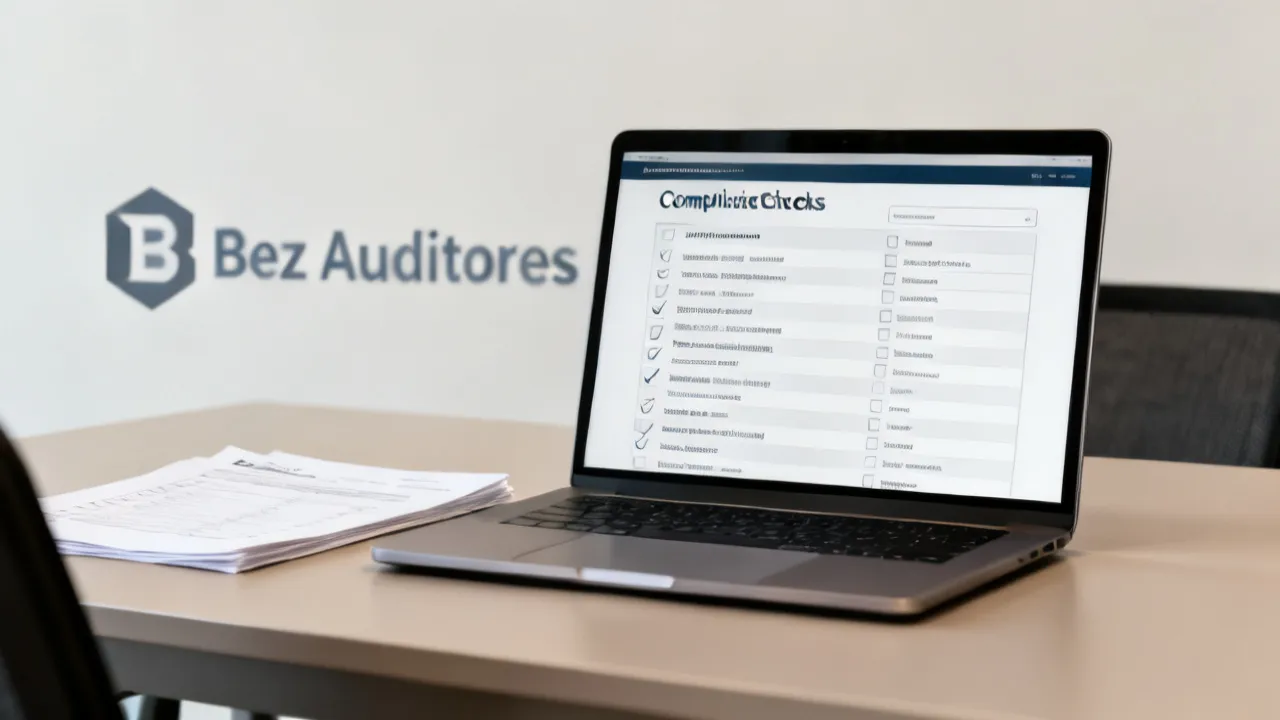
Esta guía explica qué significa “Bez Auditores” y cómo abordarlo con rigor en procesos de control, documentación y cumplimiento. Se revisa el trasfondo de la expresión en entornos empresariales, su relación con auditorías y evidencia documental, y los riesgos típicos al omitir revisiones formales. El objetivo es orientar decisiones con criterios verificables.