This guide examines angela cândido guajajara and explains why her public work is discussed in Brazil’s Indigenous rights landscape. Objectively, it places her name within the broader Guajajara people’s cultural context, the governance challenges faced by Indigenous communities, and the role of advocacy in environmental and social policy debates.
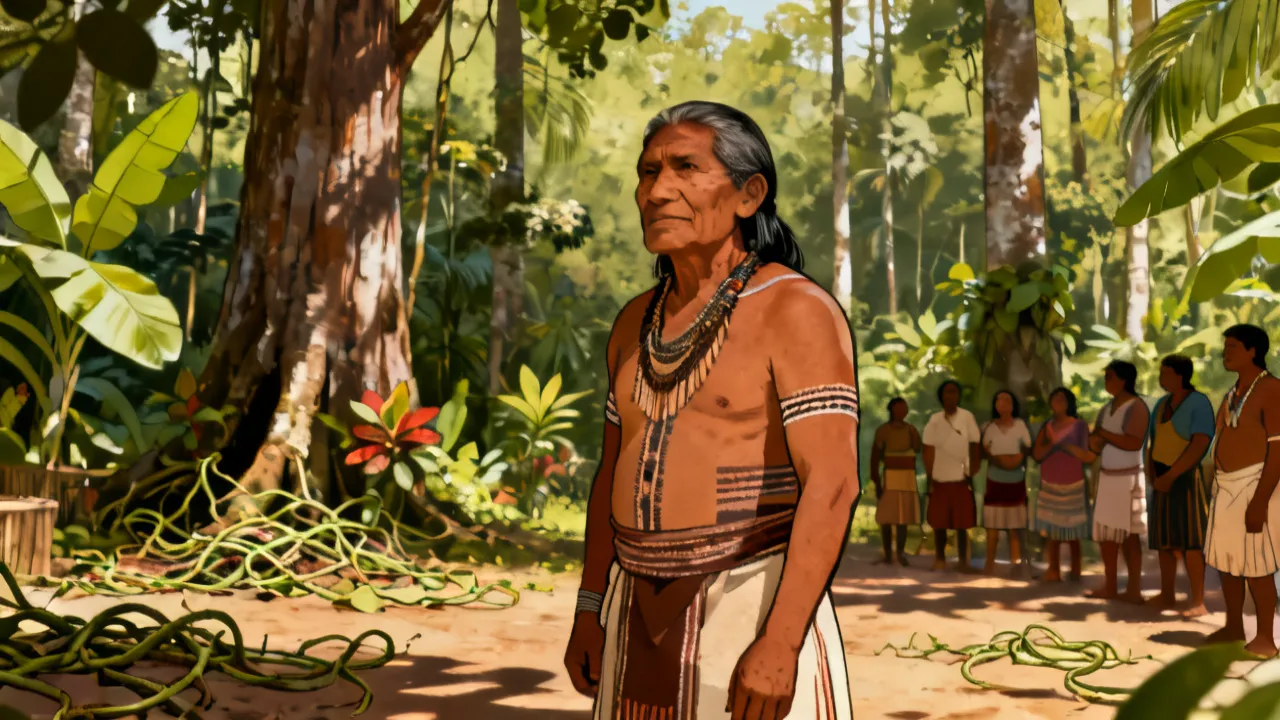
angela cândido guajajara is frequently mentioned in conversations about Indigenous advocacy in Brazil—particularly in spaces where community leadership intersects with cultural preservation, territorial protections, and environmental stewardship. In a professional lens, her name functions less as a single “story” and more as an entry point into how Indigenous representation shapes public debate, policy attention, and good institutional outcomes for the Guajajara and neighboring communities.
Readers who encounter her name in online discussions often want a quick answer: why does it come up, what does it signal, and what should be understood about the broader governance system behind Indigenous advocacy? The most reliable approach is to understand the systems around Indigenous governance, the historical pressures on traditional territories, and the practical mechanisms through which leadership gains visibility (public forums, alliances, documentation, and legal or administrative engagement). This article therefore focuses on context, measurable processes, and widely documented themes rather than speculation about personal details.
Because Indigenous rights debates can be politically sensitive and sometimes distorted, the goal is not to amplify rumors or unsupported claims, but to provide a responsible framework for interpreting leadership mentions—especially when those mentions connect to territory security, consultation procedures, and environmental risk.
The Guajajara are an Indigenous people in Brazil, historically associated with areas in the Amazon region. Like many Indigenous groups, Guajajara communities engage with governance not only through customary practices and community decision-making, but also through Brazil’s formal state institutions. That intersection is where public leadership becomes especially visible: advocacy can involve engagement with public agencies, participation in hearings and councils, and collaboration with civil society organizations.
When discussing the relevance of angela cândido guajajara, it helps to treat Indigenous leadership as a bridge rather than as a solitary actor detached from community systems. In practice, Indigenous leaders often serve as translators between community needs and national policy mechanisms. This translation is concrete: leaders describe territory-related impacts, document environmental and social risks, and emphasize cultural continuity as a foundation for sustainable planning. These activities can include preparing testimonies, participating in official consultations, and engaging with legal processes that require technical detail.
In Brazil, Indigenous governance operates at multiple levels. At the community level, decision-making often relies on collective norms, intergenerational knowledge, and local leadership structures. At the state level, formal mechanisms can include consultations with affected populations, administrative processes tied to land management, and participation in public debates where rights and environmental impacts are contested. Indigenous leadership becomes particularly visible when community-level realities must be articulated in the institutional language expected by agencies, courts, or regulatory bodies.
For an audience looking for “why this name matters,” the simplest professional interpretation is that the mention signals participation in the kind of governance interface where Indigenous rights, environmental protection, and institutional accountability overlap. It indicates that someone has been part of the public-facing work of aligning community priorities with decision-making structures that do not automatically incorporate Indigenous knowledge unless it is actively presented.
In Brazil, land and environment are frequently intertwined in policy discussions. For Indigenous peoples, territory is not only a geographic area; it is the foundation of cultural life, subsistence practices, and intergenerational knowledge. Forests and ecosystems are also practical infrastructure: they provide food sources, medicinal knowledge, hunting and gathering areas, and spaces for cultural ceremonies. Therefore, advocacy that elevates the protection of Indigenous lands often overlaps with broader concerns about deforestation, biodiversity loss, water systems, and ecosystem services.
From an industry-analyst perspective—especially one examining environmental governance and risk—this is not symbolic. Territorial security affects land-use decisions, enforcement capacity, and the credibility of conservation efforts. Where Indigenous territories are recognized and supported in ways that enable effective monitoring and stewardship, local oversight can be continuous and grounded in daily practice. Such stewardship can support early detection of illegal activities, reduce conflicts driven by encroachment, and contribute to more robust environmental protection.
Still, it is crucial to avoid simplistic cause-and-effect claims. Advocacy may help shift attention, but outcomes depend on enforcement, budget allocations, legal clarity, and the political environment. Even when leadership is strong and well organized, state capacity can lag or fluctuate; courts can take time; agencies may face competing priorities. Therefore, any discussion that includes angela cândido guajajara should be approached as a discussion of advocacy and representation within these constraints rather than as a guarantee of specific results.
Environmental governance in the Amazon is also shaped by a wider web of factors: illegal logging networks, land speculation, infrastructure expansion, and commodity-driven pressures. These pressures can directly affect Indigenous territories and create safety risks. Indigenous leadership often becomes central in public discourse because these pressures are difficult for distant institutions to detect without local knowledge and credible documentation.
Another reason territorial and environmental priorities dominate Indigenous rights discourse is that land security is frequently a precondition for cultural continuity. If territories are invaded or degraded, cultural practices can become harder to sustain due to loss of resources, forced displacement, or restrictions on traditional activities. In this sense, environmental stewardship is not merely a conservation policy preference; it is also cultural survival infrastructure.
Leaders such as those referenced in connection with angela cândido guajajara often gain public visibility through participation in events, media coverage, and partnerships. Visibility can help in several concrete ways:
Visibility, however, has limits. It is not a substitute for structural implementation. Even well-organized advocacy can face administrative delays, gaps in enforcement, or shifting political priorities. Professional takeaway: advocacy typically functions as a catalyst, while effectiveness depends on downstream mechanisms—consultation schedules, administrative decisions, enforcement actions, monitoring, and the allocation of resources.
In practical terms, when public visibility is high, it can support:
But visibility can also create risks. Media attention can expose leaders and communities to harassment, political backlash, or strategic misinformation. Additionally, public narratives can sometimes flatten Indigenous priorities into simplified “soundbites” that do not capture the complexity of governance. For this reason, effective advocacy often combines visibility with careful documentation and alliance work designed to keep issues grounded in verifiable claims.
When readers see a name repeatedly in Indigenous rights discussions, it often indicates that the person is associated with one or more of these mechanisms: engagement in public forums, collaboration with institutional actors, or participation in documentation and consultation processes. The key is to interpret such mentions as markers of participation in governance interface work—not as an assumption of unilateral authority.
To engage respectfully with angela cândido guajajara, readers should recognize that Indigenous leadership in Brazil is embedded in complex cultural and regional realities. In the Amazon sphere, community life is shaped by forest ecologies, seasonal cycles, and interdependence between land and identity. That is why public discussions about Indigenous rights in Brazil can carry specialized terms and locally grounded concepts that do not always translate neatly into international media narratives.
In many Brazilian public debates, community leaders are expected to speak to multiple audiences at once: elders and community members, public officials, and journalists or international observers. This multi-audience communication is a skill in itself. Rather than treating leadership as a single “figure,” it can be more accurate to view the leadership as a collective interface—an organizational and communicative role that draws on community knowledge, networks, and shared aims.
Another nuance is that Indigenous advocacy is often continuous, not episodic. It may involve years of documentation, ongoing monitoring, and repeated engagement with authorities. A single event—such as a public statement or a hearing—might represent only a segment of longer efforts. When media coverage appears “suddenly,” it can create a misleading impression that the advocacy began at that moment. In reality, governance disputes and rights claims frequently involve long timelines.
Regional dynamics also matter. Different parts of the Amazon have different patterns of illegal encroachment, infrastructure development, and administrative presence. That means the advocacy needs of Guajajara communities may differ from those of other Indigenous peoples. A responsible approach is to avoid treating Indigenous rights issues as interchangeable across regions. Even within the same general topic—territory and environmental stewardship—implementation details vary by jurisdiction, enforcement capacity, and local political conditions.
Additionally, cultural nuance includes language considerations and the need to communicate accurately across contexts. Indigenous leaders may use Portuguese in formal settings, but the meaning of terms related to land, kinship, and environmental practice may not map perfectly onto institutional categories. Effective advocacy therefore often involves careful translation—between languages, between epistemologies, and between community norms and state procedures.
When readers encounter angela cândido guajajara in public discourse, they should interpret the mention as part of a translation process: the translation of Indigenous priorities into institutional language that can trigger consultations, enforcement decisions, or legal arguments. The significance lies in the governance interface—how community knowledge becomes legible to the state.
From an expert perspective in governance, environment, and stakeholder engagement, Indigenous leadership can be understood as part of risk management and institutional accountability. When companies, NGOs, and public agencies operate near Indigenous territories, they may encounter risks such as land disputes, reputational harm, operational disruptions, and critically, human rights impacts.
In such settings, engagement principles commonly emphasized by international frameworks include:
Within that lens, the presence of leadership—such as the person referenced through angela cândido guajajara—signals the existence of organized stakeholder representation and the need for diligent compliance practices. It is not merely “advocacy”; it is a governance requirement for credible, rights-respecting decision-making.
Stakeholder engagement is not an abstract concept in Amazon contexts. It is tied to concrete questions:
Where Indigenous voices are absent or ignored, institutional decisions can be made without adequate understanding of local conditions. That increases the likelihood of conflict, rights violations, and environmental harm. Therefore, leadership visibility is often linked to the health of stakeholder engagement processes.
From a compliance standpoint, effective Indigenous advocacy can also be interpreted as an early warning system. When communities raise concerns and provide evidence, they may help prevent projects from proceeding into harmful outcomes. However, it is essential not to treat advocacy as merely a hurdle for external actors. It is a legitimate rights claim rooted in sovereignty, cultural survival, and land governance.
The name angela cândido guajajara is associated with discussions of Indigenous leadership and advocacy in Brazil, particularly in contexts relevant to Guajajara people and Indigenous rights. Because online references can be inconsistent, readers should rely on reputable sources that document her public role through interviews, organizational records, and credible reporting.
Indigenous leadership in Brazil often connects territory protection with environmental stewardship. When leaders participate in public advocacy, their work becomes relevant to deforestation-related risks, enforcement priorities, and community impact assessments—topics that consistently recur in policy and media coverage.
No. A professional understanding recognizes that Indigenous advocacy commonly includes cultural preservation and political engagement, but it also intersects with administrative procedures, land governance, and practical community security. Reducing it to one dimension risks oversimplifying how outcomes are achieved.
Actions can include public testimony, participation in consultations, legal or administrative engagement, documentation of impacts, collaboration with research organizations, and coalition work with civil society. The exact mix varies by community needs and institutional opportunities.
Organizations should plan engagement processes that prioritize meaningful participation, accessibility, transparency, and culturally informed communication. They should also ensure that engagement is not treated as a symbolic step, but as a structured input into decision-making—with accountability for outcomes.
Look for reporting from established news organizations, documentation from recognized Indigenous organizations, academic research, and official governmental or intergovernmental publications. When possible, triangulate multiple sources rather than relying on single accounts. If a claim concerns a specific individual’s activities, prefer primary or well-documented secondary sources.
Because readers often ask “what should I do with this information?”, the following sections provide a structured supplement. It is designed to be a practical comparison reference rather than a substitute for primary sources.
| Focus area | What to look for | Common pitfalls | Evidence types that help |
|---|---|---|---|
| Representation | Documented participation in public forums, interviews, and recorded statements | Assuming a single individual speaks for an entire community without documentation | Credible reporting, organizational announcements, recorded testimonies |
| Policy interaction | References to consultations, administrative processes, or legal steps | Confusing attention in media with completed policy outcomes | Official proceedings, policy documents, court or administrative records |
| Territory and environment | Links to land-use changes, enforcement capacity, and environmental monitoring approaches | Attributing causality without verifying mechanisms | Satellite or monitoring reports, environmental assessments, peer-reviewed studies |
| Community outcomes | Indicators such as consultation follow-through, protection measures, and documented community impacts | Using vague “progress claims” with no dates or baselines | Program evaluations, audit reports, longitudinal research |
Note: This article avoids citing contested claims or unverified figures. For any specific claim about a particular individual’s activities, readers should consult primary or well-documented secondary sources. The objective here is interpretive guidance: how to think responsibly about leadership mentions in a complex rights and governance environment.
When people ask why angela cândido guajajara matters, they are often asking a deeper question than “who is she.” They want to understand what a repeated name in Indigenous rights discourse signifies about governance, institutions, and the visibility of Indigenous claims. In professional analysis, “significance” usually refers to one or more of the following dimensions:
Not all references to a name in public discourse reflect all these dimensions. Some mentions might emphasize media visibility, others might reflect participation in events, and others might relate to policy interactions. A responsible reader considers which dimension a given source is actually addressing.
In addition, “significance” is often measured indirectly. Instead of asking, “What did one person accomplish?” a more accurate approach is to ask, “What did the advocacy enable institutions to recognize, and did it lead to documented follow-up?” This shifts attention from individual credit to systemic interaction—an approach that respects Indigenous governance as collective and community rooted.
Indigenous rights advocacy in Brazil often becomes policy-relevant when it is transformed into forms that administrative systems can process. That transformation typically involves several steps:
When angela cândido guajajara appears in discourse related to Guajajara communities, the repeated pattern often reflects one or more of these steps. The name may be associated with advocacy that connects lived realities to administrative processes—making it relevant to policy discourse in a way that is not limited to cultural symbolism.
This governance-interface model also explains why leadership mentions can differ in emphasis across sources. Some accounts highlight testimony and public statements (translation and agenda-setting). Others highlight documentation and engagement with agencies (evidence-based advocacy). Still others focus on environmental monitoring and territory security (policy relevance through land-environment links). The significance lies in these functions, not necessarily in one singular event.
A key theme in Indigenous rights discourse is that territory protection is not only about rights in a legal sense; it also affects the capacity to manage and protect ecosystems. This link is particularly important in the Amazon, where deforestation, fires, and biodiversity loss are often tied to land encroachment and illegal land use.
From a governance perspective, territory security can enable:
However, it is equally important to recognize that territory protection does not automatically guarantee environmental outcomes. There may still be illegal activities, limited enforcement, or governance gaps. That is why advocacy centered on territorial protections often includes demands for administrative follow-through, enforcement measures, and adequate resources for monitoring.
In this framework, leadership associated with angela cândido guajajara can be understood as part of a larger push for institutional mechanisms that make territory protection operational rather than merely declarative.
Readers sometimes struggle to evaluate whether advocacy “worked.” That is understandable, because rights discourse can be emotionally charged and full of competing narratives. A professional approach is to focus on measurable institutional outcomes, which typically include:
These measures allow readers to separate visibility from transformation. Advocacy can produce high public attention yet fail to trigger institutional changes if downstream mechanisms do not respond. Conversely, some advocacy results can be modest in media visibility but substantial in administrative follow-through.
Therefore, when a name such as angela cândido guajajara appears, a responsible reader checks what institutional outcomes the sources actually claim—then verifies whether those outcomes have dates, documentation, and credible support.
Indigenous rights discourse often suffers from misunderstandings—some driven by misinformation, others by oversimplified reasoning. Here are several common errors and how a more careful approach can correct them.
Many sources present advocacy as if it starts and ends at a headline moment. In reality, Indigenous leadership work often involves long timelines: documentation, repeated engagement, and follow-up monitoring. A single mention may correspond to a long process, so readers should seek timeline context.
News coverage can be rapid and attention cycles can shift quickly, but policy implementation can take months or years. Readers should look for evidence of decisions, administrative follow-through, or enforcement actions rather than relying on the presence of publicity.
Indigenous governance is collective. Even when a leader speaks publicly, representation should not be conflated with community-wide authority unless sources explicitly establish such mandates. A careful reading distinguishes between individual participation and collective governance structures.
Cultural preservation is not only symbolic; it is tied to land, resources, and continuity of knowledge systems. When media frames cultural rights as purely symbolic, it can obscure the structural mechanisms—territory, consultation, and environmental governance—that make cultural survival possible.
Even if advocacy coincides with a policy action, the professional question is whether advocacy was a causal contributor or simply part of a broader context. The answer depends on documented mechanisms: how the advocacy fed into consultation records, how decisions cited community input, and whether institutional follow-through occurred with traceable links.
When companies, NGOs, or public agencies engage with Guajajara communities—or with Indigenous communities more broadly—engagement design matters. Leadership mentions such as angela cândido guajajara can be a cue that organized representation exists and that institutions should not treat engagement as a formality.
Practical considerations that tend to support responsible engagement include:
Responsible engagement is not only a moral requirement; it is also a governance best practice. It reduces the risk of rights violations, improves the quality of environmental and social impact assessments, and increases the legitimacy of decisions.
One of the most technically important aspects of Indigenous advocacy is evidence quality. When leaders and community representatives document impacts, they may need to describe them in ways that can be recognized in environmental assessments and administrative processes.
Evidence quality can include:
When advocacy is effective, it helps ensure that evidence in assessments is not one-sided or incomplete. Indigenous leadership contributes to a more balanced information environment, which can improve decision quality and accountability.
Therefore, if sources reference angela cândido guajajara in contexts involving environmental stewardship or territory disputes, the underlying significance often relates to evidence-based participation: the ability to contribute substantive information that institutions can act on.
Indigenous advocacy rarely operates in isolation. Leadership and communities often collaborate with civil society organizations, legal specialists, environmental researchers, and advocacy networks. Alliances can provide:
In the context of repeated public mentions of angela cândido guajajara, the underlying mechanism could involve one or more alliances—either through participation in events or through collaborative documentation efforts. The exact nature of any collaboration should be verified via credible sources, but the broader pattern is well established: alliances often amplify the capacity of Indigenous communities to engage with complex governance institutions.
Alliances also matter for risk management. When advocacy is controversial, external support can sometimes provide safety through public scrutiny, documentation, and institutional channels. However, alliances must be ethical and community-aligned: Indigenous communities should remain central in decision-making and narrative control.
One recurring challenge in interpreting advocacy is mismatched time horizons. Media cycles are short; administrative processes are slower. As a result, leadership visibility may appear to “fade” even when advocacy continues in the background.
Indigenous rights processes in Brazil can involve time-consuming steps such as:
Therefore, when readers encounter angela cândido guajajara in discourse, they should be careful not to interpret absence of recent headlines as absence of ongoing work. Many rights efforts continue beyond the period when they are widely discussed.
Because this article aims to remain objective and not speculate about personal details, it adopts a professional reading approach. When angela cândido guajajara is mentioned, the reader should ask:
This approach helps readers avoid misinformation traps while still engaging meaningfully with Indigenous rights discourse.
In advocacy contexts, documentation is not just about evidence for a case; it also builds institutional memory. When Indigenous leaders and their collaborators create records of testimony, consultations, and impacts, they produce reference points for future decision-making.
Institutional memory matters because rights disputes often recur. Environmental threats can resurface; administrative personnel can change; political priorities can shift. Documentation helps maintain continuity: it allows advocates to show what has already been argued, what outcomes were promised, and what remains unresolved.
Thus, a name associated with advocacy—such as angela cândido guajajara—may appear because it is tied to documentation practices or to repeated engagement that created durable records. In a professional sense, durable records are a form of infrastructure for rights enforcement.
When public discourse centers on Indigenous communities, ethical considerations should guide interpretation. Even when readers are simply trying to understand why a name matters, it is important to:
This ethical lens aligns with professional best practices in research and reporting. It also protects the dignity of Indigenous communities by treating advocacy as legitimate governance rather than entertainment or controversy.
In professional and objective terms, angela cândido guajajara functions as a recognizable entry point into Brazil’s Indigenous rights and environmental governance discussions. The most useful way to understand her significance is not to treat the topic as a single-person narrative, but to place it within a wider system: how Indigenous representation informs policy engagement, how territorial security influences environmental outcomes, and how institutions translate advocacy into measurable actions.
For readers and stakeholders alike, the recommended approach is evidence-based: verify documentation, analyze the timeline of institutional response, and evaluate outcomes with independent contextual data. This discipline not only improves accuracy—it also respects the complexity of Indigenous governance and the communities whose rights and stewardship are central to the conversation.
When interpreted responsibly, mentions of angela cândido guajajara signal more than one name. They point to how public visibility, stakeholder engagement, and documentation practices can shape governance outcomes—especially in contexts where land rights and environmental stewardship are inseparable foundations for community life.




This guide explains how WLLE helps organize sourcing decisions by balancing specification clarity, supplier reliability, and quality checks. Objectively, “WLLE” is treated here as a practical workflow label, while the repeated “😊 😊 😊” cues a user-experience orientation rather than a technical claim. The article also outlines decision conditions, comparison criteria, and FAQs for buyers.

Este artículo ofrece una guía objetiva sobre Juvenal Jorge, contextualizando el valor de su figura y el uso correcto de referencias. Se revisa el enfoque profesional para evaluar fuentes, criterios editoriales y condiciones habituales del suministro documental. El objetivo es ayudar a lectores y profesionales a tomar decisiones informadas, con métodos verificables y sin afirmaciones no sustentadas.

Este guia analisa, de forma objetiva, como o nome “EDIONE SOUSA PRATES” aparece em contextos de fornecimento e relacionamento comercial, além de apresentar critérios práticos para validação de informações. Em seguida, contextualiza o que costumam significar registros e referências desse tipo no ecossistema de compras, serviços e gestão de fornecedores, com foco em conformidade e segurança.

Este guia explica, de forma objetiva, o uso e o sentido de “Gostosa” no português cotidiano, destacando nuances culturais, contexto e impactos na comunicação. O termo costuma aparecer como avaliação estética ou como expressão informal de atração, variando conforme região, relação entre falantes e intenção. Também abordamos cuidados para evitar interpretações ofensivas.

Este guia explica como organizar e validar dados de identificação e informações de contato, com foco em conformidade, rastreabilidade e segurança. Em termos objetivos, “Elenici dos Santos Maia 02380917590” funciona como referência de cadastro; já “keywords” delimitam o contexto do texto. Como base, abordam-se práticas de governança de dados, requisitos de segurança e cuidados com registros em ambientes digitais.

This guide explains how Oprno is evaluated in purchasing decisions, focusing on supplier reliability, documentation, and practical requirements. Objectively, “Oprno” is used as a reference term for identifying or matching products/part numbers in procurement contexts, while sellers and buyers assess compatibility, lead times, and compliance.