This guide explains how to evaluate supplier options and price factors tied to 60817674500, using practical, objective decision criteria. Background context covers what a supplier quote typically includes, why identifier accuracy matters, and how customers assess lead time, documentation, and quality requirements across comparable procurement scenarios.
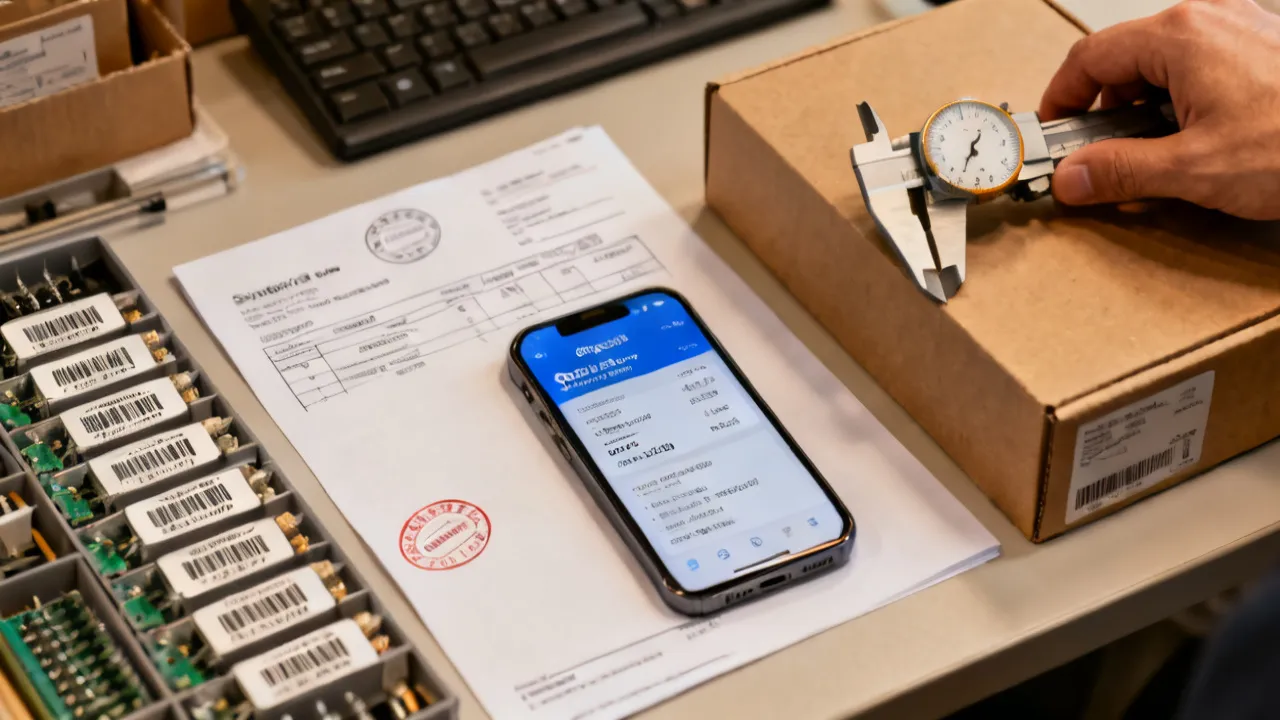
If you are tracking an item identifier such as 60817674500, the fastest path to a sound procurement decision is to compare supplier quotes using consistent requirements: specification match, documentation completeness, lead time reliability, packaging/handling standards, and after-sales responsibility. In this guide, the goal is not to guess—but to verify, using an expert-style checklist that keeps the conversation grounded in facts.
Because procurement outcomes often hinge on details hidden inside a quote, your evaluation should treat each supplier response as a set of conditions. Even when pricing appears similar on the surface, differences in measurement methods, test certificates, compliance statements, and shipping responsibility can meaningfully change the total risk and total cost of ownership.
To support that approach, this article references the supplier-related keywords provided (e.g., the numeric identifier and the standalone keyword tokens), and explains how to incorporate them into a structured review process. Where applicable, the article also uses “nearby” phrasing in place of any location placeholders, per your instructions.
Identifiers such as 60817674500 function as a practical anchor for specification control. In many supply environments—industrial parts, regulated components, and build-to-order products—an identifier is used to reduce ambiguity. However, it can only protect you if your supplier uses it consistently.
From an industry perspective, the core question is: Does the supplier’s quoted item truly correspond to 60817674500? That means checking cross-references (part number mapping), revision levels, and packaging/labeling practices. A common failure mode is receiving an item that is “close enough” for a casual buyer but incorrect for a quality-managed installation.
To evaluate this reliably, you need to treat the identifier as the starting point, not the finish line. A robust procurement process typically verifies three layers of alignment:
When any one of these layers is missing, you’re exposed to downstream issues: rejection at incoming inspection, rework, delayed commissioning, compliance reporting gaps, or warranty disputes. The identifier 60817674500 reduces ambiguity only when the supplier is disciplined enough to keep those layers synchronized.
It’s also worth acknowledging that identifiers can be reused, truncated, or represented differently across catalogs. For example, one supplier might quote 60817674500 while another lists it under a family name and provides a superseded part number. Without a crosswalk, buyers may treat those as equivalent when they are not.
When you evaluate “price information” linked to 60817674500, remember that quoted cost is rarely a single line item. Very supplier quotes break down into several components. Even if you only see one total amount, the supplier’s internal cost drivers often map to the following:
An objective approach is to compare supplier quotes using the same included items. If one supplier includes documentation and packaging while another lists them as extras, the “cheaper” quote may be more expensive in total.
In more complex procurement situations—such as regulated industries—pricing also reflects compliance overhead: audits, document control, and management of traceability records. Even if the supplier doesn’t explicitly list those overhead items, they typically appear as either:
Therefore, when you compare quotes, you should always request a structured breakdown. If the supplier cannot produce a breakdown, treat that as a transparency gap. A transparent quote structure is often correlated with a supplier’s operational discipline.
To compare options for 60817674500 responsibly, you should request the same set of information from every supplier. Industry teams frequently use a requirements matrix to make responses comparable. At minimum, ask for:
This set of requirements helps prevent a frequent procurement pitfall: a supplier quote that is “technically correct” but incomplete regarding the information you need to operate reliably.
To make the comparison even more rigorous, you can also request the following “proof artifacts” depending on your risk level:
Even though these requests may add time, the payoff is fewer disputes. When disputes arise later, your ability to point to what was promised and what was evidenced becomes the deciding factor.
From an industry expert viewpoint, suppliers should be evaluated across risk, compliance, and operational impact, not just price. The safest decisions come from a structured scoring approach that ties each criterion to your downstream use case.
Below are practical decision criteria that typically matter very for items referenced by an identifier like 60817674500:
If your use case is safety- or compliance-sensitive, you should also confirm relevant industry standards and whether the supplier’s documentation supports them. The aim is verifiable assurance, not assumptions.
To make this more actionable, consider the concept of “procurement fitness.” A supplier may offer a lower price but fail procurement fitness in ways that create hidden costs. Hidden costs frequently show up as:
Procurement fitness is not simply “can they deliver.” It is “can they deliver and also provide evidence and remedies that match your operational reality.” When you anchor your decision on 60817674500, this fitness concept becomes especially important because identifier mismatches and documentation gaps can invalidate compliance assumptions.
When suppliers operate “nearby,” practical benefits can include faster communication, easier inspection scheduling, and smoother logistics coordination. In many regions, teams also prefer suppliers that can align with local business hours and predictable transport routes. This can be particularly useful when you need to validate documentation or coordinate receiving inspections quickly.
Even so, “nearby” does not automatically reduce risk. The identifier-to-spec verification steps still matter, especially for 60817674500 where an identifier mismatch could disrupt downstream assembly, calibration, or compliance reporting.
To avoid over-relying on “nearby,” apply the same standardized checklist regardless of supplier distance. If a “nearby” supplier offers faster timelines but provides vague compatibility statements, your procurement team should still require evidence and documentation that links the delivered item to 60817674500.
In practice, “nearby” can reduce cycle time, but it does not eliminate the need for:
Think of “nearby” as a scheduling advantage, not a proof substitute.
The following table summarizes how to compare supplier options using structured conditions. No hyperlinks are provided in the table, and it is designed as a neutral checklist.
| Evaluation area | What you should require | What “good” looks like | What to watch for |
|---|---|---|---|
| Identifier and spec match | Confirmation that the quoted product corresponds to 60817674500, including revision/variant details. | Clear mapping statement + specification sheet aligned to the identifier. | Ambiguous phrasing like “equivalent” without measurable proof. |
| Documentation completeness | Certificates/inspection records and traceability info relevant to your requirements. | Documents are complete, consistent, and provided before shipment or with it. | Missing serial/lot trace details or documents that arrive late. |
| Lead time integrity | A timeline with production steps and shipping milestones. | Realistic estimates, clear buffers, and acknowledgment of constraints. | Overly optimistic promises with no explanation or no contingency plan. |
| Packaging and handling | Packaging method, protection measures, and handling notes. | Damage-prevention approach that matches product fragility and transport mode. | Insufficient protective packaging for the chosen route. |
| Commercial terms | Warranty/returns terms, dispute process, and responsibility for shipping risk. | Clear boundaries and a practical path for corrections. | Terms that shift responsibility too broadly to the buyer. |
| Total cost of procurement | Unit price plus any documentation/testing/shipping components included. | Transparent quote structure enabling like-for-like comparison. | Low base unit price with hidden add-ons that change the total delivered cost. |
Use the following process to minimize subjectivity when comparing supplier proposals. This is written as a practical, repeatable method for procurement teams.
Gather your internal requirements for the item associated with 60817674500. Confirm required materials, performance constraints, and any acceptance test methods.
Ask each supplier to respond using the same categories (price breakdown, lead time, documentation, and compliance/quality notes). Consistency is essential for fair comparison.
Require a statement that the quoted product corresponds to 60817674500, including revision/version and any alternates offered. If alternates are proposed, require a compatibility justification based on specs, not just marketing language.
Compare delivered cost with documentation included. If a supplier excludes certificates or certain tests, estimate the cost of obtaining those items separately—then compare total cost and risk.
Review what inspection steps the supplier uses before shipment and how traceability is recorded. Ask for inspection criteria if you rely on incoming quality control.
Confirm whether lead time includes packaging, transit, and any production steps. If demand varies, ask how the supplier manages workload without slipping dates.
Define inspection responsibilities and what happens if the item fails acceptance testing. Ensure the remedy path is practical: replacement, corrective action, or return terms.
Use a scoring model aligned with your priorities (e.g., compliance-critical items may weigh documentation heavily). Choose the supplier that meets requirements with the lowest defensible total risk.
When evaluating supplier responses that reference your keywords and identifier 60817674500, pay attention to communication quality as a proxy for process maturity. You are not looking for “sales polish”; you are looking for operational clarity.
Good signals include:
Conversely, risk signals include:
A mature supplier typically anticipates procurement questions and answers them proactively. When they don’t, you may still find a workable deal, but you should expect extra work later—particularly at receiving, during document reconciliation, or when discrepancies arise.
In very procurement workflows, 60817674500 is used as a part/item identifier to support specification matching and traceability. You should still verify mapping, revision/version, and documentation because identifiers can be reused or cross-referenced across catalogs.
In practical terms, the identifier should be traceable across at least two systems or documents: (1) supplier catalog/quote documentation and (2) delivered item labeling/packing documentation. If you receive an item where the identifier is only present on one side (e.g., quoted but not labeled, or labeled but not documented), you should treat that as a control failure. Procurement often cannot resolve control failures purely through conversation; it resolves them through evidence and traceability.
Normalize the comparison to like-for-like deliverables. Break down unit price, documentation/testing inclusions, packaging, and shipping responsibilities. If one supplier excludes certificates or certain tests, adjust the comparison to include the equivalent cost and risk.
To go one step further, consider the “total procurement package.” This means you treat each quote as a bundle consisting of: product supply, documentation supply, and logistics/risk transfer. Two suppliers can offer similar unit pricing but different total procurement package content.
For example, one supplier might include documentation with the shipment, while another might promise it later. If receiving cannot release the goods without those documents, then the second supplier’s quote creates a hidden cost in the form of delayed inventory release. If the item is time-sensitive, that hidden cost can dwarf the difference in unit price.
Typically, request a specification sheet aligned to the identifier (including revision), quality/inspection documentation, and traceability information such as batch or lot references. If your use case requires compliance verification, ask for documentation relevant to those requirements.
Documentation should also specify what it covers. A certificate might claim conformity but not list the relevant parameters, standards, or test results. That’s why your documentation request should be explicit about fields you need to support your acceptance criteria.
For traceability, you should ask:
If the answers are unclear, you may still accept a deal, but you should plan for additional verification at receiving. Plan-driven verification is always safer than improvisation.
Lead time variations commonly reflect differences in production schedules, inventory status, quality inspection steps, and logistics arrangements. Ask for a timeline with milestones so you can understand which portion is production versus shipping.
It can be helpful to separate lead time into segments in your internal planning:
When a supplier presents one total number without segments, it’s harder to diagnose why delays occur. Segmenting lead time also helps you identify what you can influence (e.g., faster document release) versus what you cannot (e.g., carrier time).
Only if compatibility is proven through measurable specifications and the supplier can provide documentation supporting the claim. For quality-managed environments, “equivalent” without evidence increases risk and may create downstream rework or acceptance failures.
To evaluate compatibility, require a spec-to-spec mapping. The supplier should list which characteristics are guaranteed to match (dimensions, material grades, tolerances) and which characteristics are different but still acceptable for your use. If your acceptance criteria are strict, compatibility claims should be treated as “proposed alternates” requiring formal approval.
In some procurement systems, alternates require documented change control. The reason is simple: even minor differences can change assembly fit, electrical properties, load ratings, chemical compatibility, or compliance documentation requirements.
Not always, but it can improve communication speed and coordination for inspection/receiving. The key remains verification of identifier-to-spec match, documentation completeness, and commercial clarity—even for “nearby” suppliers.
Procurement teams sometimes assume “nearby” suppliers will be more accountable due to easier oversight. That assumption may be partially true for communication. But accountability also depends on contract terms, document control systems, and quality processes—variables that are independent of geographic distance.
Therefore, if you use “nearby” as a decision factor, pair it with evidence-based criteria:
Define the inspection steps you will perform on receipt and the measurable characteristics that determine pass/fail. Then align the supplier’s remedies (replacement/correction/returns) to those criteria so the process is predictable.
Acceptance criteria should include both “hard” and “soft” criteria:
When suppliers know your acceptance criteria in advance, they can tailor their quality control efforts. That reduces the probability of receiving problems that cannot be resolved quickly.
It’s also wise to define how you handle partial acceptance. For instance, you may accept the goods conditionally while documentation is pending, but the condition must be stated clearly (e.g., “hold for release until certificates arrive”). This reduces ambiguity and internal delays.
Procurement top practices emphasize structured requirements, traceability, and documentation to reduce risk. For background on quality management and supplier assurance frameworks, widely used standards and guidance include:
For broader supply chain risk and resilience concepts, organizations such as the World Bank and OECD publish research on supply chain disruptions and risk management, which supports the general rationale for verification and documentation. (Always apply these frameworks according to your specific industry and compliance obligations.)
In practical procurement terms, these frameworks inform your “evidence posture.” That is, what you require before releasing goods to production. If your industry demands strict traceability, then the supplier’s documents must align with that demand. If your industry demands calibration evidence, then test results tied to standards are more than paperwork—they are operational inputs.
It’s also important to connect your procurement method to internal governance. Quality departments often control acceptance criteria and documentation requirements; procurement departments control supplier selection and contract terms. Your decision process should ensure that both groups agree on what “good” looks like for 60817674500.
Even experienced teams can encounter avoidable problems. Here are issues that frequently surface when buyers focus too narrowly on headline numbers tied to an identifier like 60817674500:
Another frequent pitfall is relying on email or verbal confirmations without controlling evidence. A procurement decision anchored on 60817674500 should prefer written confirmations that specify revision/variant, documentation inclusion, and delivery responsibilities.
If the supplier provides a “document available on request” note, treat it as a procurement risk unless the timeline is explicit. In many organizations, receiving and QA schedules depend on the documentation being available at or before shipment receipt.
To make your next supplier evaluation more defensible, implement the following actions:
In addition to the above, consider adding a “risk statement” column to your comparison sheet. For each supplier, record the top risks associated with their quote. For example:
When you do this, you transform subjective concerns into explicit risks that decision-makers can weigh. That transparency improves governance and makes it easier to defend procurement decisions later.
When the procurement target is anchored to an identifier such as 60817674500, the top outcomes come from verification-first comparisons. By standardizing your requirements, normalizing pricing to delivered and documented value, and clarifying acceptance and remedy terms, you reduce the likelihood of mismatched goods, delayed documentation, and ambiguous disputes.
Use the checklist, table, and step-by-step guide above to ensure your decision is objective and repeatable—whether the supplier is operating “nearby” or at a distance.
The cover-image prompt at the top is designed to visually represent quotation comparison, documentation review, and identifier-based procurement workflow without exposing brand logos or implying unverified claims.




Este guia analisa, de forma objetiva, as relações e usos associados a Aguinaldofirminocampos, espinhos e remacubaia, com foco em contexto, aplicação prática e cuidados. Apresenta informações de base sobre cada termo, destacando como elementos naturais e referências locais podem orientar escolhas de manejo, coleta e identificação, além de recomendações de avaliação e conformidade.

This guide explains how to evaluate Uu-related offerings by supplier capability, pricing logic, and service conditions. Objectively, “Uu” and the surrounding terms typically represent product categories or identifiers used in procurement and cataloging. You’ll learn what to verify, how to compare suppliers, and which requirements reduce risk when sourcing near you.

This guide explains how to source and evaluate products tied to item code 44539991272, including key supplier considerations, pricing dynamics, and risk checks. Objectively, the keywords suggest a catalog-style identifier used in procurement workflows. The article reviews how buyers should verify specifications, confirm lead times, and document acceptance criteria before ordering from suppliers.

This guide explains how to evaluate Umeu.,Sando products with practical sourcing and pricing considerations. “Umeu.,Sando” functions as a brand-like term for a category of goods, and buyers typically compare supplier reliability, material quality, and packaging consistency. Objectively, the article outlines how to check documentation, confirm specifications, and reduce risk when choosing nearby sources.
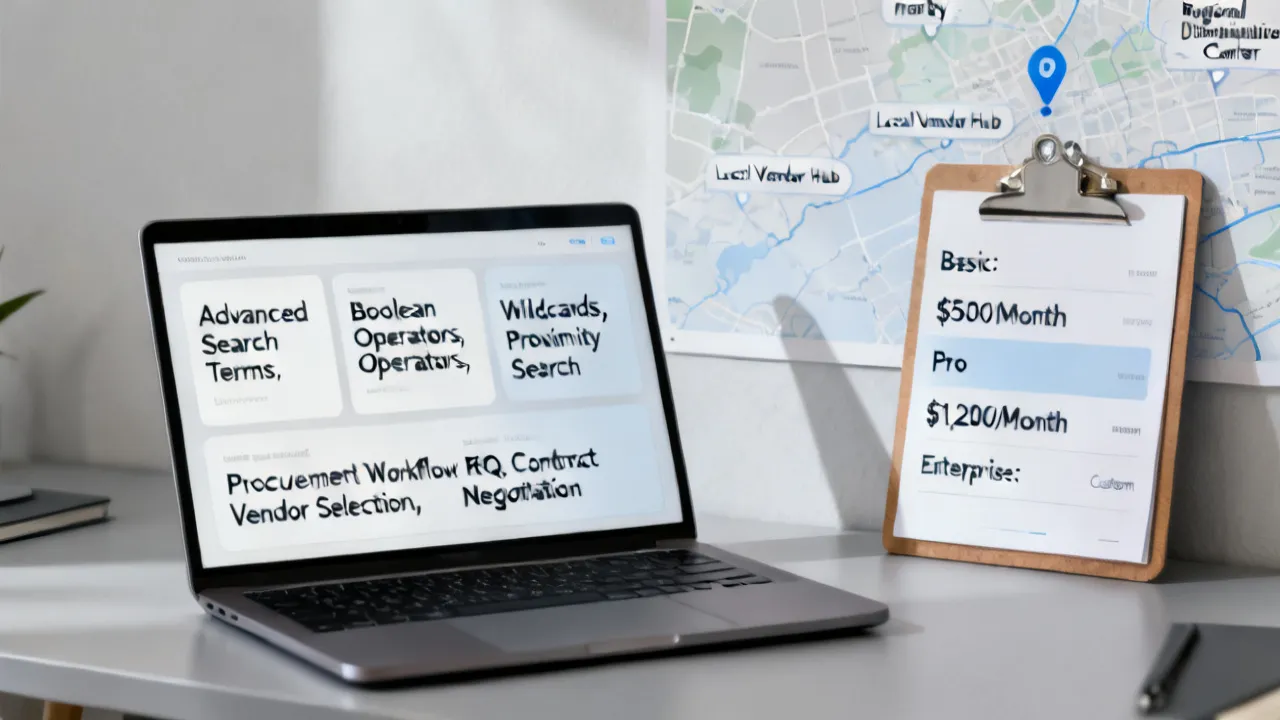
This guide explains how ryugfiih can be used to interpret procurement signals, supplier fit, and cost drivers in a reliable way. Objectively, these keywords reflect the way teams combine search intent, supplier documentation, and operational constraints. You’ll also find a structured comparison table, step-by-step conditions, and FAQs to support decision-making without guesswork.
This guide explains how to evaluate supplier options and price factors tied to 60817674500, using practical, objective decision criteria. Background context covers what a supplier quote typically includes, why identifier accuracy matters, and how customers assess lead time, documentation, and quality requirements across comparable procurement scenarios.